Want to Feel Happier Every Day? Just Talk to Someone

Feeling a little off lately? There’s a surprisingly simple—and free—way to boost your mood: have a good conversation.

According to a recent study, just one quality interaction a day can significantly improve your well-being. Researchers found that meaningful communication helps reduce stress and anxiety, while also increasing feelings of connection and overall happiness.

But what counts as a “quality conversation”? The researchers pinpointed seven types that make the cut:

  • Joking around: Light-hearted banter that makes you laugh.
  • Catching up: Reconnecting with someone you haven’t seen or talked to in a while.
  • Deep, meaningful talks: Conversations that go beyond small talk and get into real emotions or ideas.
  • Showing care: Expressing concern, empathy, or support.
  • Valuing someone’s opinion: Asking for and appreciating someone’s perspective.
  • Sincere compliments: Genuinely praising someone for something they’ve done or who they are.
  • Just listening: Being present and fully hearing someone out, without interrupting or judging.

Even a brief moment of connection in one of these forms can do wonders. And while just one solid chat is enough to feel better, the study found that multiple conversations throughout the day amplified the effect even more.

So whether it’s a quick laugh with a coworker, a check-in with a friend, or a heart-to-heart with someone close, making space for meaningful interactions isn’t just good social etiquette—it’s scientifically proven self-care.

Think of it as mental health maintenance that doesn’t require a gym membership, meditation app, or even leaving your house. Just talk. Listen. Connect. Repeat.

Here’s Why Toxic Positivity Sucks

In a culture that often equates positivity with strength, it might come as a surprise that too much of it—at the wrong time—can be toxic.

Toxic positivity is the belief that no matter how bad a situation is, people should maintain a positive mindset. It sounds supportive on the surface, but in practice, it can actually minimize or dismiss real emotions like sadness, frustration, or grief.

Think of it as emotional gaslighting.

You lose your job, and someone says, “Just stay positive!” Sure, they’re trying to help—but in that moment, it can feel more like they’re ignoring your reality than offering support.

Or imagine missing out on a major goal—bombing a big game, for instance—and hearing, “Everything happens for a reason.” That kind of response, though common, assumes there’s some cosmic lesson in failure rather than validating your disappointment.

Then there’s the classic: “Happiness is a choice.” It’s the kind of phrase that, instead of lifting someone up, can make them feel like their struggle is their fault. Rather than supporting someone through their low moment, it unintentionally adds guilt to the mix.

So what’s the alternative? It starts with understanding the difference between toxic positivity and healthy optimism.

Optimism is about having hope and confidence in the future. Toxic positivity, on the other hand, is when we force that hope onto others—even when they’re not ready or able to receive it.

And when people are navigating loss, anxiety, or other intense emotions, what they really need is validation, not a motivational poster.

Just remember, it’s okay to not be okay.

Mental health experts say that embracing difficult emotions is a key part of resilience. Acknowledging someone’s pain—even sitting with them in silence—is often more comforting than trying to spin their pain into a positive.

This is especially important in the workplace, where a culture of relentless positivity can make it harder for employees to speak up about burnout or stress. When people feel they have to put on a smile no matter what, real issues go unaddressed.

So next time someone’s having a rough day, try swapping “Look on the bright side” with something more empathetic like, “That sounds really tough—do you want to talk about it?”

Because real support doesn’t mean cheering people up. It means showing up.

Beavers Announce Their Presence with Farts

(Who knew I was part-beaver?)

A beaver in Cornwall recently achieved unexpected internet fame—not for building a dam or swimming in a stream, but for farting on camera.

The moment, captured on a night vision wildlife cam at Helman Tor Nature Reserve near St Austell, quickly turned heads.

But according to experts, the noisy toot may serve a more serious purpose in the beaver world.

Lauren Jasper, a beaver officer with the Cornwall Wildlife Trust, explained that the flatulence might be linked to scent-marking behavior. Beavers possess a gland near their tails that secretes castoreum, an oily substance used to mark territory. Jasper believes the expulsion of gas could have accompanied this scent-marking process, helping the beaver communicate its presence to others in the area.

“We set out camera traps hoping to catch footage of their natural behaviors—things like grooming, swimming, and dam-building,” Jasper told What’s The Jam.

“But what really stood out was the sound of a beaver breaking wind. It gave us all a good laugh.”

Beavers, once extinct in the UK, have been gradually reintroduced to the wild as part of ongoing conservation efforts. Their impact on ecosystems is significant—they’re considered “ecosystem engineers” for good reason. By constructing dams and creating wetlands, they help manage water flow, reduce the risk of flooding, and provide vital habitats for other wildlife.

“The wild release of beavers is a huge step toward restoring natural landscapes,” Jasper said. “They improve water quality and create diverse habitats. Their return marks a major milestone for nature’s recovery.”

While the viral video might elicit chuckles, it also draws attention to the critical role beavers play in rewilding efforts across the UK. Conservationists hope their return will support a more sustainable, biodiverse future.

In the meantime, the Cornwall Wildlife Trust can add “beaver fart caught on camera” to their growing list of footage showcasing the quirky charm—and ecological importance—of these once-vanished mammals.

This Mom Counted Every Screen in Her House—and the Total Is Wild

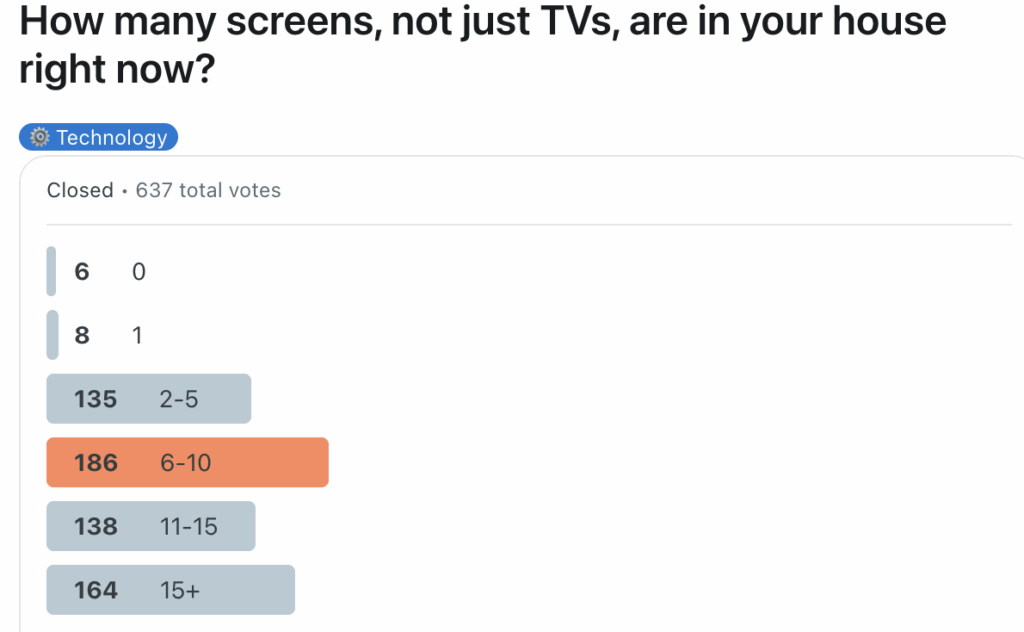
How many screens are in your home right now? You might want to sit down before you start counting—because one mom on TikTok did the math, and her household total has the internet rethinking their own digital habits.

The mom, who shares snippets of family life online, recently went viral after revealing her family owns 24 different screens. Yes, 24.

She and her husband have four kids, aged two to 10, and every member of the household—toddler included—has multiple devices.

In a breakdown that feels more like an electronics store inventory, she included everything with a screen: TVs, tablets, phones, computers, even smartwatches. Shockingly, nine of the 24 screens are televisions. (That’s more TVs than people in the house.)

Then there are the tablets—seven in total. Each family member has their own iPad, and her five-year-old has a second one specifically for speech therapy. Add in three iPhones, two Apple Watches, two computers, and a Nintendo Switch, and you’ve got a fully loaded digital household.

Some outlets tried to bump the number to 27 by including game consoles like PlayStations and Xboxes. But the mom clarified: if it doesn’t have a screen, it didn’t make the list. Naturally, the video sparked conversation. Some commenters were amazed, others horrified.

“No wonder nobody plays outside anymore,” one viewer quipped.

Others admitted their own families weren’t far off—with one user tallying up 30 screens between six people.

The video taps into a growing cultural moment where many families are trying to navigate screen time limits, digital burnout, and device dependency. According to a 2023 Pew study, the average U.S. household has more than 10 connected devices—and with smart homes on the rise, that number is only climbing.

Whether you’re screen-rich or just screen-aware, this mom’s viral moment is a good reminder: maybe it’s time for a quick digital audit of your own. (And maybe—just maybe—some fresh air.)

You Shouldn’t Give 100% at Work… a Solid 85% Is Plenty

If you’re constantly being told to give 100% — or worse, 110% — at work, it might be time to hit the brakes. According to a concept called the “85% rule,” putting in just enough effort could actually make you better at your job.

The idea? Stop overexerting yourself. Instead of running on all cylinders every minute of the day, aim to give about 85% effort. It sounds counterintuitive, especially in hustle culture, but there’s science — and Olympic gold — behind it.

The rule was popularized by none other than track legend Carl Lewis.

The Olympic sprinter was known for starting races at a seemingly relaxed pace, only to surge past competitors in the final stretch.

Why? Because he wasn’t tensed up and burning out in the first half — he was running at about 85%, saving the rest for when it really counted.

In a work setting, the same logic applies. Operating just below your maximum capacity can actually help you:

  • Stay mentally flexible
  • Be more present and aware
  • Boost your creativity
  • Avoid burnout

By contrast, always pushing yourself to the limit can leave you drained, scattered, and ironically, less productive.

Think of it like trying to drive a car with your foot glued to the gas pedal — you’re going to burn through your fuel fast and probably miss your turns.

Of course, this doesn’t mean slacking off. The 85% rule isn’t about doing the bare minimum — it’s about working smart, not just hard. It’s a reminder that peak performance often comes when we dial it back just enough to stay sharp, steady, and sustainable.

So the next time someone tells you to give 110%, just smile and give them your well-balanced 85. Carl Lewis would approve.

Skipping Lunch Is Hurting Your Brain!

If you’re someone who regularly powers through your lunch break, you’re not alone — and the toll it takes on your mental health may be bigger than you realize. A recent study out of Australia found that nearly 80% of workers occasionally skip their lunch break, with most reporting that it negatively affects their mental well-being.

It’s easy to see how it happens. A looming deadline, a project in full swing, or just the inertia of being “in the zone” can make lunch feel like something you can push off or skip altogether. But experts warn that this habit, while common, comes at a cost.

According to a workplace psychologist quoted in News.com.au, skipping lunch doesn’t make us more productive — it actually does the opposite.

“We think that not taking breaks is making us more productive,” she explains, “but the trade-off is we’re not giving our brains a chance to rest.”

Over time, that leads to burnout, stress, and a decline in overall productivity.

One practical solution gaining attention is setting a “lunch alarm.” By scheduling a reminder on your phone or smartwatch, you create a simple but powerful nudge to step away and recharge. It’s a proactive strategy that encourages you to reclaim your break, even on the busiest days.

This small habit shift aligns with a growing awareness about the importance of mental health in the workplace. Globally, companies are recognizing the role that breaks and downtime play in preventing burnout.

From “no meeting” lunch hours to designated wellness rooms, many employers are looking for ways to support their staff’s well-being.

But even if your company isn’t there yet, a personal lunch alarm is something you can control.

Of course, the reminder only works if you don’t ignore it. So, as the psychologist advises, “putting strategies in place to prevent burnout is the best approach.” Translation: don’t just hit snooze twelve times — respect the break as a critical part of your day.

In an always-on culture, pausing for lunch may feel like a luxury, but it’s increasingly clear that it’s a necessity. A simple midday alarm could be the gentle push you need to protect your mental health and, ultimately, perform at your best.

Which States Drive the Least—and Who’s Racking Up the Miles?

Are you a highway warrior or a hometown cruiser? According to stats from the Federal Highway Administration, the average American drives a whopping 14,263 miles per year.

But depending on where you live, that number can vary wildly. States with sprawling rural areas tend to top the list, while those with dense cities and strong public transit systems drive much less.

Top 5 States Where People Drive the Most:

  1. Wyoming – 24,069 miles/year
  2. Mississippi – 19,966 miles/year
  3. New Mexico – 19,157 miles/year
  4. Missouri – 18,521 miles/year
  5. Georgia – 18,334 miles/year

No big surprises here. These states are known for wide-open spaces and fewer public transportation options, meaning longer drives for work, errands, and everything in between.

Top 5 States Where People Drive the Least:

  1. Rhode Island – 9,961 miles/year
  2. New York – 10,167 miles/year
  3. Washington – 10,949 miles/year
  4. Alaska – 11,111 miles/year
  5. Pennsylvania – 11,445 miles/year

Fun fact: You can fit 430 Rhode Islands inside Alaska, but somehow, people in both states drive a similar number of miles per year. (You’ve got to love that paradox.)

A Few More Fascinating Driving Facts:

  • The U.S. boasts 8.7 million miles of roadway.
  • Men drive about 6,000 more miles per year than women.
  • In total, Americans clock 3.2 trillion miles annually—that’s more than enough for 6 million round trips to the Moon.

So, how do you stack up? Are you cruising past the national average, or letting someone else do the driving? Either way, you’re part of one of the most car-dependent cultures on Earth. Buckle up.

How Many Men Would It Take to Defeat a Moose in Hand-to-Hand Combat?

“That moose is [bleeping] huge.”

If you’ve ever encountered a moose in the wild, you know they’re not to be messed with. Towering nearly 8 feet tall and weighing in at over 1,500 pounds, these massive mammals are more than just majestic — they’re terrifying. Country singer Colby Acuff knows this all too well, having had several close encounters with moose in his home state of Idaho.

So it’s probably not surprising that he’s developed a bit of a fascination with the question:

How many people would it take to take down a moose in hand-to-hand combat?

Acuff recently posed this hypothetical during an interview, clarifying that the fight would involve no weapons — just people versus moose. One interviewer responded with a pop culture reference, comparing the challenge to taking down an AT-AT from Star Wars. “You’d have to go for the legs,” they said. “But even that might not be enough.”

That’s when Colby delivered his number: 30 people.

“I always say 30,” he explained. “Because when it starts, it’s going to be heinous.”

The response stunned the interviewer, who admitted they might not fully grasp just how large and powerful a moose really is. According to Acuff, that’s the point — people consistently underestimate them. He joked that moose are strong enough to match the force of 30 men, which may sound exaggerated, but after hearing his near-miss stories, you might think twice before calling it hyperbole.

Moose aren’t typically aggressive, but they’re certainly capable of defending themselves with surprising speed and strength. Every year, there are reports of people and even vehicles being charged or damaged by moose — especially if the animal feels threatened or is protecting a calf.

While Acuff’s scenario is obviously tongue-in-cheek, it’s rooted in real respect for a creature that dominates any forest it wanders through. And maybe that’s the point: Don’t mess with a moose — even if you’ve got 29 friends backing you up.

The Weirdest Law in Every State

From outlawing donkeys in bathtubs to forbidding surprise pizza deliveries, the United States is filled with bizarre, outdated, and downright hilarious laws that somehow still linger on the books. While many of these laws aren’t enforced today, they offer a glimpse into our quirky legal history—and make for some excellent trivia.

Here’s a roundup of some of the strangest laws still technically in effect across all 50 states:


1. Alabama – It’s illegal to drive blindfolded. Eyes on the road, folks.

2. Alaska – Dogs aren’t allowed in the back of open vehicles unless their tail clears 46 inches. Tall dog privilege?

3. Arizona – Donkeys may not sleep in bathtubs. Thanks to one flood in the 1920s, this became an actual law.

4. Arkansas – No honking after 9 p.m. near sandwich shops. Keep your pastrami cravings quiet.

5. California – In Berkeley, you can’t whistle for your lost canary before 7 a.m. Apparently, birds need their sleep too.

6. Colorado – Couches are banned on porches in Boulder. This one’s thanks to rowdy college couch bonfires.

7. Connecticut – A pickle isn’t a real pickle unless it bounces. Yes, officials tested this in 1948.

8. Delaware – You can’t sell dog hair. Sorry, Fluffy, your shedding isn’t a side hustle.

9. Florida – You must pay animal parking fees—even for elephants. A relic of the circus era.

10. Georgia – Living on a boat for more than 30 days? Illegal. Guess you’ll have to dock and Airbnb it.

11. Hawaii – It’s illegal to place coins in your ears. A coin trick crackdown from 1900.

12. Idaho – Sweeping debris into the streets is a no-go. Clean streets, clean conscience.

13. Illinois – Underage culinary students can legally taste alcohol. Sip, swirl, spit. No swallowing.

14. Indiana – Horses may not exceed 10 MPH. Hold your horsepower.

15. Iowa – No brick-throwing on highways. No matter how bored you are.

16. Kansas – Tire screeching is unlawful. Keep your drag racing to video games.

17. Kentucky – Women can’t marry the same man more than three times. Three strikes, you’re out.

18. Louisiana – Surprise pizza deliveries are considered harassment. A $500 fine for generosity gone wrong.

19. Maine – No parking in front of Dunkin’ in South Berwick. Coffee rage is real.

20. Maryland – Sleeveless shirts are banned in public parks in Baltimore. Better bring a hoodie to your jog.

21. Massachusetts – Fortune telling without a license is illegal.

22. Michigan – Selling cars on Sundays is outlawed.

23. Minnesota – Driving with dirty tires that leave marks is against the law.

24. Mississippi – Cities cannot require restaurants to display nutritional info.

25. Missouri – Bear wrestling is banned due to animal cruelty concerns.

26. Montana – It’s illegal to give a rat as a gift.

27. Nebraska – People with STDs can’t legally marry.

28. Nevada – Sitting or lying down on sidewalks in Reno is unlawful.

29. New Hampshire – Picking up seaweed from the beach at night is prohibited.

30. New Jersey – Wearing a bulletproof vest while committing a crime results in extra charges.

31. New Mexico – “Idiots” (archaic legal term) are technically barred from voting.

32. New York – Wearing slippers after 10 p.m. is prohibited by an outdated law.

33. North Carolina – Drinking while playing bingo is illegal.

34. North Dakota – Fireworks are banned after 11 p.m.

35. Ohio – Selling dyed baby chicks and rabbits is illegal.

36. Oklahoma – Horse tripping is outlawed.

37. Oregon – Hunting in cemeteries is against the law.

38. Pennsylvania – Paying someone to tell your fortune is technically illegal.

39. Rhode Island – Racing horses on highways is prohibited.

40. South Carolina – Minors under 18 cannot legally play pinball.

41. South Dakota – Sleeping in cheese factories is banned.

42. Tennessee – Sharing Netflix passwords is against the law.

43. Texas – Selling a human eye (and other organs) is illegal.

44. Utah – Biting during a boxing match is specifically outlawed.

45. Vermont – Women need husband’s permission to wear false teeth.

46. Virginia – Trick-or-treating after age 14 is illegal in some cities.

47. Washington – Attaching vending machines to utility poles is prohibited.

48. West Virginia – Hats are banned in movie theaters if they block others’ views.

49. Wisconsin – Restaurants must serve real butter unless customers request margarine.

50. Wyoming – Public buildings over $100K must include artwork funded by 1% of the budget.


So next time you find yourself wondering if you can race a horse on a Rhode Island highway or play pinball as a teen in South Carolina—just assume the answer is no. And maybe don’t even think about parking in front of a Dunkin’ in Maine.

These laws may not always be enforced, but they prove one thing: our legal system is as colorful as it is complex.

“Choppelganger”: Gen Z’s New Slang for a Not-So-Flattering Doppelganger

If you’ve ever been told you look like a celebrity—but not in a good way—you might have a new label: choppelganger.

The term is catching fire online, and like most Gen Z slang, it’s funny, blunt, and just a little mean.

A choppelganger is basically the budget version of a doppelganger—if that doppelganger got “chopped.” The word mashes up chopped (which now means “unattractive” or “busted” in internet slang) with doppelganger, meaning someone who looks just like someone else. So yeah, a choppelganger is someone who resembles another person… just not in the most flattering way.

It’s not exactly a compliment, but it’s not always meant to be cruel either. The term seems to walk that fine line between playful roast and low-key insult, depending on who’s saying it—and how well you know them.

Think of it as the meme version of “you look like if [insert celebrity] had a rough week.”

Choppelganger started making waves on TikTok and Twitter (sorry, X) sometime last year, but it’s been gaining traction in recent months. One viral TikToker joked that people call her the “Mick Jagger choppelganger,” and then promptly told everyone, “If you think someone has a choppelganger, keep it to yourself.” Fair enough.

It’s unclear who coined the word first, but it clearly hit a nerve online. In a digital world obsessed with comparisons and curated looks, it’s no surprise that Gen Z would invent a whole new way to gently (or not-so-gently) roast someone’s vibe.

Just remember: for every choppelganger, there’s probably someone out there who thinks you look like the hotter version. So take it with a grain of salt, or better yet, a strong Wi-Fi signal and a sense of humor.

Exit mobile version