10 BBQ Personalities You See at Every Cookout

What’s your technique at a barbecue?  Do you grab some food and then go back if you want more?  Or do you just go once and pile as much as possible on your plate?

A poll by bread brand Baker Street found 28% of us are “pilers,” where your whole plate is covered and there’s a mound of food on it.  Plate pilers were voted the most common type of person seen at barbecues. 

It’s one of 10 BBQ Personalities Who Seem to Show Up at Every Cookout.

1.  The person who piles up way too much food on their plate

2.  The person who gets their food delivered to them without getting up

3.  The drinker who keeps asking if anyone else needs another beer

4.  The person who will definitely drop food on the ground at some point (Dogs love that person.)

5.  The person (usually a guy) who offers unsolicited grilling advice

6.  The person (usually a woman) who shows up but doesn’t eat anything

7.  The meat-eater who’s about to try a vegan option and wants everyone to care

8.  The person who won’t eat with their hands

9.  The person who wants to take over the music and be DJ

10.  The person who shows up with their own chair

The poll also came up with four steps you can take to be seen as the “perfect” guest at your Fourth of July barbecue:

  1. Bring something.
  2. Offer to help the host.
  3. Before you eat, ask if you can get food for someone else.
  4. Before you leave, offer to help clean up.

Fourth of July: Half of Americans Think They Should Get the Whole Week Off

If your productivity this week has dipped below “bare minimum,” you’re in excellent (and lazy) company. A recent poll found that 45% of American workers admit they’re not really getting anything done between now and the Fourth of July. And frankly, the other 55% might just be lying to look good.

That’s right: nearly half of us are mentally out of office, spiritually beachside, and physically still showing up to Zoom meetings with the camera off.

And we’re not just talking about a slow day or two. Half the country thinks the entire week of July 4th should be a national no-work zone.

49% say companies should just close up shop and let everyone live their best summer life. Millennials and Gen Z are especially here for it: 61% are in favor of making it official.

Meanwhile, only 32% of older workers agree. Which tracks. These are the same people who think taking a sick day for appendicitis is “pushing it.”

But here’s the twist: a mid-year summer break might actually help companies.

35% of workers believe they’d be more productive the rest of the year if they knew they had a week off in July. 28% said they’d work harder, and 22% would be more likely to recommend their company to others. So yes, Cheryl in HR… time off is a retention strategy.

If you are getting more than just Friday off, congratulations, you’re living the dream. Only 34% of workers will get two or more days off this week, and just 10% are getting the full five-day break. The rest of us are pretending to care while googling “patriotic jello shot recipes.”

So go ahead and phone it in this week. Just make sure your boss is phoning it in too.

The Most Dangerous Day of the Year for Your Phone Is July 4th

Sure, the Fourth of July is rough on your fingers (thanks, fireworks), but it turns out the real casualty might be your phone. And no, we’re not being dramatic… just statistically accurate.

A phone repair company looked at their data and found that July 4th is the single worst day of the year for phone accidents. That means more cracked screens, more soggy devices, and a whole lot of panicked “Find My iPhone” searches. In fact, phone mishaps spike 52% higher on the Fourth than an average day. (Memorial Day and Labor Day are next, but they don’t quite have that same chaotic energy.)

The bigger problem? Summer in general is like a war zone for smartphones.

  • Water damage cases jump more than 80%
  • Cracked screens rise 18%
  • Lost phones soar 66%

(So yes, your phone absolutely dreads summer break.)

If you’d prefer to end the weekend with both your dignity and your device intact, here are a few solid survival tips:

1. Don’t trust that “waterproof” hype. Yes, you heard about someone who fished their phone out of a lake after two months and it still worked. That’s the phone equivalent of a miracle. Yours is more likely to drown in a hot tub full of margarita mix. Bonus fun fact: saltwater and chlorine are even worse for electronics.

2. Put your info on your lock screen. Take a screenshot of your contact details and set it as your wallpaper. It triples your chances of getting your phone back if it goes missing.

3. Fix that cracked screen already. A busted screen makes your phone extra vulnerable to water damage. Even humidity can sneak in through the cracks and cause problems. (Yes, your phone is apparently as high-maintenance as your ex.)

10 Things That Happened 10 Years Ago: June 29-July 5

Joey Chestnut loses, Ben Affleck gets divorced, and Donald Trump hears, “You’re fired.” Here are 10 things that happened 10 years ago this week.

Joey Chestnut lost the Nathan’s Hot Dog Eating Contest.

It was the first time in nearly a decade that he didn’t win. Competitive eater Matt Stonie ate 62, while Chestnut only managed 60. It’s the only time Chestnut lost between 2007 and 2023. He won eight straight, lost to Stonie in 2015, then won another eight in a row before sitting out in 2024 due to a sponsorship issue.

Ben Affleck and Jennifer Garner announced their divorce.

“After much thought and careful consideration, we have made the difficult decision to divorce.” The announcement came one day after their 10th anniversary. He eventually got back together with former flame Jennifer Lopez, and married her in 2022. They split up two years later.

Ashton Kutcher and Mila Kunis secretly got married.

They tied the knot on July 4th, 2015, 17 years after first meeting as cast members on “That ’70s Show”.

Donald Trump heard “you’re fired” over and over again.

NBC, Macy’s, NASCAR, and others dumped Trump after he launched his presidential campaign and made disparaging remarks about Mexicans: “They’re bringing drugs. They’re bringing crime. They’re rapists. And some, I assume, are good people.”

Diddy fell in a hole at the BET Awards.

He was performing with Lil Kim, Mace, Faith Evans, and others while celebrating the 20th anniversary of Bad Boy Records.

Rihanna did something no other artist had done.

The Recording Industry Association of America (RIAA) announced she was the first artist to rack up more than 100 million gold & platinum song certifications.

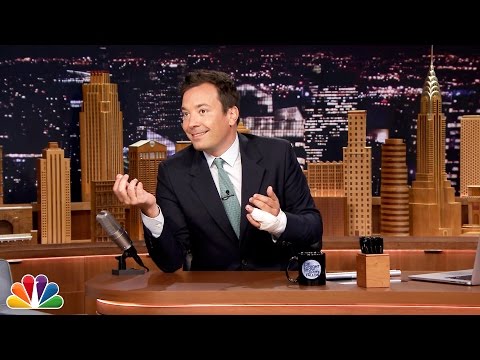
“The Tonight Show” was on hiatus after Jimmy Fallon almost lost a finger.

His wedding ring partially ripped his finger off when he tripped on a rug and grabbed a countertop to catch himself. He suffered a “ring avulsion” and was in the ICU for 10 days. They had to take a vein out of his foot and rebuild the digit. “The Tonight Show” resumed taping two weeks later in mid-July.

“Crypto” was giving people diarrhea.

A disease called cryptosporidium – or “crypto” for short – was infecting pools and hot tubs and making people ill. Bitcoin and other cryptocurrencies wouldn’t take off in a big way for another few years.

People were wondering if “South Park” would make it to 20.

In the lead up to Season 19, co-creator Matt Stone calmed fans’ nerves by saying, “We won’t stop until we get canceled. We’re renewing. They have to f*cking cancel us, goddammit!” Season 27 of the show (which premiered in 1997) is set to start July 9th, 2025.

The trailer for “Creed” was released.

Fans of the “Rocky” franchise were wondering if the spinoff – starring Michael B. Jordan as Apollo Creed’s illegitimate son – would even work. It ended up grossing $174 million at the box office, leading to “Creed II” in 2018 ($214 million), and “Creed III” in 2023 ($276 million).

The Surprising Psychology Behind “Just Keep It” Returns

Ever had Amazon tell you, “Just keep it,” when you tried to return something? That tiny thrill might be more than just a lucky break. It can also be the ultimate marketing move.

It creates brand loyalty.

A lot of the big-name retailers have adopted the “just keep it” return policy for certain low-cost items over the past few years, largely because the return shipping costs more than the item itself.

Now, a study from the University of Notre Dame found that letting customers keep those unwanted or defective items – known as “returnless returns” – actually makes them more loyal in the long run.

It fosters “brand warmth.”

Researchers found that those “keep it” returns trigger something called “brand warmth.” Basically, we start to think of the company as more generous, friendly, and trustworthy. That warm and fuzzy feeling sticks, and it can turn a one-time buyer into a lifelong customer.

The effect gets even better when the company frames it as the most eco-friendly option, or suggests you keep it and give it to someone else. That little nudge can make us feel like we’re part of something bigger, and keeps the brand in our good graces.

But there’s one thing that can ruin it.

Even when the product is defective, the goodwill isn’t completely lost – unless the company demands proof. Making a customer jump through hoops to prove something doesn’t work is where the good vibes go to die.

Normal Amount of Clumsy? Average Adult Racks Up 35 Injuries a Year

Think you’re more accident-prone than your friends? You might be totally average.

A new poll commissioned by bandage brand Curad has revealed that the typical adult suffers 35 minor injuries – like cuts, bruises, and scrapes – every year.

That’s almost three a month. So, if you haven’t stubbed a toe or cut yourself slicing into an avocado lately, you’re overdue.

Lifetime total: 4,000

Curad’s study also took a look at the lifetime total. Over the course of your life, the average person will tally up about 4,000 little injuries. So yes, it’s entirely normal to have a few mystery bruises at any given time.

4,000 would be 50 a year if you make it to 80 years old, much higher than the average of 35 for adults. But remember, not all age groups have the same injury risks. Anyone who’s raised a five-year-old knows they average way more than three boo-boos a month.

Think back to when you were a kid and all those times you bumped your head, got stung by bees, twisted an ankle, or skinned a knee. Those cuts and scrapes from your prepubescent years really add up.

The most common causes?

Unsurprisingly, the top culprits for adults are distraction, clumsiness, and kitchen mishaps – a trio responsible for most of our everyday injuries. Yeah, we’re basically walking slapstick routines.

And speaking of distraction, technology is making it even worse. A whopping 80% of people say they’ve had a near-miss accident while using their phone. One in three admit to close calls while walking and texting, and nearly one in five have gotten into trouble just from scrolling social media.

So if you’ve ever walked into a pole while checking Instagram, you’re not alone.

We’re oddly proud of our injuries.

There’s also a surprising amount of social pressure tied to injuries. One in four people say they feel judged when they wear a band-aid, and are worried others will think they’re weak. But not everyone feels that way.

A solid number of Americans are into the attention and can’t wait to brag about it. One in eight people want you to ask what happened, because every injury has a story.

The TL;DR? It’s a dangerous world out there. Life’s hard, and no one gets through it unscathed. (Especially if you’re walking around staring at your phone.)

Should You Give Your Kids Screen Time on Long Road Trips?

The short answer is yes. What are you crazy? But not everyone agrees.

Did you know that 73% of U.S. travelers would prefer a road trip over flying? And 83% of people plan to drive to their summer vacation destination this year.

Everyone’s talking about how expensive airfare is nowadays, so it makes sense more people are hitting the road. But here’s the million-dollar question for parents: How much screen time are you doling out for your kids?

A lot of parents out there are strict with screen time.

There’s one lady that says she only lets her kids listen to audiobooks. If I was that kid, I’d be looking at my emancipation options.

But apparently being strict is far from the norm. According to the CDC, here is the average amount of screen time given to kids daily. Not just on road trips, but every day:

  • 8-10 years old: Six hours
  • 11-14 years old: Nine hours
  • 15-18 years old: Seven and 1/2 hours

So if an 11-14 year old is averaging nine hours on screens per day, surely for a 500-mile road trip, they get to be on an iPad the entire time, right?

Why 500 you might ask? Because I need advice. I’m driving from Tennessee to Michigan and my wife thinks the kids need a break for their eyes. But I think I might need a break from all the questions. I love them, but is nine hours really that bad?

I would have played nine straight hours of Game Boy when I was their age, but the batteries would’ve never lasted that long.

Coffee Can Add Years to Your Life

Turns out your cranky uncle was right all along: coffee is the nectar of the gods… as long as you don’t ruin it with a bucket of cream and a pound of sugar.

A new study out of Tufts University found that drinking one to three cups of black, caffeinated coffee a day is linked to a lower risk of dying, especially from heart-related issues.

So, not only does it not “stunt your growth,” like your grandma warned you about, it might actually extend your life.

But there’s a catch: we’re talking about real, honest, grown-up coffee. Not the 700-calorie dessert disguised as a beverage that you just ordered from Starbucks with whipped cream, caramel drizzle, and a misspelled name.

Researchers say the benefits are mostly tied to black coffee, or coffee with only tiny amounts of added sugar and fat. People who drank it this way had a 14% lower risk of death than non-coffee drinkers.

For the record, “low sugar” means about half a teaspoon per cup. And “low fat” means something like one tablespoon of light cream, or five tablespoons of 2% milk if you’re feeling fancy.

Two to three cups a day seems to be the sweet spot, but don’t bother doubling that and expecting to live forever.

Drinking more than three didn’t give any added benefits… except maybe the ability to hear colors.

Scientists think the credit goes to bioactive compounds in coffee that help your heart, fight inflammation, and possibly make mornings bearable.

So go ahead, pour yourself another cup of black gold. Just don’t let the barista turn it into a milkshake.

Job Seekers Want Short Workweeks, Pets, and Nap Rooms

Turns out job seekers in 2025 aren’t just asking for competitive salaries… or beanbag chairs and unlimited LaCroix.

A new survey from Resume.io reveals what today’s workforce considers non-negotiable benefits, and at the top of the list? Cold, hard financial security.

Topping the workplace must-haves:

  • Paid overtime (76%)
  • Paid sick leave (75%)
  • Comprehensive health insurance (73%)
  • 401(k) retirement plans (67%)
  • Dental coverage (59%)

In other words, if you want to hire great people, you better be ready to pony up for the basics.

But there’s a gender divide when it comes to the finer details. Male professionals are prioritizing wealth-building perks: 28% say stock options are essential, and 20% want financial planning services included. Meanwhile, women are more focused on benefits that support inclusivity and family life. Over a third (36%) say maternity/paternity leave is a must, and 30% list DEI programs as essential… compared to just 27% and 23% of men, respectively.

And then there’s Gen Z and Millennials, coming in hot with the vibe check.

Gen Z’s demands include:

  • Four-day workweeks (30%)
  • “Fun rooms” with ping-pong and games (18%)
  • Pet-friendly offices (20%)

Millennials? They just want a nap. Literally—17% of them say “nap rooms” are necessary.

While some of these perks might sound a little over the top, they reflect a real shift in work culture. Flexibility, mental health, and purpose-driven policies are quickly becoming as critical as pay and healthcare. Employers hoping to stay competitive might need to rethink what their benefit packages say about their company’s values.

Or, maybe they just hire A.I. to replace you, until it starts demanding gym memberships, trampolines, and adult ball pits.

Feeling Stressed? Science Says You Should Try Wearing Green

Looking to lower your anxiety without meditating on a mountaintop or adopting another houseplant? You might just need to rethink your wardrobe. According to color psychology experts, the simple act of wearing green could give your mood a serious boost.

While color psychology doesn’t have the deepest stack of peer-reviewed studies behind it, plenty of artists, designers, and therapists agree that color affects how we feel. And green, in particular, might be your new go-to.

“Green is the psychological primary color that balances the others—red, yellow, and blue,” one expert explained. “If you’re too stressed, it calms you. Feeling low? It picks you up.”

Consider it the yoga teacher of colors.

There’s real science to back it up, too. Studies have shown that just being around the color green—say, walking past a park or looking at houseplants—can reduce stress levels, lower your blood pressure, and even ease anxiety. So it makes sense that wearing green might create a similar effect, kind of like tricking your brain into thinking it’s on a nature hike.

Another psychologist (who also happens to be a Reiki master, so you know they’re serious about good vibes) chimed in: “Green tends to be soothing. So wearing it may make you feel more relaxed and less anxious.”

So if you’re spiraling about deadlines, dinner plans, or the general state of the world, maybe start small: grab a green sweater, or throw on that minty T-shirt that’s been hiding in your drawer. It might not solve everything, but it could make your day a little easier to handle.

This should work for everyone except New York Jets fans.

Exit mobile version