ZZZ- Old Home Page & Posts Page

10 Things That Happened 10 Years Ago: Jan 11-17

Billion-dollar jackpots, football returns to LA, and Chris Pratt has perfect 🏀⚾️. Here’s what was in the news 10 years ago this week.


The First $1 Billion Lottery Jackpot

For the first time ever, a U.S. lottery jackpot cracked the $1 billion mark, instantly turning a routine drawing into a national obsession. Three lucky tickets split the prize, proving once and for all that “it could happen” is technically true… just not to you. The $1.59 billion jackpot now ranks sixth all-time.


Alan Rickman Dies at 69

Beloved actor Alan Rickman passed away at age 69, leaving behind a career full of unforgettable performances and iconic voices. Whether you knew him as a villain (“Die Hard”), a romantic lead (“Love Actually”), or a deeply sarcastic wizard professor (“Harry Potter”), Rickman had a rare talent for making every line sound smarter than it actually was. The world lost a legend, and a truly elite sneer.


L.A. Gets Its Football Team Back

After two decades without an NFL team, Los Angeles officially welcomed the Rams back home, with the Chargers following a year later. The move promised a shiny new stadium, massive fan interest, and years of debates about traffic, loyalty, and why everyone still wears Raiders gear anyway. L.A. football was back.


Harry Styles Goes Solo

Before launching his solo career, Harry Styles reportedly started taking professional voice lessons. Fresh off his boy-band success, Styles was clearly aiming for longevity, not just screaming fans. Turns out talent plus training is a powerful combo, especially when you already look like that.


Nick Cannon Claims He’ll Never Remarry

Following his divorce from Mariah Carey, he said, “I feel like marriage isn’t for everyone.” He’s backed it up over the past decade and never remarried. But he’s averaged a kid per year since then – 10 kids with multiple women in the past decade. So clearly the man did not give up on commitment-adjacent activities. Love comes and goes. Child support, however, is forever.


“The Revenant” and “Mad Max” Dominate Oscar Nods

Oscar voters made it clear they loved suffering and explosions. One featured brutal wilderness survival, the other nonstop vehicular chaos – and somehow both counted as prestige cinema. Leonardo DiCaprio freezing for art finally paid off, while Mad Max proved shouting and fire still impress Hollywood.


“Fifty Shades,” “Pixels,” and “Paul Blart 2” Lead the Razzie Pack

The Razzie nominations were announced, and cinematic excellence was… not present. It was a banner year for questionable decisions, lazy scripts, and movies that made you ask, “How did this get greenlit?” Hollywood answered: “Shh. Money.”

Eddie Redmayne and Rooney Mara had the distinct honor of being nominated for an Oscar and a Razzie in the same year. (Eddie went on to win Worst Supporting Actor for “Jupiter Ascending,” but lost out on Best Actor for “The Danish Girl.” Leo won for “The Revenant.”)


“George Bush” Gets Busted for Selling Monkey Heads on eBay

No, not that George Bush. A man with the same name was in court for selling endangered monkey heads in England. The bizarre case was a reminder that sharing a famous name does not grant you immunity from being incredibly weird and criminally stupid.


Anna Farris Says Chris Pratt Has Perfect Balls

Anna Faris made headlines after publicly complimenting then-husband Chris Pratt in a way that was… anatomically enthusiastic. The comment was affectionate, graphic-adjacent, and absolutely not meant for children, yet somehow still charming. Sadly, his perfect balls couldn’t save their marriage. They separated a year later in 2017.


The Hottest Men’s Grooming Trend Is… Looking Like You Gave Up

According to trend watchers, the big men’s grooming look of 2016 was intentional sloppiness. Think unkempt hair, scruffy beards, and clothes that say “effort was considered, then rejected.” The vibe? Casually disheveled, but make it fashion. It was great news for guys everywhere who wanted to feel stylish without actually doing anything differently at all.

Kids Now Make $52 a Month in Allowance

The newest Americans to get a cost-of-living raise are not government workers or teachers or anyone who actually needs one. Nope. It is children. Small children. Children who sometimes complete chores… and sometimes just confidently lie about completing chores.

A new report says the average kid now pockets $52 a month in allowance, which is about $13 a week.

Of course each kid’s take varies depending on age, work, and whether the family budget is held together by coupons and prayer. But before Grandpa fires up the rant machine about “kids these days,” a quick reality check: inflation is real. Paying a 12-year-old $13 a week today is basically the same as paying a kid in the 1990s about $5.50 a week. And for grandparents who grew up in the 1960s, it would have been about $1.25 a week.

The one place older generations are absolutely justified in shaking a fist? The workload. Kids in previous generations were probably doing more adult work, not to mention farm chores before school. Meanwhile today’s kids are earning thirteen bucks a week for cleaning their room and maybe putting the plates in the dishwasher. Truly the golden age of labor.

Still, parents say the allowance is teaching valuable skills. 78% think their kids can handle money responsibly.

61% even admit their kids are more financially responsible than they were, which is fair, because many of today’s parents learned about money by accidentally racking up overdraft fees in college.

Cash is still the most common allowance method at 56%, but parents are going digital fast. 17% pay their kids through apps like Venmo, which means somewhere an 11-year-old just typed “ty” with a sparkle emoji after receiving five dollars. 14% use special debit cards for kids.

A small slice of parents skip money entirely and pay their kids with experiences (6%) or precious screen time (another 6%), which honestly may have more value than Bitcoin in a young kid’s world.

Bottom line: Kids are earning more, working less, and somehow negotiating better benefits than most grown adults. Grandpa may not love it, but every 11-year-old with chore-induced wealth certainly does.

These Are the Greatest Cartoon Characters of All Time

Trying to rank the best cartoon characters of all time is basically asking for chaos.

Everyone has their favorites, everyone has nostalgia blinders on, and everyone is convinced their childhood cartoons were objectively better. MovieWeb.com leaned into that chaos anyway and released a ranked list of the Top 20 cartoon characters ever, and honestly, it is pretty solid, even if it is guaranteed to start arguments.

At the very top of the list is Mickey Mouse, the original cartoon superstar and the face of an entire entertainment empire. Mickey has been around for nearly a century and somehow remains instantly recognizable to kids, parents, and grandparents alike. Right behind him is Bugs Bunny, the wisecracking Looney Tunes icon who turned sarcasm into an art form long before it was cool.

Landing at number three is the entire Simpsons family, which feels like a bit of a cheat but also completely justified. Homer, Marge, Bart, Lisa, and Maggie have been cultural fixtures for decades, shaping comedy, satire, and animated TV in a way few characters ever have.

SpongeBob SquarePants takes the fourth spot, representing a newer generation of cartoon dominance. He is endlessly quotable, wildly expressive, and somehow appeals to kids and exhausted adults at the same time. Fred Flintstone comes in at number five, reminding everyone that cartoons were doing prime-time TV long before streaming existed.

Classic chaos lands at number six with Tom and Jerry, while Ash Ketchum and Pikachu from “Pokémon” grab the seventh spot. Scooby-Doo checks in at number eight, proving that cowardly mystery-solving dogs never go out of style.

Rounding out the top ten are Snoopy and Charlie Brown at nine, followed by Optimus Prime at ten. One brings quiet, existential humor, and the other brings robots, explosions, and inspirational speeches.

The middle of the list features the “South Park” kids at eleven, the “Rugrats” gang at twelve, and Wile E. Coyote with the Road Runner at thirteen. Daffy Duck and Porky Pig follow at fourteen and fifteen, representing the golden age of animation absurdity.

Tweety and Sylvester come in at sixteen, Garfield at seventeen, Casper the Friendly Ghost at eighteen, and Popeye the Sailor Man at nineteen. Closing out the list at number twenty are the Teenage Mutant Ninja Turtles, who have somehow remained cool through multiple generations, reboots, and pizza-related catchphrases.

No list like this will ever make everyone happy, but that is kind of the point. Whether you grew up with Saturday morning cartoons, after-school reruns, or streaming marathons, these characters helped define pop culture. The full list goes to 35, and if your favorite didn’t make it, congratulations, you have just found your next argument.

Want to Be Happier? Just Do This One Thing Each Day

If you are looking for an easy, no-cost way to feel a little happier, there’s a study that has a surprisingly simple suggestion: have at least one solid conversation with someone every day.

That’s it. No expensive wellness apps, no major lifestyle overhaul, just an actual human connection. Researchers found that having a meaningful conversation, even just one, can help reduce stress and anxiety while also making us feel more connected to the people around us.

And before you panic thinking this means an hour-long heart-to-heart, relax. The study identified seven different types of conversations that all count, and some of them are things you probably already do without thinking about it.

According to the research, joking around qualifies. So does catching up with someone you have not talked to in a while. Deep, meaningful talks count too, but they are not required. Showing care, valuing someone else’s opinion, offering sincere compliments, and even just listening attentively all fall under the “solid conversation” umbrella.

In other words, you do not need to suddenly become the most emotionally available person in the room. Laughing with a coworker, checking in on a friend, or actually listening instead of half-scrolling on your phone can do the trick.

The study found that people who had at least one of these quality interactions each day reported feeling happier overall. They also felt less stressed and less anxious, which tracks with what a lot of us already know deep down. Humans are social creatures, even the ones who insist they are totally fine never talking to anyone ever again.

Interestingly, the benefits did not stop at just one conversation. People who had multiple quality interactions throughout the day saw an even bigger boost in happiness.

This research lands at a time when a lot of communication happens through texts, emails, and DMs. While those still count as communication, the study highlights how much impact genuine connection can have, especially when it feels intentional and present. A quick joke, a thoughtful compliment, or simply letting someone feel heard can go a long way.

The takeaway here is refreshingly simple. You do not need to schedule a therapy session or write a gratitude journal to feel better today. Just talk to someone. Really talk to them, even for a few minutes.

So the next time you are debating whether to call a friend, chat with a coworker, or actually listen instead of nodding along, remember this. That one small conversation might be doing more for your happiness than you realize.

Here Is Who Is Going to Win Every NFL Playoff Game

The NFL playoffs start next weekend, SB Nation has ranked all of them according to their likelihood of winning it all.

Here’s how they see it:

  1. Seattle Seahawks
  2. Los Angeles Rams
  3. San Francisco 49ers
  4. Buffalo Bills
  5. Denver Broncos
  6. New England Patriots
  7. Philadelphia Eagles (defending champs)
  8. Jacksonville Jaguars
  9. Chicago Bears
  10. Houston Texans
  11. Los Angeles Chargers
  12. Green Bay Packers
  13. Pittsburgh Steelers
  14. Carolina Panthers

But who you got? I saw screw all the prognosticators. (Had to check that spelling.)


Here is what’s going to happen this weekend:

Rams 38 – Panthers 17

Bears 35 – Packers 34

Bills 31 – Jaguars 26

49ers 27 – Eagles 24

Patriots 24 – Chargers 20

Texans 20 – Steelers 14


Then we go on to the divisional round:

Bills 24 – Broncos 21

Patriots 20 – Texans 19

Seahawks 23 – 49ers 14

Rams 42 – Bears 38


And then for the AFC and NFC championship:

Bills 27 – Patriots 24

Rams 28 – Seahawks 21


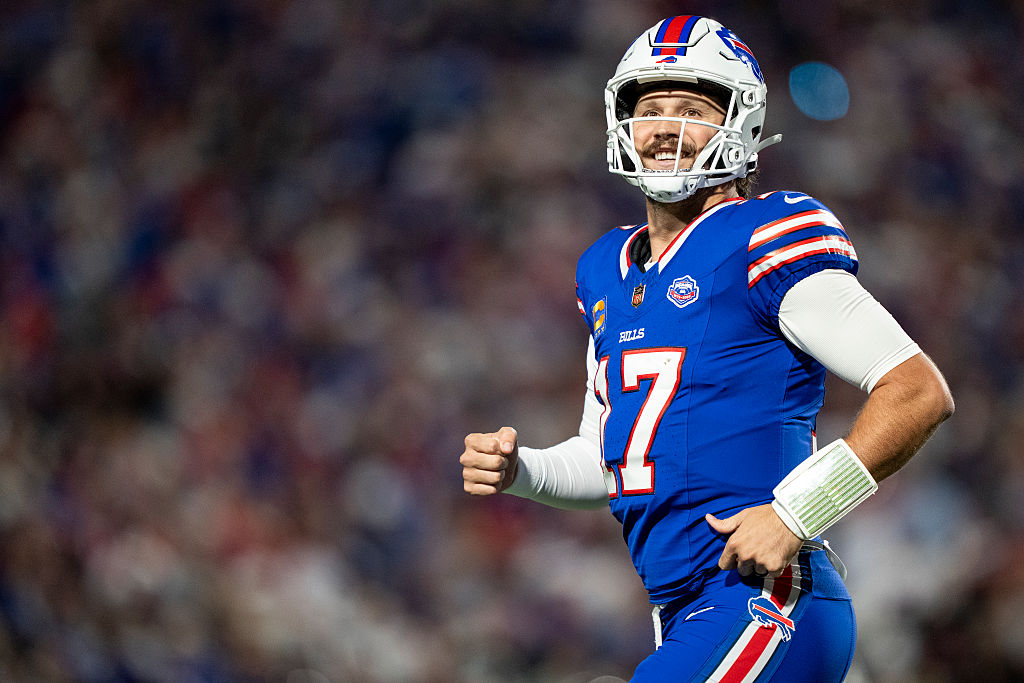
And of course this will be the first time in history the BILLS win a Super Bowl. Josh Allen is too handsome, he should be holding the Lombardi.

Bills 35 – Rams 31

ORCHARD PARK, NEW YORK – SEPTEMBER 7: Josh Allen #17 of the Buffalo Bills celebrates after a touchdown during an NFL football game against the Baltimore Ravens at Highmark Stadium on September 07, 2025 in Orchard Park, New York.
(Photo by Michael Owens/Getty Images)

Got a Song Stuck in Your Head? This 40-Second “Earworm Eraser” Might Save You

Getting a song stuck in your head is annoying. It can even be maddening. But the internet might have just delivered a fix at exactly the right time.

There is a 40-second audio track floating around online called the Earworm Eraser, and its entire purpose is to help remove songs that are stuck in your head. Not replace them. Not remix them. Just evict them entirely.

The idea behind the Earworm Eraser is pretty simple, and kind of clever. Instead of giving your brain another catchy tune to latch onto, the track constantly shifts tempos, time signatures, and musical styles. Just when your brain starts to settle in, it changes again. And again. The result is something your brain cannot really grab onto long enough to turn into a new earworm.

In other words, it’s musical chaos, but intentional musical chaos.

The Earworm Eraser is available on YouTube, and the comment section reads like a support group for people who accidentally listened to “All I Want for Christmas Is You” one too many times. Plenty of listeners swear it worked almost immediately. Others say it did absolutely nothing for them. So yes, results may vary.

Still, there is something fascinating about how many people are desperate enough to try it. Earworms are a real psychological thing, often triggered by repetition, stress, or even boredom.

The Earworm Eraser is not claiming to be science-backed therapy or a guaranteed cure. It is more of a harmless experiment that takes less than a minute of your life. Worst case scenario, it does nothing and you are still stuck singing the chorus in your head. Best case scenario, sweet mental silence.

The Top “Soft Skills” That Could Land You a Job

If you’re planning to job-hunt in 2026, polish up that resume – but don’t forget to brush up on your people skills too.

ResumeTemplates.com polled over 1,000 hiring managers and found that “soft skills” are no longer just a nice bonus. Even if you’re overqualified on paper, they could make or break your chances of landing that next gig.

While “hard skills” refer to job-specific knowledge, soft skills include traits like teamwork, communication, and time management. And in today’s workplace, they matter. A lot. In fact, 62% of managers say hard and soft skills are equally important, and 24% go even further – saying soft skills now outweigh the rest.

So, what should you work on if you want to boost your hireability? According to the survey, here are the top 10 soft skills hiring managers are most drawn to:

  1. Good communication: This includes being clear and concise in emails, listening well, and generally not sounding like you’re typing with oven mitts on.
  2. Professionalism: Yes, this is still a thing – apparently, some younger applicants have never heard of it. One expert noted that Gen Z’s “more laid-back attitude” could be the reason professionalism ranks so high now.
  3. Time management: Can you actually meet a deadline without five reminder emails and a last-minute panic attack?
  4. Accountability: Own your wins and your losses.
  5. Resilience: The ability to bounce back when things go sideways.
  6. Problem-solving: Can you troubleshoot without spiraling into existential dread?
  7. Critical thinking: This one’s about thinking beyond the obvious, and also knowing when an idea is just plain bad.
  8. Attention to detail: Because “teh best condidate” probably isn’t the best candidate.
  9. Collaboration: Work well with others or risk becoming the office cautionary tale.
  10. Adaptability: Roll with the changes, especially with AI shaking up just about every industry. Leaning in and learning to use it well could be your secret weapon.

Bottom line? Your resume might say you can code in 12 languages. But if you can’t play nice in the digital sandbox, that job might go to someone who can.

So start practicing now – and maybe don’t begin that concise email with “per my last message…”

The Words We Keep Googling Because Spelling Is Hard

If you’ve ever Googled a word to figure out how to spell it, congratulations, you are extremely normal.

According to Google search data shared by Mental Floss, millions of people are quietly doing the exact same thing every single month. And yes, the words tripping us up are words we use all the time.

The most misspelled, most Googled-for-spelling word is restaurant. Americans search for the correct spelling an average of 95,000 times a month. The main problem seems to be that sneaky “A-U” in the middle. You know the word. You have eaten there a thousand times. Your fingers still freeze halfway through typing it.

Right behind it is pneumonia, which makes sense because it starts with a silent “P” and then immediately throws an “E-U” at you for no reason. English really said, “Good luck,” and walked away.

Third on the list is appreciate. People constantly second-guess how many P’s it has and whether there is a C or an S hiding in the middle. It does not help that spellcheck sometimes waits a beat before saving you, just long enough to make you feel judged.

Here are the Top 10:

1.  Restaurant.  We google the spelling an average of 95,000 times a month.  The part that trips a lot of us up is the “A-U” in the middle. 

2.  Pneumonia.  There’s a silent “P”, and an “E-U” in there.  

3.  Appreciate.  People forget how many “P’s” there are, and whether there’s a “C” or an “S” halfway through.

4.  Receipt.  Remember, it’s “I” before “E” except after “C.”  

5.  Beautiful.  Tough because it’s got three vowels in a row.  (When in doubt, think of “Bruce Almighty” . . . B-E-A-UTIFUL.)

6.  Niece.  People can’t remember if it’s an “I-E” or an “E-I”.  

7.  Maintenance.  We forget where the “A’s” and “E’s” go.  

8.  Bougie.  (pronounced booj-ee)  Like, “You bought the expensive champagne?  Wow, you’re so bougie.”  

9.  Diarrhea.  You don’t have to know how to spell it to have it.

10.  Congratulations.  We google it a lot, partly because we write it on Facebook so much. 

The Average American Begins to Notice Aging at 42

When it comes to your health, your 20s and early 30s are basically a free trial period…

Eat garbage, down a few beers on work-nights, sleep four hours, and somehow wake up feeling fine. But after that? You’re just doing whatever you can to delay your official membership in the “aches and pains” club.

A study found that the average American starts noticing the signs of aging at 42. Which feels optimistic, honestly. Most people said they were at their peak health around 34… and then it’s a slow descent into more exhaustion, supplements, and doctor visits.

Not everyone was so lucky, though.

15% of people said they started spotting the warning signs before 35… which is cruel, considering they (or their friends) were probably still getting carded at bars.

And this isn’t about a few gray hairs or crow’s feet. The telltale signs include things like joint pain, higher blood pressure, slower metabolism, random weight gain, and the occasional “chronic issue” (which sounds like something your back develops after sitting wrong once).

By age 39, most people start tweaking their health routines to, you know, not die sooner. Translation: swapping shots at the bar for green smoothies and pretending yoga is fun.

You Should Listen to 78 Minutes of Music a Day for Your Mental Health

If you are looking for an easy, enjoyable way to boost your mental health, the answer might already be in your headphones.

A new study says listening to music every day can seriously improve how you feel, and there is even a recommended daily dose. According to the British Academy of Sound Therapy, the magic number is 78 minutes of music per day to help maintain good mental health.

That might sound oddly specific, but the idea is simple. Different types of music support different emotional needs, and mixing them together creates the biggest benefit.

The study breaks those 78 minutes into categories.

  • To start, about 14 minutes of uplifting music can help boost happiness and put you in a better mood. Think songs that instantly make you smile or sing along, even if you are a little off-key.
  • Next comes 16 minutes of calming music to help you relax. This is the stuff you might play while winding down, commuting, or trying to shut your brain off after a long day.
  • Another 16 minutes should be whatever music helps you work through sadness. That could be emotional songs, comfort tracks, or anything that helps you process feelings instead of bottling them up.
  • You also need 15 minutes of motivating music to help with focus and concentration. This is your productivity soundtrack, the kind of music that makes you feel like you can take on your to-do list without screaming into a pillow.
  • Finally, there are 17 minutes of music chosen specifically to help manage anger, whether that means aggressive songs you can vent to or calmer tracks that help you cool off.

The good news is you do not have to hit all 78 minutes every single day to see benefits. Researchers say listening to just 11 minutes of music a day can still have therapeutic effects. And if you are really short on time, even five minutes of music can boost your happiness.

That makes this one of the most realistic wellness recommendations ever. No gym membership, no meal prep, no complicated routine. Just press play. Whether it is in the car, while cooking, or during a quick break at work, those minutes add up.

So if anyone asks why you are always listening to music, you now have a scientific excuse. You are not procrastinating. You are maintaining your mental health. And according to the experts, that playlist is basically self-care.

Exit mobile version