Get ready to rhyme your way through all 50 states. A brand-new Dr. Seuss book is hitting shelves next summer, just in time for America’s 250th birthday.
It’s called“Sing the 50 United States!” and stars the one and only Cat in the Hat, who’s trading in his usual antics for a musical geography lesson. The book will help kids (and probably some adults) learn the names of every U.S. state, Dr. Seuss–style.
Even though the book’s new to us, it’s actually an old treasure that was recently rediscovered. A complete manuscript was found in Dr. Seuss’ archives in San Diego, along with a cover sketch and his own notes on the art direction. Think of it like opening a time capsule from the mind of Theodor Seuss Geisel himself.
Dr. Seuss Enterprises CEO Susan Brandt said in a statement, “Uncovering a new work from Ted is like finding a time capsule of his imagination. ‘Sing the 50 United States!’ celebrates his boundless creativity, genius with words, and enduring ability to inspire young readers everywhere.”
The book will be released June 2nd, 2026, but it’s already available for preorder wherever books are sold. There will also be a special music video to go along with it on the Dr. Seuss YouTube channel.
If this sounds familiar, that’s because it’s not the first time a posthumous Dr. Seuss book has been discovered.
The last one, “What Pet Should I Get?”, came out in 2015, nearly a quarter-century after his passing in 1991.
Dr. Seuss’ stories have always found ways to spark joy and curiosity across generations, and this latest surprise should be no different. With the Cat in the Hat back on the scene and a patriotic singalong to boot, this feels like a perfectly Seussian way to celebrate America’s big milestone year.
If you’re a ghost looking for a change of spooky scenery this Halloween, we’ve got good news: there’s data to help you decide where to haunt next.
A new ranking of the best U.S. cities for ghosts considered everything from the number of cemeteries per 100,000 residents to haunted houses, ghost tours, vacant housing units, and even “search interest in ghosts.”
So, where should a restless spirit settle down? According to the study, Savannah, Georgia is the top spot for ghosts to call home. It’s basically the Beverly Hills of the afterlife, thanks to its famously haunted mansions, moss-covered cemeteries, and centuries of eerie history.
Here’s the Top 10:
Savannah, Georgia
Charleston, South Carolina
New Orleans, Louisiana
Pittsburgh, Pennsylvania
Richmond, Virginia
Birmingham, Alabama
Las Vegas, Nevada
Cincinnati, Ohio
Philadelphia, Pennsylvania
Baltimore, Maryland
And if you’re more of a “modern ghost” who wants a city with good Wi-Fi and cold brew options, the next 10 include Nashville, Miami, Orlando, Boston, Detroit, Tampa, Norfolk, Virginia, Atlanta, Kansas City, and San Francisco.
Just don’t be too shocked at San Francisco’s housing prices… even the undead might think twice before spending $23 for a breakfast burrito.
New York City is #23. It has a lot of perks, but also the Ghostbusters. Or at least it did in the ’80s.
From spooky Southern charm to abandoned rowhouses with “character,” it seems America’s spirits have plenty of haunting hotspots to choose from this Halloween. If you hear footsteps in an empty hallway or a whisper in the wind, don’t be scared… your city might just be ghost-friendly.
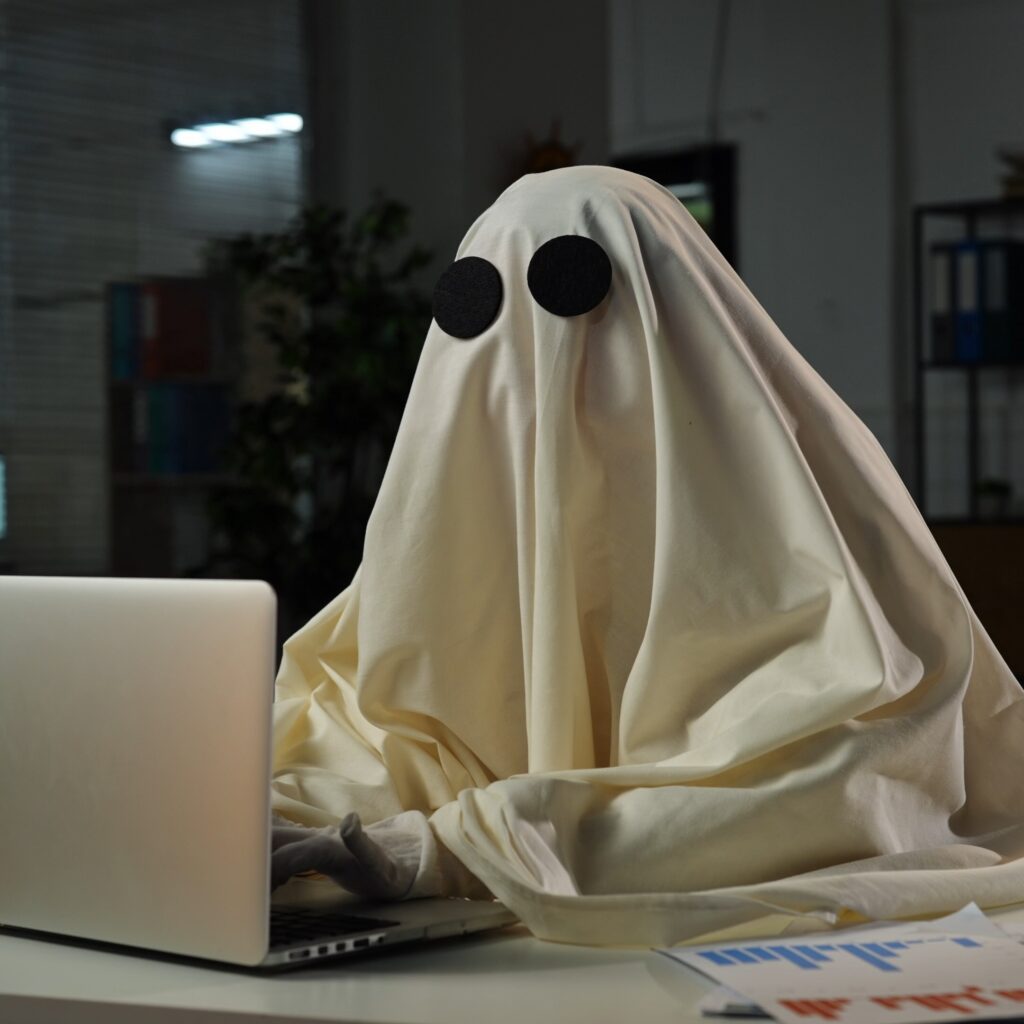
A spooky figure draped in a sheet works on a laptop in a dimly lit office, surrounded by office supplies. SSUCv3H4sIAAAAAAAACpxX3a6rKBS+n2TeYcfraQKoIOdVJnOBiMpUxQB2pznZ7z5LW7uV1eSczF1dfF0/H+uPn3/+8fGR1SpYnf34+Ll+wbcdhiVEr6J1E4jJX0+5N1Nj/FFy8zknR4Gyxy/T2Oi8VcNRWKuo+0mNBoTTMgyr+Gs7zEJUcQkmHHwJ/RKj8SE6fQUx3bU0ZnbBxrl30YXjgWpcbRCcsty3R8HspqY8KfRGjSHazS96cEqraDqI4uTWTtnfj++P/WA7hH/AUZY9VT/iWOpNtoseyv/XPx8//nkF3JlJ31ffvg5eezMY9aDy6WMmmJC8VeYiJWkvhSjZpSpNccmF5nlb5rIh9WbloTq7fgLx4zHqrnchHqPOKOEFE1nikmtbq80JyAmnMsWF3pizPk45JSnss7cx0cZoVaawXg2D+zRmSjRWBEE1xLGMqYeixKadvyaoQtIUNag5ujn1MK9S3OztlMTLGEfehdl6m+AIKXmK6yDPF59EQUuB/Gtth3BSVPg+7NC7xUDBnbE5Ech477x3PnGSFigYpyMU5BlImSQSWdeDi30adZFjw4Nt1D1RmFOcXlHVQ3rHDLMzo4xhEqX0J9wIYpojVrQ3Zr6nQUiEG90UoLpOQAF2kXNbyQ1JtCTnDCVX0Mrff30f9aC21nhKVYFYrgHVebdMzRkL0Yh3RRJm9TsVP0JfXs6VkueUyALGCKrRcTReP6bHLwqwsSPKWETQYLs+2qk7k17IdwXo3PXMpYCmiQJXC3SRJHlYJRGZ66hK7FJCCWPIcFwa65J4S44z28AIdYPr0gsvKXuTausUPgMFz1FOxvucegk5XqGop5XHlG7sY9BmSjOiJIgbmBTPPeNUphg4uZsZ4jngivCyQA1iGXFjKlE6jPe1AlGt4nihZxtvkUryps8uHrhGrRagKLsbE2yH+g5BLKo4ujD3JtEpBJcMT4TZJ2OI0gIoetOlYLm72YTNlXbkaFThmmZujruPmW7Wu2k06YCDcsX1ZWLSBNb5hky3S0IQKMO7Rv2v0WebkhcSKVP6TcS0qAoO/QeBvVdTZ3A0LOe4ur3TJoTU1RKlhx1VZyf1e+kO+xs2L6isvnk6rHvq2Tf2Te3mtBpWl/IjyM7Kw5K77YoPEWwk+lH0uwRm8DaXdk0aZkDcyiRj0M9fzdS5+TleW7BkvpewEJ5TY5MfzGt4VLjxYGpycVtQn/tu1sCmvX7SPJeCFrIQRZETKRjJju+D3oKezaPdx2UenGrMavS1TaOXA+y7XJQV3zf+rQiTR8SOyb8x5/fEDii+Aa+nxZuz1ytjP+MH46cHxw4Qj/PjKr8Zt83x2uwaKvBEWl6T6sIb2lyKQpOLklJfhGKwlfNWsHqt06//AAAA//8DAE5sgM7mDQAA
Horror fans, sharpen your stakes and hide your kitchen knives, because “Entertainment Weekly” has done the impossible: They’ve ranked the 25 Best Horror Villains of All Time.
Predictably, Count Dracula swooped in and claimed the top spot, proving that sometimes the classics still have the sharpest bite.
Right behind him is everyone’s favorite refined cannibal, Hannibal Lecter, at #2. Frankenstein’s Monster rounded out the top three, showing that misunderstood monsters never go out of style.
The rankings highlight how horror villains have evolved — from gothic monsters and psychological terrors to supernatural slashers and modern nightmares. But no matter how high-tech horror gets, it seems nothing beats a vampire with a cape, a taste for blood, and a flair for the dramatic.
Here’s the full ranked list with quick notes on what makes each one unforgettable (or downright nightmare fuel):
Count Dracula – The original vampire icon: suave, immortal, and forever thirsty.
Hannibal Lecter – A charming genius with a taste for the finer things… and people.
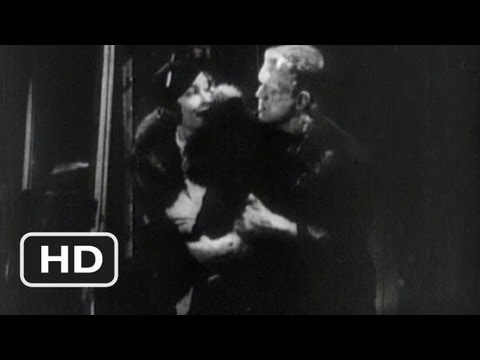
Frankenstein’s Monster – A tragic creation who proves that humans can be the real monsters.
Norman Bates (“Psycho”, 1960) – The mild-mannered mama’s boy who redefined “mommy issues.”
Michael Myers (“Halloween” franchise) – Silent, masked, and unstoppable — evil in its purest form.
Candyman (“Candyman” franchise) – A vengeful spirit with a hook for a hand and a killer backstory.
Ghostface (“Scream” franchise) – The ultimate meta slasher who made horror self-aware (and terrifying).
Freddy Krueger (“A Nightmare on Elm Street” franchise) – A wisecracking dream demon who makes bedtime deadly.
Godzilla – The king of monsters: sometimes hero, sometimes villain, always destructive.
Pennywise (“It” franchise) – A shape-shifting clown who feeds on fear — and occasionally entire towns.
Jason Voorhees (“Friday the 13th” franchise) – Hockey mask, machete, and a serious grudge against camp counselors.
Carrie White (“Carrie”, 1976) – The bullied teen who turns prom night into an inferno of revenge.
Bruce the Shark (“Jaws”, 1975) – Proof that nature can be every bit as terrifying as the supernatural.
The Invisible Man – Science gone wrong; the danger of power without morality.
Pinhead (“Hellraiser” franchise) – A leather-clad demon who brings pain, pleasure, and plenty of pins.
Pazuzu (“The Exorcist”, 1973) – The demon that made everyone terrified of Ouija boards and pea soup.
The Phantom (“The Phantom of the Opera”, 1925) – The original tortured romantic villain, haunting opera houses for love.
If you’re the kind of person who loves a little fright with your playlist, Billboard just dropped the ultimate list for you: 20 of the spookiest music videos of all time.
Some of the picks make perfect sense, others might leave you thinking, “Wait, that song?” But hey, sometimes it’s the cheerful ones that hide the creepiest visuals.
The lineup includes everything from pop icons like Taylor Swift and Sabrina Carpenter to horror legends like Rob Zombie and Ozzy Osbourne. Whether it’s the zombie dance that defined a generation or a surreal fever dream that makes you question your reality, these are the videos that prove music and horror go hand in hand.
Here’s Billboard’s spooky countdown (in no particular order):
“Thriller” – Michael Jackson
“All Good Girls Go to Hell” – Billie Eilish
“Look What You Made Me Do” – Taylor Swift
“Everybody (Backstreet’s Back)” – Backstreet Boys
“The Dead Dance” – Lady Gaga
“Closer” – Nine Inch Nails
“Come to Daddy” – Aphex Twin
“Bark at the Moon” – Ozzy Osbourne
“Taste” – Sabrina Carpenter
“Demons” – Doja Cat
“Dinner & Diatribes” – Hozier
“Disturbia” – Rihanna
“Dragula” – Rob Zombie
“Everybody Scream” – Florence + the Machine
“Grave” – Kid Cudi
“How Low” – Ludacris
“All Nightmare Long” – Metallica
“Emperor’s New Clothes” – Panic! At the Disco
“Y Control” – Yeah Yeah Yeahs
“Mary Jane’s Last Dance” – Tom Petty & the Heartbreakers
Michael Jackson’s “Thriller” is obviously the granddaddy of all spooky music videos, but newcomers like Sabrina Carpenter’s “Taste” and Lady Gaga’s “The Dead Dance” prove that the genre is still thriving. There’s everything from undead choreography to psychological horror to straight-up weirdness.
So, if you’re building a Halloween playlist or just want to creep yourself out on a random Tuesday night, this list is your new binge.
Before “Smells Like Teen Spirit” blew up MTV and changed rock forever, Nirvana’s first moment on the airwaves came from something a lot scrappier: their 1988 cover of “Love Buzz.”
The song, originally by Dutch rock band Shocking Blue, was the band’s first studio recording to ever get radio play—and it marked the beginning of grunge’s slow climb from Seattle basements to global dominance.
Back in ’88, Sub Pop Records had just pressed a few test copies of the band’s debut single. One of those landed in the hands of Scott Vanderpool, a local DJ and Sub Pop insider. The minute it hit his mailbox, Vanderpool threw it on his Seattle radio show. That spin made music history, even if nobody realized it at the time.
That very same test pressing—a 7-inch vinyl stamped with the Sub Pop logo—is now up for auction.
As of last night, bidding had already hit $8,500 (and you might want to check if it’s climbed since). It’s a rare piece of early Nirvana lore, representing the moment they went from garage band to on-air artists.
“Love Buzz” went on to appear on Nirvana’s 1989 debut album Bleach, the raw, heavy record that first showcased Kurt Cobain’s growl and the band’s signature mix of punk energy and melodic hooks.
It might not have topped charts, but Bleach built the underground buzz that set the stage for Nevermind just two years later.
For fans of vinyl, Sub Pop, or Seattle’s legendary grunge scene, this auction isn’t just about owning a record—it’s about holding a piece of rock history. Not bad for a $1 single from a tiny indie label that once just hoped people would listen.
If you’ve ever felt like your paycheck vanishes the second it hits your bank account, you’re not alone—and now there’s data to prove it.
According to a new report, the average American burns through nearly 48% of their paycheck within the first 48 hours of getting paid. Even more shocking, a full 35% is gone in the first 12 hours. So yeah, your bank account probably isn’t broken. It’s just trying to survive.
This paycheck vanishing act is especially common among Millennials, who, for the record, are not blowing it all on impulse buys or whatever collectible is trending this week. The bulk of that spending goes toward real-life grown-up things: groceries, bills, rent, credit cards, and other must-pay-now obligations.
In fact, over half of all people surveyed said they immediately use their paycheck to knock out the basics as soon as it lands.
It’s not necessarily reckless spending—it’s just the reality of living paycheck to paycheck in a world where bills show up constantly, but paychecks don’t.
Most workers in the U.S. get paid every two weeks, yet expenses don’t politely wait their turn. Some 32% of people also take care of smaller charges right away, like utilities or subscription fees, which seem to hit harder when they all pile up at once.
That paycheck timing mismatch is a big part of the problem. The study found that 62% of people believe getting paid more frequently—even daily—would significantly improve their financial wellness and lower stress levels. Think of it as the difference between feeding your wallet a steady diet or making it fast for 13 days and then binge on payday.
So next time your checking account looks like it’s been mugged within hours of payday, know this: It’s not just you.
The first 48 are financially brutal for just about everyone.
And no, unfortunately, you can’t call the cops to investigate the disappearance of your direct deposit. But you can maybe set a calendar reminder to not spend 35% of it before breakfast.
The phrase “Horror Sequel” can be a bad word. A really bad word. No, worse than that; a slur. The kind of horrific, dehumanizing slur you only hear from the mouth of a Quentin Tarantino character or a popular country singer.
But sometimes it’s a song. A transcendent lilt emanating from the golden throat of the most elegant songbird, directly into your undeserving earholes. Here are 10 of those cases:
“The Texas Chainsaw Massacre 2” (1986)
The only other film in the franchise directed by the original mad genius Tobe Hooper, and it shows. This movie gets several things right that few other “Chainsaw” flicks do, including Leatherface himself.
While so many sequels make him out to be a malicious, hulking, serial-killing monster, Leatherface is actually a frightened, confused child, who really only kills because he’s told to; or because he’s frightened by a sudden intrusion into his (slaughter)house.
“Chainsaw 2” takes Leatherface’s arrested development to the next level, by introducing a sexy DJ to oil up his blade. Add to that the career-making performance of horror hero Bill Mosely as Chop Top, and a hero played by Dennis FREAKIN’ Hopper, and you’ve got GOLD, baby.
“Troll 2” (1990)
I really believe the world would be a better place if everyone watched schlocky Italian exploitation movies from the late ’60s through the mid-’90s. I have no evidence to back that up, and no theories as to why it could be true. I just believe it.
Which is why “Troll 2” should be required viewing in every high school in America. This is a sequel in name only. It’s not remotely related to “Troll” (1986), which starred Sonny Bono and featured a character named Harry Potter and his son Harry Potter Jr.
Bad acting, bad special effects, and a ridiculous plot make “Troll 2” an absolute gem. One of the stars even made a documentary about it called “Best Worst Movie“ . . . and that title is pretty accurate.
“Halloween 3: Season of the Witch” (1983)
After “Halloween 2”, producers John Carpenter and Debra Hill were approached to produce a third installment. They agreed on the condition that they could retire Michael Myers, and thus, “Halloween 3” was born.
An evil toymaker produces Halloween masks that cause the wearers’ heads to rot like months-old pumpkins as snakes and all manner of insects escape from their upper orifices. But only when they watch the “big giveaway” on Halloween night, which is promoted incessantly with one of the most annoying ad campaigns ever. Yes, even more annoying than the Limu Emu. and Doug.
Unlike every “Halloween” movie that followed, “Halloween 3” is original, it’s creepy, and it stars the great Tom Atkins, who you may remember from “Night of the Creeps”, “Escape from New York”, “The Fog”, and “Creepshow”.
What’s the point of this horrible plot to kill millions of children on their favorite night of the year? To return Halloween to its bloody, Celtic origins. As our villain explains, “We don’t decide these things, the planets do.” As motivations go, that’s pretty damn cool.
Alas, the movie tanked, and everybody cried that Michael Myers wasn’t in it, so instead of an unique story every Halloween, we got 40+ years of bland, repetitive sequels. Thanks a lot, America.
“Jaws 2” (1978)
There are very few movies in the history of movies that can hold a candle to the original “Jaws”. And, full disclosure, “Jaws 2” doesn’t either. But it’s a fun ride and a damn good monster movie, not to mention that only other “Jaws” movie that’s worth your time.
Yeah, it’s completely implausible that another giant, killer shark would show up at the same beach where the first one went on a killing spree three years earlier. As one expert tells Chief Brody, “Sharks don’t take things personally.” (A line that became laughable in retrospect, after “Jaws 4” came out less than a decade later.)
But who cares? It’s a blast. It even presages the late ’70s / early ’80s slasher boom, focusing as it does on a group of terrorized teenagers stranded on a makeshift raft fashioned from their wrecked sailboats. The only difference is, the monster is killed by Brody once again, and not a by final girl whose abstinence from marijuana and premarital sex made her morally superior to her peers.
Oh, and did I mention that the shark sinks a flippin’ helicopter???
“Evil Dead 2” (1987) and “Army of Darkness” (1992)
One of the most brilliant and subversive things about the original “Evil Dead” trilogy is that each installment represents an almost entirely different film genre . . . and fans have followed the saga of Bruce Campell’s incompetent demon fighter Ash just as avidly through each one.
“The Evil Dead”, released in 1981, is balls-out, unrelenting horror that just barely hints at the comedic turn the next two movies would take. “Evil Dead 2” threw in screwball comedy, but kept things bloody. It ended up as one of the keystone films in the “splatstick” trend of the ’80s that also included “Re-Animator”, “Return of the Living Dead”, and “The Toxic Avenger”.
“Army of Darkness” kept things R-rated by throwing in some F-bombs and a flash of boob, but other than that, it’s a swashbuckling medieval comedy-adventure with very little blood and a lotta yuks. Unlike its predecessors, this was an actual studio film, and they even got Danny Elfman to record a song for it.
“Evil Dead” also unique in that, as Mr. Campbell often points out, it’s possibly the only horror franchise where you root for the HERO, not the villain. Hail to the king, baby.
“Psycho 2” (1983)
A sequel to one of Alfred Hitchcock’s most celebrated films? Twenty-three years later? Without Hitchcock? This shouldn’t have worked, and yet somehow it delivered in a big way.
Anthony Perkins returning as Norman Bates is a huge reason why. Norman has finally been released from the nuthouse, and he’s trying to turn his life around. But suddenly, “Mother” starts sticking her nose in his business again.
Also not willing to let go is Lila Crane, played once again by Vera Miles, who’s determined to see Norman back in custody.
This one’s got a fantastic twist ending that’s worthy ol’ of Hitch himself.
“Dawn of the Dead” (1978)
Look up 10 different lists of the best zombie movies. Chances are, “Dawn of the Dead” will be on all of them . . . and #1 on most of them.
George A. Romero invented the modern movie zombie with 1968’s “Night of the Living Dead”, and lost absolutely no steam with this sequel a decade later. Everybody calls it a critique of American capitalism, and it is. But it’s okay if you just enjoy it as mindless, splatterific fun.
This is also the film that put FX master Tom Savini on the map as the go-to guy for gore well into the ’80s (because fuck CGI).
Tragic Epilogue: The Monroeville Mall outside Pittsburgh, where the movie was filmed, is still there. But not for long. Walmart bought it, and they’re demolishing it to build a “retail and commercial destination.” So if you wanna visit this piece of film history, which also houses the Living Dead Museum and bronze bust of Romero, make your plans ASAP.
“Exorcist 3: Legion” (1990)
Author William Peter Blatty and director William Friedkin had nothing to do with 1977’s “Exorcist 2: The Heretic”, and it was a shitshow. But Blatty himself directed “Exorcist 3” from a screenplay he wrote, based on his own novel. And it kinda slaps.
No Linda Blair or Ellen Burstyn this time around, but Jason Miller returns as Father Karras. If you’re wondering how that’s possible, you’ll just have to give it a watch.
Lieutenant Kinderman is also back, only this time played by George C. Scott, taking over for the late Lee J. Cobb. This time he’s trying to solve a series of murders that seem like they’re being committed by residents of an old folks home, and he meets an old friend along the way. Even a tacked-on exorcism that the studio forced Blatty to film doesn’t take too much away from the story.
You can disagree with me on the merits of this film, but one thing that can’t be denied: It has one of the best jump scares ever filmed.
“28 Years Later” (2025)
“28 Days Later” is a masterpiece. “28 Weeks Later” is okay. But “28 Years Later” is a return to something special. And it’s just the first part of a new trilogy.
There’s a message in here about British isolationism and societal regression, but what came to the forefront for me was the story of a son’s dedication to his mother, and a crazy guy, who turns out to be not so crazy, who helps them accept the inevitable.
Oh, and zombie dick. Massive, swinging zombie dick.
“Bride of Frankenstein” (1935)
Largely considered the first horror sequel, “Bride” is also one of the best. And if you ask me, it’s better than the original.
It’s a little scary, a little campy, a lot of fun, and yes, a little gay, thanks to Ernest Thesiger’s “coded” portrayal of Dr. Pretorius.
This, not the original, is also where you’ll find the classic scene of the Monster befriending the blind hermit . . . a scene that’s probably more famous in parody form in Mel Brooks’ “Young Frankenstein“.
Interestingly enough, the Bride herself, who’s not only the title character but also one of the most indelible movie monsters 90 years later, only appears for a few minutes. Just long enough to reject her intended mate, leading to the film’s explosive conclusion.
You go to Spirit Halloween expecting costume chaos, jump scares, and bad animatronics… not a live-action reboot of Jumanji.
But that’s exactly what shoppers in Plano, Texas got when a pet monkeyescaped inside the store and went full Tarzan for half an hour.
Witnesses say the monkey escaped from its owner and spent more than 30 minutes swinging from the rafters and poles. At first, shoppers weren’t sure it was even real… because, let’s be honest, Spirit Halloween is 90% fake body parts and motion-activated craziness.
The giveaway? This particular “animatronic” was wearing a diaper.
Apparently, the poor monkey got freaked out by one of the store’s creepy displays and bolted. Employees tried to wrangle it, but that went about as well as you’d expect. These are seasonal workers… not many of them have a PhD in zoology.
At one point, police were even called to the scene.
Nothing seemed to get the situation under control until the owner managed to lure the little guy down using the most Texas method possible: a cookie bribe.
No one was hurt, and the monkey made it out just fine… though several customers reportedly sprinted out of the store.
The cops confirmed there was never any danger to the public, but honestly, the mental image of a diapered monkey doing laps through Spirit Halloween might be the best accidental marketing campaign they’ve ever had.
MONKEY BUSINESS: A pet monkey wearing a diaper was caught on video swinging from the rafters inside a Spirit Halloween store in Plano, Texas. A store employee also told Storyful the monkey had gotten spooked by one of the store’s animatronic decorations. Ultimately, the monkey’s owner was able to entice it with a cookie and regain control. No injuries were reported to the animal or any shoppers. Credit: Arlene Pinkston via Storyful
What are the chances you celebrate Halloween by… seeing a real demon, not just the ones who show up at your front door, begging for peanut butter cups?
According to a new poll, 60% of Americans say they’ve had at least one paranormal experience.
That’s a lot of haunted basements. But don’t worry… only 7% claim to have seen a demon, so we’re still doing better than most horror movies.
Here’s what people say they’ve experienced:
35% have felt a presence or strange energy.
32% have smelled something weird with no explanation (so, either a ghost or a teenager’s gym bag).
31% have heard unexplained sounds or music.
26% have heard a disembodied voice or felt an unexpected chill.
16% have actually seen a ghost.
Interestingly, men are more likely than women to believe their paranormal encounters have scientific explanations, even if they can’t say what those are. (“It’s not a ghost, babe, it’s just… uh… atmospheric pressure or something.”)
In general, about 40% of Americans believe in ghosts, demons, and psychics, but only 6% believe in vampires and werewolves.
So we’ll talk to the dead, but we draw the line at “Twilight”.
Among the ghost-seers, 31% say their ghosts were good, 8% say evil, and 24% say neutral. So apparently, even in the afterlife, most spirits are just minding their own business.
Oh, and 7% of people say they can communicate with the dead… nbd.
Which probably explains why group chats get so weird around 3 a.m.
So yeah, next time you hear a bump in the night, it’s either your cat, a draft, or the 60% of Americans who apparently live in a haunted house.
Every fall, pumpkins take center stage… But here’s a fun twist that might mess with your mental produce aisle: pumpkins are technically fruits.
That’s right. According to Joe Masabni, Ph.D., a vegetable specialist and professor at Texas A&M, pumpkins fall squarely into the “fruit” category from a botanical standpoint. Why? Because fruits are what develop from the flower of a plant—and pumpkins do just that.
“Anything that starts from a flower is a fruit,” Masabni explains, turning our grocery store assumptions upside down.
So why do so many of us file pumpkins under “vegetables” instead?
It comes down to how we eat them, not how they grow. “We categorize foods by whether we eat them as a dessert, salad, or part of a meal,” Masabni said. It’s the same reason people commonly think cucumbers or tomatoes are vegetables. We slice them into salads or roast them with dinner—no sugar, no dessert plate—so we mentally label them as veggies.
Pumpkins are a bit of a culinary wildcard, though. Some people throw chunks of pumpkin into savory stews, others purée it into sweet, spiced pies. That mix of uses only adds to the confusion.
So, what exactly is the difference between a fruit and a vegetable, scientifically speaking? It all comes down to the flower.
Vegetables like lettuce, for example, never grow from a flower that turns into something edible. You harvest the leaves, and that’s it. Pumpkins, on the other hand, start as flowers that—after a little help from pollinators like bees—transform into the bright orange gourds we know and love.
This same flower-to-fruit process also applies to some other unexpected “vegetables” like tomatoes, cucumbers, eggplants, zucchini, squash, peppers, string beans, corn, and okra. Yep, they’re all technically fruits too.
Does it matter at the end of the day? Not really. Your pumpkin pie isn’t going to taste any different now that you know it’s a fruit.
But it is a great conversation starter for your next fall get-together. Maybe bust it out after dessert (fruit-based or otherwise).
“The fruit and vegetable debate is a fun one,” Masabni said. “At the end of the day, we want people to enjoy these plants as gardeners and at the dinner table.”
So now when you’re sneaking that second slice of pie, you can say you’re eating your fruit…






![Dawn of the Dead (1978) | Original Trailer [HD] | Coolidge Corner Theatre](https://i.ytimg.com/vi/Y_EviQj5tvA/hqdefault.jpg)