ZZZ- Old Home Page & Posts Page

Parents Snap Over 1,000 Photos in Their Baby’s First Year

A new poll from Horizon Organic reveals that today’s new parents are documenting their baby’s first year like never before—snapping an average of 1,000 photos, or about three a day.

The survey sheds light on how much parents cherish even the tiniest moments, capturing everything from sleepy yawns to the first gummy smile. But it’s not just about the photos.

The poll also found that parents are tracking an average of 48 different milestones in that all-important first year. Among the top three most anticipated: a baby’s first steps, first word, and first laugh.


This surge in documentation isn’t too surprising in an era when every smartphone is a camera and every cute moment is a potential social media post. But it also speaks to a deeper desire among parents to preserve fleeting moments that pass all too quickly.

While milestones bring joy, they can also stir up anxiety—especially when it comes to food. According to the same poll, 56% of new parents admit they’re already worried about their baby becoming a picky eater. For a brand like Horizon Organic, which focuses on healthy food options for kids, that concern hits close to home.

The results highlight just how intensely modern parenting has evolved. Where once baby books sufficed, now it’s digital albums, milestone-tracking apps, and curated Instagram highlights. And while the pressure to “capture everything” can be overwhelming, it’s clear that for most parents, it’s worth it to document every laugh, every stumble, and yes, every spoonful of mashed carrots flung across the kitchen.

In a world that moves fast, today’s parents are trying to freeze time—one snapshot at a time.

MLB Ballpark Food Goes Off the Rails with ‘Glizzilla’ and Funnel Cake Sundaes

Baseball season is back, and so is one of its most beloved traditions, wildly over-the-top ballpark food. From giant hot dogs to desserts that feel like dares, Major League Baseball stadiums are once again competing to see who can outdo everyone’s arteries.

This year’s lineup of absurd eats is already turning heads online, with fans sharing photos, reactions, and probably antacid recommendations. If you thought peanuts and Cracker Jack were the peak of baseball snacking, buckle up.


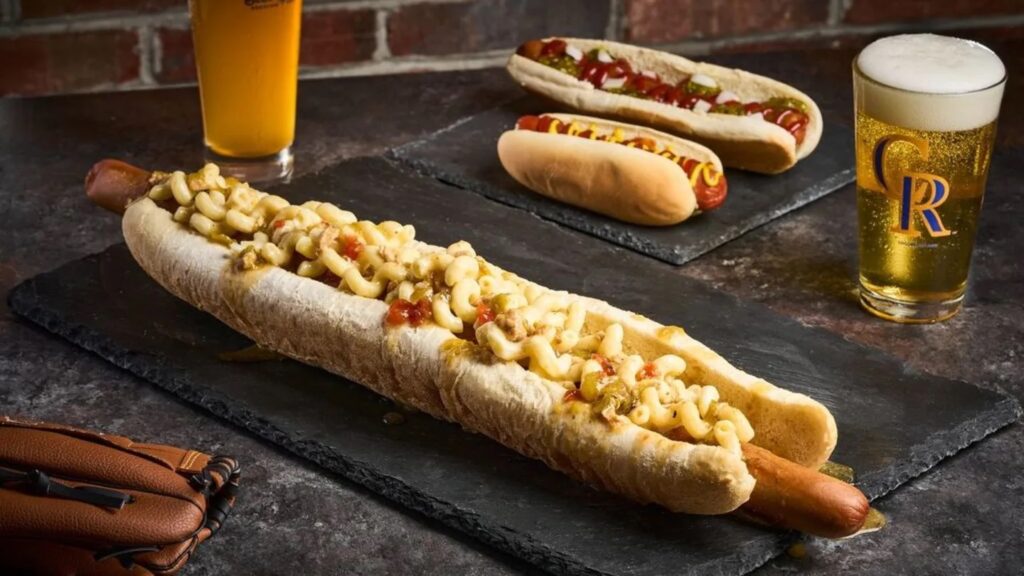
One of the biggest stars of the menu might be the “Glizzilla,” a two-foot-long hot dog served by the Colorado Rockies. Yes, two feet. It comes loaded with whatever toppings you can handle, and while it is technically “meant for sharing,” that feels like a suggestion, not a rule. Social media is already comparing it to a certain spaghetti scene from a classic animated movie, and honestly, that checks out.


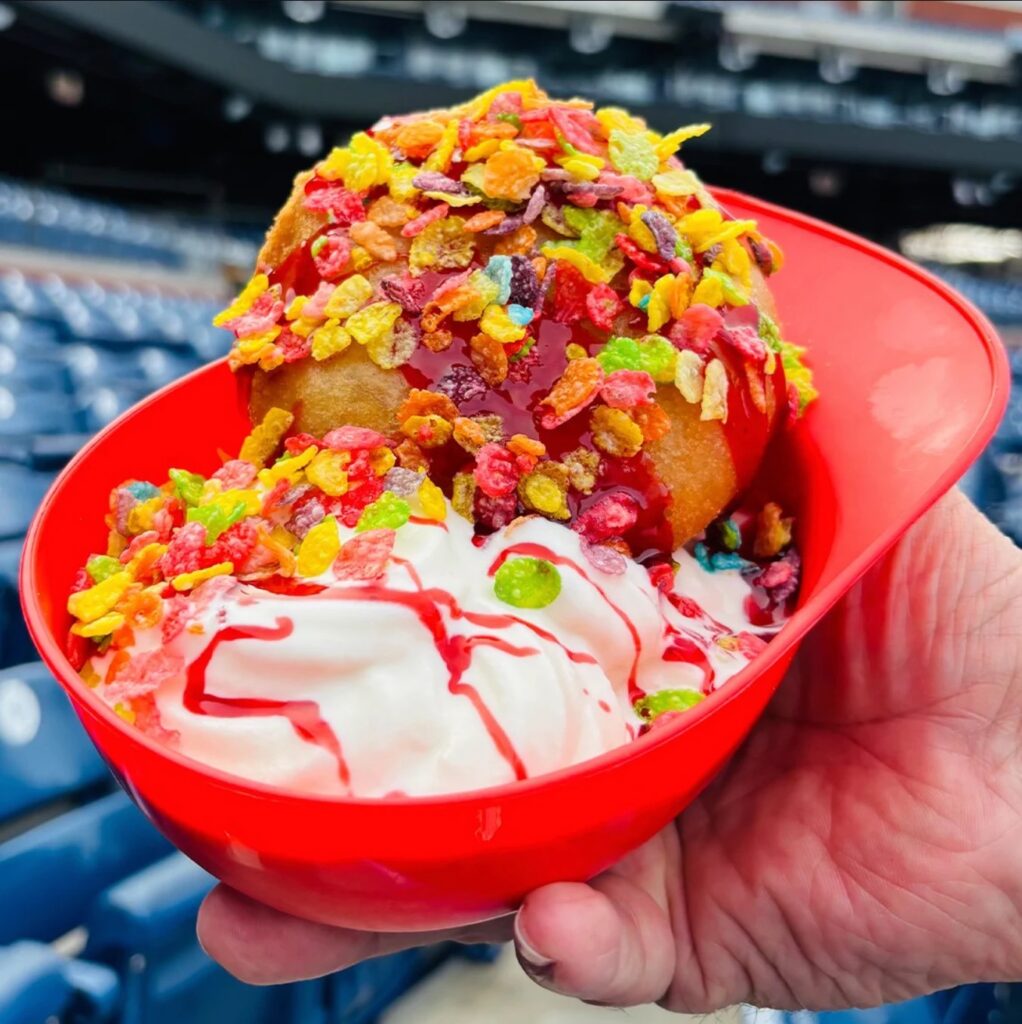
Over in Philadelphia, things take a sugary turn with the “Schwarbomb Sundae.” This dessert comes in a mini helmet and piles on ice cream, strawberry sauce, fruity cereal, and, because why not, a funnel-cake-fried Uncrustable. It is part carnival, part baseball, and entirely chaotic. Whether it is delicious or just impressive depends on your sweet tooth and your bravery.


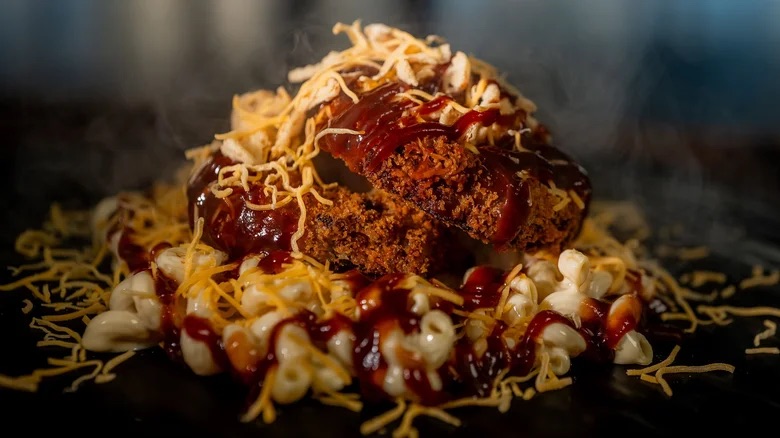
Not to be outdone, the Houston Astros are serving brisket doughnuts. That is exactly what it sounds like, brisket stuffed inside a doughnut, topped with barbecue sauce and mac and cheese. It is the kind of food that makes you pause, think, and then immediately try anyway.


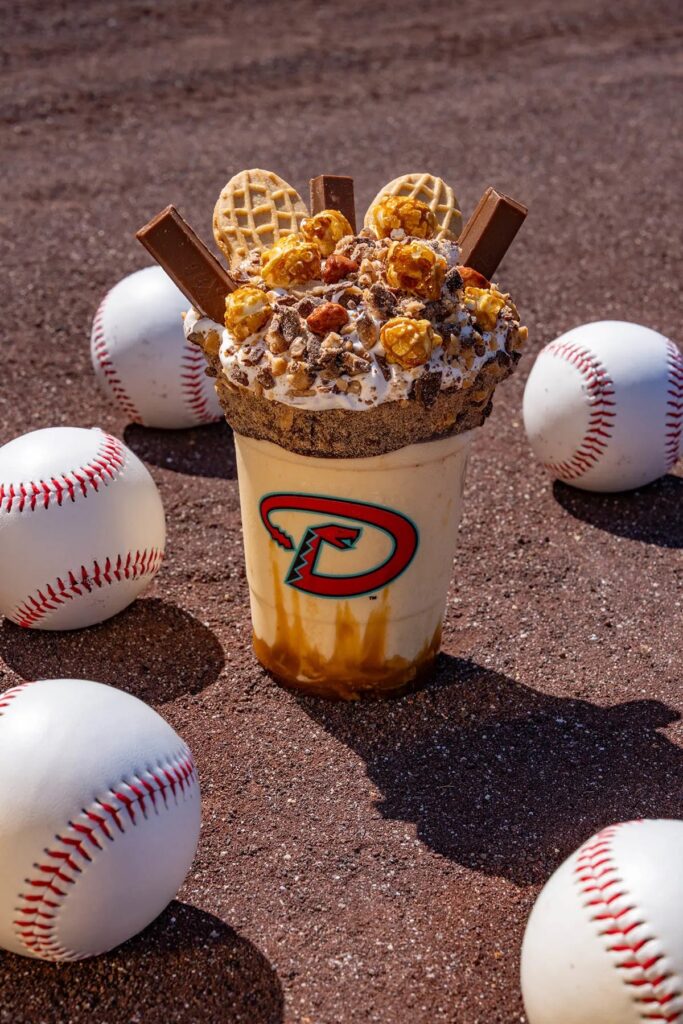
If you are more of a “drink your calories” person, the Arizona Diamondbacks have you covered with the “Take Me Out to the Ballgame Shake.” It is a milkshake loaded with whipped cream, peanut butter sandwich cookies, and Cracker Jack. It sounds nostalgic until you realize it might also double as a full meal.


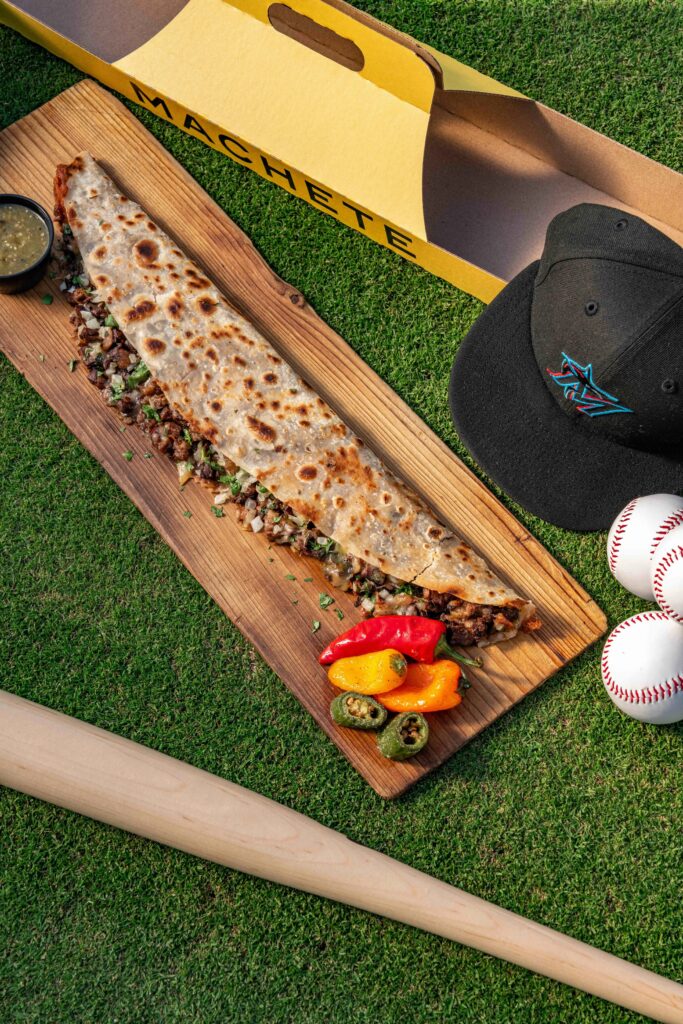
Meanwhile, both the Miami Marlins and Chicago White Sox are offering “The Machete,” a two-foot-long carne asada quesadilla that actually looks somewhat reasonable compared to everything else on this list. And for dessert lovers in Kansas City, the Royals have a s’mores quesadilla stuffed with Nutella, marshmallow fluff, and graham cracker crumbs, topped with strawberry pico de gallo for a sweet twist.


Ballpark food has clearly evolved into its own kind of entertainment. Whether you are there for the game or just the Instagram post, one thing is certain, nobody is leaving hungry. Or possibly, able to move very fast afterward.

Robot Dogs Guarding Data Centers? The Future Is Getting Weird Fast

Robot dogs guarding data centers might sound like something straight out of a sci-fi movie, but it’s already happening. As data centers continue expanding across the country to support growing A.I. demands, security is getting a serious upgrade, and yes, it includes four-legged robots on patrol.

According to a new report, some facilities are now using robotic dogs to help protect their infrastructure. These machines are about the size of a large dog, but instead of fetching tennis balls, they’re busy patrolling fences, inspecting equipment, and spotting potential problems before they turn into expensive outages.

So basically, less “good boy,” more “system alert.”

Robot dogs aren’t entirely new. They’ve already been used by first responders and even the military. But guarding data centers might be their most low-key assignment yet, even if it still sounds a little intimidating. Imagine hopping a fence and being greeted by a metal dog that doesn’t blink.

Of course, this level of tech doesn’t come cheap. A single robot dog can cost anywhere from $175,000 to $300,000. But depending on how you look at it, companies may still see it as a bargain. One robotics expert pointed out that a human security guard can cost around $150,000. So instead of hiring two guards, companies could pair one human with a robot and potentially save money.

Plus, robots don’t call in sick, don’t take vacations, and definitely don’t get distracted scrolling their phones.

If that wasn’t futuristic enough, there’s even more on the horizon. Researchers at an Australian biotech startup are exploring something called “biological data centers.” Instead of relying on traditional computer chips, these systems would use neurons grown from human blood stem cells.

To be clear, they’re not using actual people, but they are using human-derived brain cells to help power computing systems. Which somehow feels both fascinating and a little unsettling at the same time.

So while robot dogs are already roaming the perimeter, the inside of these data centers could eventually be powered by something that’s part human, at least on a cellular level.

The takeaway here is simple. The future of tech is arriving fast, and it’s bringing some very strange ideas with it. From robotic security guards to brain cell-powered computing, data centers are becoming a lot more than just rows of servers. And honestly, it might be a good idea to stay on their good side.

March Madness Rules: What NCAA Players Can and Can’t Do During the Tournament

March Madness rules, NCAA basketball restrictions, and tournament guidelines are about more than just what happens on the court. While fans focus on buzzer-beaters and busted brackets, players have to follow a surprisingly detailed rulebook that covers everything from fingernails to fashion choices.

Yes, really.

Every year, NCAA athletes competing in the tournament are expected to stick to strict guidelines that keep the games fair, safe, and, apparently, free of long nails and dangling jewelry.

Some of the rules make total sense. Others might leave you doing a double take.

For starters, players are allowed to fill out their own March Madness brackets, just like the rest of us. The catch, no money can be involved. Betting on games is strictly off-limits, and breaking that rule could come with serious consequences. So if you thought your office pool was stressful, imagine risking your eligibility over it.

When it comes to appearance, the NCAA keeps things pretty locked down. Jewelry is a no-go during games, and headwear is limited to specific types of headbands. Even small accessories like barrettes and bobby pins are not allowed, likely to prevent injuries during play.

Uniform rules also differ slightly between men’s and women’s teams. Men are required to tuck in their jerseys, while women typically are not, mostly because their jerseys are designed shorter.

Then there is the fingernail rule, which might be one of the more unexpected ones. Players have to keep their nails trimmed and not “excessively long.” They can still paint them, so there is some room for personal style, but length is where officials draw the line.

Some rules are more about gameplay and sportsmanship. Players are not allowed to lift or carry teammates, which sounds obvious until you picture a celebratory moment getting a little out of hand. There is also a strong emphasis on respectful behavior. Poor sportsmanship can lead to penalties, so keeping emotions in check is part of the job.

And finally, tobacco use is completely prohibited. No exceptions.

At the end of the day, these rules might seem quirky, but they are all part of maintaining fairness and safety during one of the biggest sporting events of the year. So while fans argue over brackets and Cinderella stories, players are busy making sure their jerseys are tucked, their nails are trimmed, and their focus stays on the game.

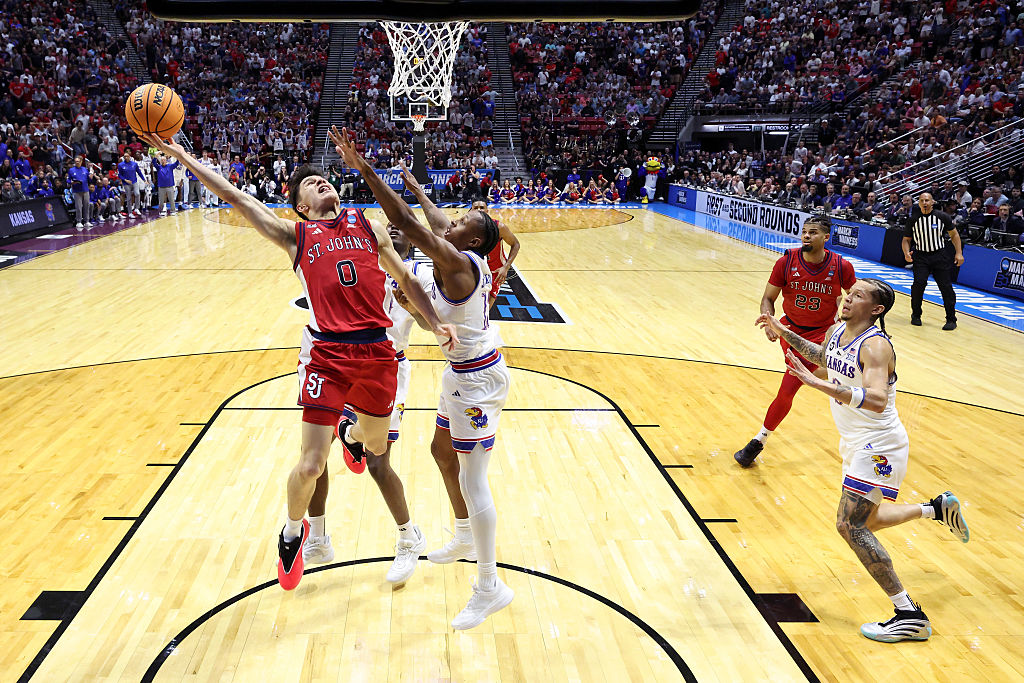
SAN DIEGO, CALIFORNIA – MARCH 22: Dylan Darling #0 of the St. John’s Red Storm shoots the ball against Elmarko Jackson #13 and Flory Bidunga #40 of the Kansas Jayhawks during the second half in the second round of the 2026 NCAA Men’s Basketball Tournament at Viejas Arena at San Diego State University on March 22, 2026 in San Diego, California. (Photo by Sean M. Haffey/Getty Images)

Humans Need Four Hugs a Day

How many hugs do you need a day? It turns out the answer might be more than you think, especially if you care about stress, mental health, and overall well-being. A viral claim making the rounds says humans need at least four hugs a day just to avoid anxiety and depression, and honestly, that sounds like a pretty good excuse to hug someone right now.

But that number might just be the starting point.

According to author Virginia Satir, the “hug quota” is a bit higher. She famously said…

“We need four hugs a day for survival, eight hugs a day for maintenance, and 12 hugs a day for growth.”

Twelve. That is a full-time job for anyone who is not a golden retriever.

Still, there is real science behind why hugs matter. Researchers say physical touch, like hugging, can lower cortisol levels, which is the body’s main stress hormone. Less cortisol means less stress, which is something pretty much everyone could use more of.

Hugs can also help slow your heart rate and even reduce blood pressure. So while it might feel like a simple, everyday gesture, your body is actually getting a mini reset every time you wrap someone up in a quick squeeze.

There is more.

Hugging also triggers the release of oxytocin, often called the “love hormone.” This is the chemical that helps you feel safe, connected, and supported. It is the same hormone linked to bonding, which explains why a hug from the right person can instantly turn your whole day around.

Some studies even suggest that people who get hugged more often are better at handling stress overall. In other words, regular hugs might not just make you feel good in the moment, they could help you stay calmer when life gets chaotic.

Of course, there is one important rule here, all hugs should be CONSENSUAL. Not everyone is a hugger, and that is okay too.

And for anyone wondering, yes, hugging your dog probably counts. It may not be officially confirmed by science in this case, but let’s be honest, it feels like it should.

So whether you are hitting the four-hug minimum or aiming for that ambitious 12-hug goal, it might be worth adding a few more to your daily routine. Your stress levels could thank you for it.

Would You Wear a Device to Study Your Farts?

Researchers at the University of Maryland have created a wearable fart-tracking device, and yes, it does exactly what it sounds like. The tiny gadget clips onto your underwear and records every time you pass gas. The goal is to help scientists finally answer a surprisingly complicated question: how often do people fart in a normal day?

While the concept might sound like a punchline, researchers say the project is actually serious medical science. Right now, there is no clear baseline for what counts as a “healthy” amount of intestinal gas. Doctors often rely on patients to self-report their symptoms, which can be… unreliable.

One of the physicians involved in the research explained that more than one in five people say they experience excess gas, but there has never been an objective way to measure it.

That is where the new wearable device comes in. By collecting real data, scientists hope to better understand digestive health and what “normal” really looks like.

The device itself is about the size of a nickel and designed to be worn discreetly. Volunteers simply clip it onto their underwear and go about their day while it logs each, well, emission. Participants in the study are asked to wear it for three days so researchers can gather enough data to analyze patterns.

The effort is now expanding across the country through a project called the Human Flatus Atlas, which is collecting data from volunteers nationwide. The idea is to build the most comprehensive dataset ever assembled on human gas production. If that sounds like a weird research project, you are not alone, but the scientists involved are genuinely excited about what they might learn.

Early results have already shown that the range varies widely from person to person. Some participants pass gas as few as four times per day. Others have recorded up to 175 in a single day, which averages out to roughly one every eight minutes.

For anyone worried about where they fall on the spectrum, the researchers say the study is still in its early stages. Right now, they are simply gathering data and trying to understand how much variation exists.

The lead doctor behind the project says that uncertainty is part of what makes the research so exciting. As he put it, exploring the unknown is where some of the most interesting discoveries happen.

Even if those discoveries happen to be about farts.

Everybody Hates Mondays, Even Retired People

If you woke up today feeling a little “meh,” you’re definitely not alone. A new poll confirms what most of us have suspected forever, Monday is still the least popular day of the week, and it is not even close.

In fact, only 42% of employed Americans say they have a favorable opinion of Mondays. That makes it the clear loser in the weekly popularity contest, which honestly feels about right for the day most associated with alarm clocks, inbox overload, and pretending you are “refreshed” after the weekend.

From there, things improve quickly. Each day gets a little more love as the week rolls on, building up to the real MVP, Saturday. A whopping 85% of working people say they like Saturdays, with Sunday close behind at 78%. That slight dip for Sunday likely comes from that familiar late-day anxiety, when you realize Monday is quietly lurking around the corner.

But here is where things get interesting. Even retired people, who technically live in a world where every day could feel like Saturday, still rank Monday dead last.

Sure, they are a bit more forgiving. About 69% of retirees say they are okay with Mondays, which is much higher than the working crowd. Still, it is their least favorite day of the week. So apparently, Monday’s reputation is so bad it survives even after the need for a job disappears.

The rest of the week for retirees is basically a three-way tie. Tuesday, Wednesday, and Thursday all land at 77% favorability. That kind of supports the long-running joke that once you retire, the days start to blend together. Except, apparently, Monday still manages to stand out, just not in a good way.

There is at least some good news to balance all this out. The same poll asked about favorite months, and things get a lot more cheerful there.

Unsurprisingly, January and February rank at the bottom. Cold weather, post-holiday blues, and long stretches without a day off probably do not help. But things pick up in March and keep climbing.

October takes the top spot overall, with 78% of people saying they like it. May comes in second at 76%, followed by April at 74%. Summer months like June, July, and August all perform well too, along with September.

So while Mondays may never win any popularity contests, at least we have weekends and a few great months to look forward to. And if nothing else, this proves one thing, even if you retire someday, Monday is still going to find a way to annoy you.

Pun Poll: Some Love Wordplay, Others Just Groan

Wordplay might be the lowest form of comedy to some, but to others it is simply a play on brilliance.

A new poll on puns shows the country is pretty divided on whether clever wordplay is witty or just a bit pun-derwhelming.

(Sorry. I do appreciate the polite eye roll.)

The survey asked a simple question: how do you feel about other people making puns?

14% of people say they love when others drop a clever play on words. Another 27% say they like it. That means about four in ten people are at least pun-positive. Meanwhile, 37% feel neutral, which is basically the human equivalent of “meh.” On the more pun-ishing end of the spectrum, 5% say they dislike puns and 3% flat-out hate them. Another 15% are not sure how they feel, which suggests they are still processing a dad joke from 2007.

The poll also flipped the question around and asked how people feel about making puns themselves.

16% say they love crafting a good groaner.

Another 23% like it. 36% are neutral, 4% dislike doing it, and 2% hate it. So yes, there is a small but mighty group who would rather face a tongue twister than attempt a pun.

When it comes to skill level, most people admit they are just average in the wordplay department. However, 6% boldly claim they are outstanding at coming up with puns. That is some serious confidence. On the flip side, 9% say they are horrible at it, which might explain why some jokes never quite land and instead just plane crash.

The demographic breakdown is not shocking. Men are more into puns than women, which tracks with the long-standing tradition of dad jokes being both relentless and unrequested.

Younger adults also tend to appreciate puns more than older folks, proving that wordplay is still very much in its prime.

Puns may not always be well-received, but for a dedicated slice of the population, they are the highest form of humor.

The Top 10 Things We Miss Because They’ve Been Replaced by Technology

Remember back when you could make someone a mixtape or a photo collage for Valentine’s Day?  This year you’d have to make them a Spotify playlist or a Facebook photo memories video.  And that’s really not the same.

A survey asked people to name the things that have been replaced by technology that they miss the most. 

Here are the top 10 . . .

1.  Making mixtapes.

2.  Putting photos into albums.

3.  Recording TV shows on your VCR.

4.  Having printed photos around the house.

5.  The excitement of seeing how the photos from a roll of film turned out.

6.  Handwritten letters.

7.  Sending love letters.

8.  Sending postcards.

9.  Having a penpal.

10.  Buying CDs and having a CD collection.


A few things that just missed the top 10 are: 

Phone books… playing board games… disposable cameras… owning encyclopedias… and “remembering phone numbers by heart.”

Do You Remember These Nostalgic ’90s Scents?

If you grew up in the 1990s, chances are your childhood soundtrack gets a lot of love. People will happily spend hours arguing about the best boy band, the greatest one-hit wonder, or whether peak MTV was basically a cultural miracle. But the real memory machine might not be music at all. It might be smell.

A new online ranking rounds up the most nostalgic scents from the ’90s, and honestly, it reads like a scented time capsule. For anyone now in their 30s, 40s, or 50s, this list is less “top aromas” and more “instant flashback trigger.” One second you are reading it, the next you are mentally back in a classroom, toy aisle, or mall food court.

At the top of the list is Play-Doh, which technically belongs to more than just the ’90s, but absolutely deserves a spot. That smell is weirdly specific, instantly recognizable, and impossible to confuse with anything else on Earth.

And don’t you ever forget Bubble Tape, the gum that came packed in that iconic pink plastic puck.

Then come Scratch & Sniff Stickers, which basically turned school supplies into a sensory event, and Mr. Sketch Scented Markers, which for a lot of people could easily be number one. If you know, you know.

The ranking keeps the nostalgia rolling with scented erasers, Lip Smackers, Strawberry Shortcake dolls, and Fruit Stripe Gum, which may have lost its flavor in about nine seconds, but definitely left an impression. Koosh Balls also made the list, proving that even toys somehow had a signature smell back then.

Then there is the mall-era lineup: anything from Bath & Body Works

Plus perfumes like Sunflowers and CK One. Add in Teen Spirit deodorant and suddenly the entire list starts to smell like a school dance, a sleepover, and a trip to the mall wrapped into one.

Rounding things out are scented pencils, scented gel pens, and Floam, that strange part-slime, part-clay substance that felt like it came straight from a toy lab and probably was mostly chemicals.

The funniest part of this whole ranking is that none of these scents were exactly subtle. Many were aggressively artificial, highly questionable, and probably not something you would want bottled as a luxury candle today. But nostalgic? Absolutely.

Turns out the ’90s did not just have a sound. They had a smell too. And apparently, a whole generation still remembers it.

Exit mobile version