How Many of These Things Did You Do When You Were Underage?

I guess we were all BAD KIDS in our own way.

A survey asked people about a bunch of things they could’ve done when they were underage and, well, if you’re like me, you did most of them. 

Let’s walk through the list, because it reads like a greatest-hits album of youthful poor decisions.

Watched an R-rated movie at home or a friend’s house, 79%.
This is basically everyone. If you grew up in a house with cable, DVDs, or parents who went to bed before 10 p.m., congratulations, you saw things you were not emotionally prepared for. 90% of us watched an R-rated movie and pretended we totally got the jokes.

Bought alcohol, 54%.
More than half of people pulled this off, which explains why every small town had that one gas station clerk who did not ask questions. Fake IDs, older friends, or just raw confidence did a lot of heavy lifting here.

Bought cigarettes, 39%.
Different era, different rules. Back then, all you needed was cash and the ability to not look nervous while saying “Marlboro Lights.”

Watched an R-rated movie in a theater, 27%.
This was the elite-level crime. You had to buy a ticket to something innocent, sneak into the “cool” movie, and hope no employee cared enough to stop you. Absolute adrenaline rush.

Had sex, 25%.
One in four people checking this box feels surprisingly low, which suggests either honesty was optional or people are still lying to surveys.

Drove a car, 14%.
These people drove before they were legally allowed, which is terrifying in hindsight. At the time, though, it probably felt like freedom and zero consequences.

Gambled, 13%.
Some of you were underage and still managed to lose money legally. That takes initiative.

Got a tattoo, 6%.
This is the wildest one. These people convinced an adult with a tattoo gun that this was a great idea. Somewhere out there is a regrettable ankle tattoo that tells this entire story.

How Do We *Still* Not Have a Great Hangover Cure?

It seems like everyone has a DIY hangover cure… that DOESN’T work.

Stuff like:  Downing glasses of water… using activated charcoal… drinking pickle juice… and rubbing lemon slices under your armpits.

Researchers in the U.K. have released a comprehensive review of hangover “cures,” and it has concluded that… nothing works.  So yes, we’re already a quarter of the way through the 21st Century, and science has failed to deliver ANYTHING.

The review included clinical trials on dozens of supposed remedies… including curcumin, red ginseng, probiotics, artichoke extract, and pear juice… and nothing helped.  At least not consistently.

The researchers also dismissed a lot of flawed experiments in the past… saying there’s “a limited number of poor quality research studies [examining] hangovers.”

In fact, only three things showed enough promise for continued study:  Clove extract… tolfenamic acid, which is a painkiller available in the U.K…. and Vitamin B.  Specifically that would be a synthetic version of Vitamin B6.

If YOU discovered something that YOU think works during this holiday season, please go on TikTok and… well.. I guess join the choir, and hopefully science finds you and tests your theory.

It’s Science: Cold Weather Makes Us Drink More

If you’ve ever found yourself reaching for a drink the second the temperature drops, congratulations, science is on your side.

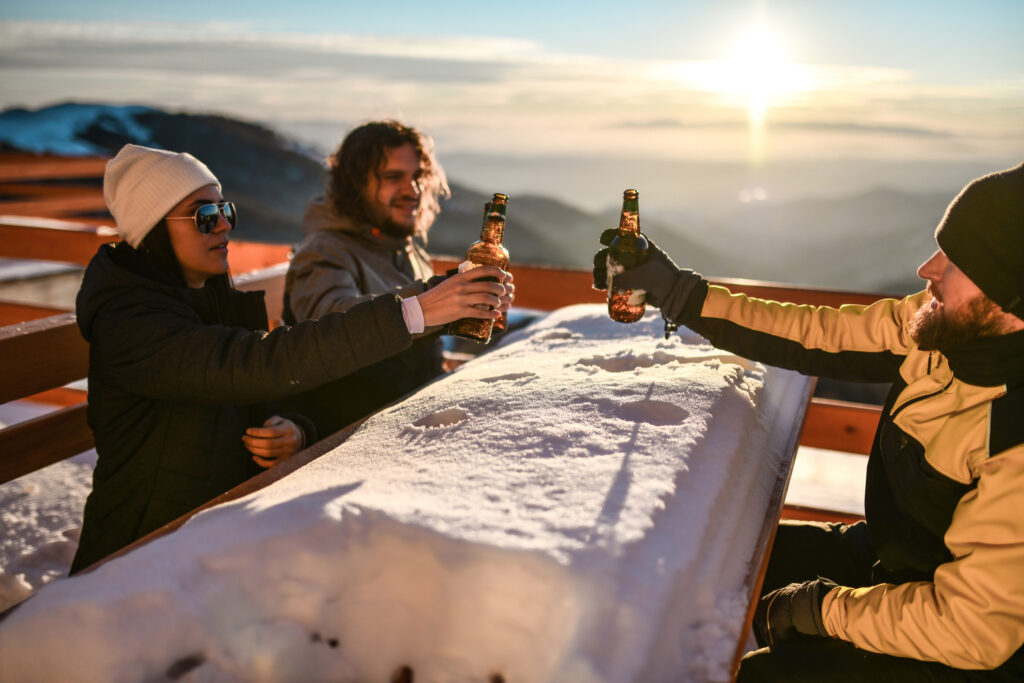
A study from the University of Pittsburgh has confirmed something that feels obvious to anyone who has survived a long winter; colder weather really does make people drink more alcohol.

Researchers looked at weather patterns across cities and compared them to average alcohol consumption. What they found was a clear, direct connection between cold temperatures and higher alcohol intake. In other words, when it’s freezing outside, people are more likely to pour themselves another one.

The explanation is actually pretty simple.

Alcohol increases blood flow to the skin, which creates a warming sensation. It does not actually raise your core body temperature, but it tricks your body into feeling warmer. That cozy buzz might be why a cold night suddenly feels like the perfect excuse for a drink, whether it’s a beer, a glass of wine, or something stronger.

This helps explain why cold-weather traditions often revolve around alcohol. Think about it. Après-ski drinks, hot toddies, mulled wine, whiskey by the fire, and even tailgating in freezing stadiums all lean heavily on booze. When winter drags on, alcohol becomes part comfort, part social glue, and part survival tactic, at least mentally.

But the study also came with an important warning label.

Researchers found that people living in colder climates were more likely to develop liver disease, which is strongly linked to long-term alcohol use. That means the seasonal urge to drink can turn into a real health issue if it becomes a habit instead of an occasional indulgence.

It is a reminder that while alcohol may feel warming in the moment, it comes with consequences. The short-term comfort can easily mask long-term damage, especially in places where cold weather sticks around for months at a time. Winter blues, limited daylight, and cabin fever can all pile on, making it even easier to drink more without noticing.

None of this means you need to swear off winter drinks entirely. It just means being a little more aware of why you are reaching for them.

If it’s cold, dark, and miserable outside, that urge might be less about celebration and more about coping.

So yes, science has officially confirmed what your instincts already told you. Cold weather makes us want to drink. Just remember that staying warm and staying healthy do not always mean the same thing, even if winter tries to convince you otherwise.

Red Wine and Ice Cream Sounds Good (But Is It?)

Is vanilla ice cream topped with red wine really every desperate mom’s new favorite treat?

I’m a strong proponent of “don’t knock it till you’ve tried it.” So, I’ll reserve judgement until the next time I have a half-pint of ice cream in the fridge and a half-bottle of zin on the counter.

That said, this recent review from TikTok has me thinking that in this case, the whole may not be greater than the sum of its parts. 🤮

Plenty of others claim it’s amazing. 🤩 But the question as always with wannabe influencers is… are they dirty liars just doing it for the clicks.

It’s Official: Coffee Isn’t Optional

If you can’t think straight before your first cup of coffee, you’re not alone. And now a report has confirmed it: coffee isn’t optional.

Coffee is the #1 beverage Americans “can’t live without.”

In its first-ever State of Beverages report, Keurig Dr Pepper (yes, the company behind your morning and afternoon caffeine fixes) surveyed Americans to find out which drinks they love the most, and which ones they need the most.

Unsurprisingly, coffee reigns supreme when it comes to daily survival. It topped the list of the drinks people “can’t live without.”

Coffee is our “happy place.”

According to the report, 62% of Americans agree with the statement, “My day doesn’t start until I’ve had a cup of coffee,” and 69% call their morning coffee their “happy place.”

In other words, coffee isn’t just a drink, it’s therapy in a mug.

Coffee isn’t our “favorite” drink though.

Plot twist! While coffee might power our mornings (and sometimes our afternoons), it’s not actually our favorite beverage when it comes to taste.

That title goes to soda! (If you’re from the Midwest, that’s “pop.” If you’re from the South, we mean “Coke,” but not the brand.)

53% of Americans say carbonated soft drinks are their favorite beverage based solely on taste. So while coffee is the MVP of mornings, soda takes the crown when it comes to pure enjoyment.

The data also reflects how different drinks serve different purposes in our lives. Coffee is how we survive Monday mornings, back-to-back meetings, and groggy commutes. Soda is for backyard barbecues, movie nights, and let’s be real, any meal that just tastes better with some carbonation.

Coffee vs. Breakfast vs. Booze

The report has plenty of other fun stats too. We poured through it so you didn’t have to. Here are the highlights…

  • 59% would rather skip breakfast than skip their morning cup of joe, while 41% would rather chow down and drink something else.
  • 73% of people 21+ would rather quit drinking alcohol than quit drinking coffee.
  • Late night coffee? Los Angeles does it the most. Dallas, Atlanta, and Boston don’t want it to keep them up at night.
  • 65% customize their beverage in some way. 52% add sugar or sweeteners, 51% add creamer or milk, and 44% add flavor syrups (especially when ordering at chains like Starbucks).
  • 58% find soda the most “refreshing” beverage out there.
  • 74% of Gen Z’ers use social media to learn about new beverage trends.
  • 56% of Americans say they’ve cut back on alcohol for “wellness or lifestyle” reasons, and 58% now prefer non-alcoholic drinks when hanging out with friends.

Spicy or Sacrilege: Adding Jalapenos to White Wine?

You may have heard of putting fruit in your wine. Maybe even ice cubes. But jalapeños? That’s not a mix-up from a rowdy brunch. It’s a real thing.

A viral trend is heating up TikTok and Instagram, where spice lovers are adding frozen jalapeño slices to their chilled Sauvignon Blanc.

On the surface, it sounds like someone mixed up their glass of wine with their margarita during happy hour. But this isn’t just a one-off cocktail experiment. It’s become a full-on phenomenon, especially among fans of bold flavor pairings.

Enthusiasts are calling the combo “refreshing, light, and spicy,” though some videos show that the heat level can be intense depending on how many seeds make it into the glass.

What’s surprising is that even wine snobs aren’t entirely against the idea. Some oenophiles are actually backing the trend, citing chemistry to explain why it works. Sauvignon Blanc is known for its grassy, citrusy, and sometimes “green” notes—thanks in part to pyrazines, a class of organic compounds that also give jalapeños and bell peppers their characteristic aroma. So the pairing, while unconventional, isn’t entirely unnatural from a scientific perspective.

One expert went a step further, rimming the glass with chili salt to double down on the flavor fusion.

That bold twist drew comparisons to a spicy margarita, only with the sophistication of wine and the zing of jalapeño.

Wine purists might still shudder, but the trend has sparked genuine curiosity among casual drinkers, foodies, and flavor chasers. It’s not the first time social media has reshaped how people enjoy wine: remember the frosé craze or red wine in Coca-Cola (aka Spain’s kalimotxo)? As long as the internet keeps experimenting, the wine world may need to keep adjusting its palate.

So if you’re looking to cool off with something crisp and catch a buzz with a bite, a Sauvignon Blanc with jalapeño just might be your next summer sip.

Exit mobile version