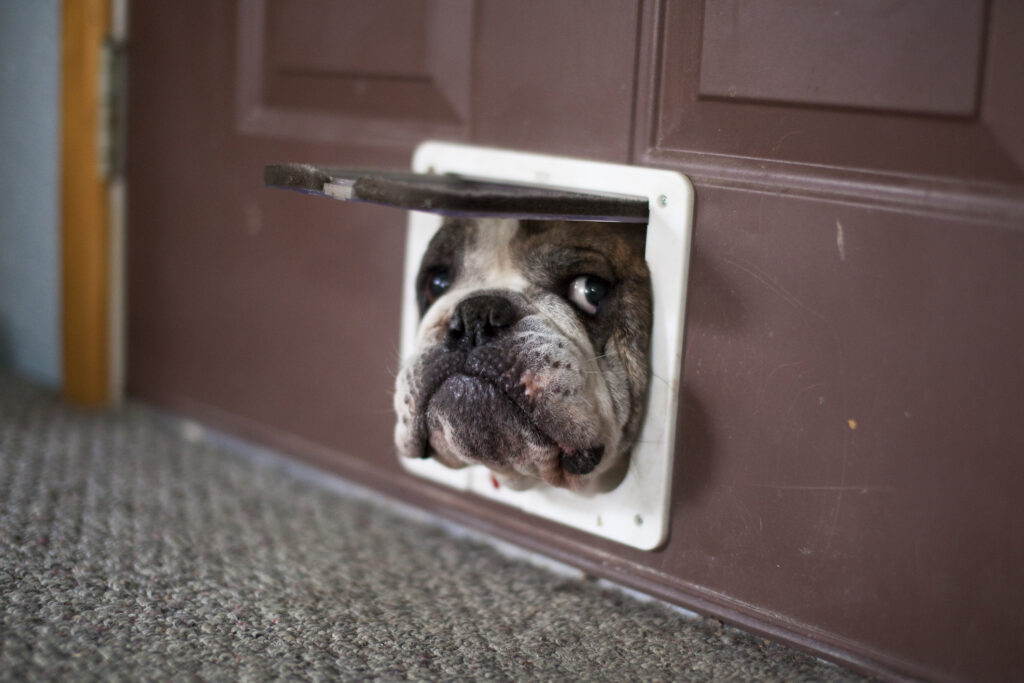
99% of Dogs Have Behavioral Issues—Yes, Even Yours

Think your dog is perfectly behaved? Science says: probably not.

A new study from Texas A&M University has revealed that more than 99% of dogs in the U.S. exhibit some kind of behavioral issue. Researchers examined data from over 43,000 dogs of all breeds, sizes, and ages, and found that a truly “perfect” pup—one with no problematic behaviors at all—is incredibly rare, showing up in less than 1% of the dogs studied.

The research looked at a range of behavioral categories, including aggression, separation and attachment issues, fear and anxiety, and house soiling (yes, we’re talking about those “oops” moments on your rug).

They found that 99.12% of dogs showed at least one behavior rated as moderately serious or worse, or at least two moderate-to-serious issues.

So what’s the most common problem? Attachment-related behaviors topped the list. These are signs of separation anxiety and emotional dependence, such as pacing, restlessness, clinginess, escape attempts, or destructive behavior like chewing and barking when left alone. In short, your dog missing you might be more of a red flag than a sweet quirk.

Aggression—like growling, snapping, and biting—was also a frequent issue.

Though not always dangerous, even minor signs of aggression can signal deeper behavioral or psychological concerns. While some behaviors may seem harmless or even cute, experts say it’s crucial to take them seriously. Your dog’s odd or disruptive behavior might be a symptom of anxiety, discomfort, or unmet needs. The researchers emphasize the importance of involving your vet, who can help you understand your dog’s mindset and determine if further behavioral intervention is needed.

Most pet parents admit their dogs aren’t perfect.

But many still believe theirs falls into that elite 0.88%. Until, of course, their “well-behaved angel” flips out on the mail carrier or loses it over a squirrel. Cue the classic defense: “Luna NEVER does this… I don’t know what’s gotten into her today!”

The takeaway? If you think your dog is the exception, the data says you’re probably not. But knowing that you’re not alone might help take the sting out of the next chewed-up slipper.

Can Your Dog Be a Tax Dependent? A Lawyer Says They Should

If raising kids feels expensive… raising pets is not exactly cheap either. Food, vet bills, grooming, boarding, training, toys you swear you will stop buying… it all adds up fast. And now, one lawyer is asking a question plenty of pet owners have at least joked about during tax season:

Why can’t pets count as legal dependents?

A lawyer filed a lawsuit against the IRS, arguing that pets should qualify as dependents for tax purposes, just like human family members. It sounds ridiculous at first, but once you dig into her argument, it starts to feel… possible?

97% of American pet owners say they consider their pets part of the family. And unlike your freeloading cousin, pets are truly dependent. They rely on humans for food, shelter, medical care, transportation, training, and basically every aspect of daily life. No side hustle. No allowance. No chance of paying rent.

The lawyer says her own eight-year-old golden retriever meets nearly every requirement the IRS looks for when defining a dependent. The dog has no independent income, lives exclusively with her, and racks up more than $5,000 a year in expenses. From a purely financial standpoint, the only thing the dog is missing is being human.

Right now, that is kind of a big deal. The IRS officially classifies pets as property, not people, which makes them ineligible for any dependent-related tax breaks.

That distinction is exactly what this lawsuit is challenging.

Still, even people who would love to write off their Labradoodle are not holding their breath. Legal experts say the case faces long odds. One major hurdle is something called legal standing. To sue, you have to prove you were directly harmed, and courts generally do not allow people to challenge the tax code just because they do not like it.

The lawyer insists she has been harmed, arguing that the tax rules are unfairly applied and discriminatory because they treat taxpayers differently based solely on whether their dependents are human.

As of now, the case has not been dismissed, so it is technically still alive. But realistically, do not expect to be claiming your dog, cat, or horse on next year’s return. For the moment, your pet is still family in every way that matters, just not according to the IRS.

If You’ve Canceled Plans to Stay Home with Your Pet, You’re Not Alone

Remember the “before times,” when having plans actually meant leaving the house?

Turns out, a lot of those nights out never stood a chance, especially if there was a dog waiting at home giving you that look‘According to a survey, three out of four dog owners admit they have bailed on plans at the last minute just so they could stay home with their pup. Not because they were sick. Not because they were tired. Just because the couch, the dog, and the idea of not putting on real pants sounded way better.

Cat owners are not totally innocent here either. About one in three people with cats say they have also canceled plans to hang out with their feline. Although, let’s be honest, the reaction was probably very different. Dogs were thrilled. Cats were likely annoyed that their perfectly planned night of ignoring you was suddenly ruined.

The survey also found that pet ownership has quietly turned into a full-blown lifestyle. The average dog owner has 1.7 dogs, while the average cat owner has 1.9 cats.

Which means a lot of people crossed the line from “I have a pet” into “this is now a household with a system.”

That might also explain another big takeaway from the survey, where pets actually sleep. The most common answer was not a dog bed. Not a crate. Not even the floor. It is the bed. Your bed. Right between you and any hope of personal space.

For many pet owners, especially dog people, staying home is not a backup plan anymore. It’s the preferred option. A night in with your dog means no small talk, no waiting for the check, and no pretending you’re having fun when you would rather be home anyway.

Your dog is always excited to see you, never asks where you want to eat, and thinks every evening is the best night ever. Cats, of course, are a little different.

Choosing to stay home with a cat is more of a gamble. You might get cuddles. You might get judgment. You might just get two forearms full of lacerations.

Still, the numbers do not lie. Whether it’s dogs wagging their tails or cats silently questioning your existence, a huge chunk of people are perfectly happy canceling plans to be home with their pets. And honestly, that sounds like a pretty great excuse to us.

The Cities Most Likely to Force Pets Into Holiday Festivities

Pets can tell when the holidays hit. One day everything is normal, and the next, a giant indoor tree appears, the house is glowing like a casino, and their humans are wearing sweaters with bells on them.

Sometimes the pets themselves are wearing the sweaters, which is when they realize humans are absolutely unhinged.

PetSmart just released a new list ranking the cities where people are most likely to drag their pets into the holiday spirit.

This is based on what people are buying in local stores, including festive toys, Santa sweaters, reindeer antlers, and whatever other glittery nonsense pets quietly judge us for.

Here are the Top 15 cities where pet participation is basically mandatory:

  1. Midland, Texas
  2. Dickson City, Pennsylvania
  3. Lexington, Kentucky
  4. Amarillo, Texas
  5. Johnson City, Tennessee
  6. Winter Garden, Florida
  7. Lubbock, Texas
  8. Pensacola, Florida
  9. Florence, Kentucky
  10. Athens, Georgia
  11. Portland, Oregon
  12. West Jordan, Utah
  13. Antioch, California
  14. Roseville, Michigan
  15. Cape Coral, Florida

If your city made the list, your pet has already accepted their fate. They will be in at least one holiday photo… possibly wearing a tiny scarf or a pair of antlers they did not consent to.

And if you live in Midland, Texas, which topped the list, your dog is probably already in a costume with a matching hat.

Overall, PetSmart says 90% of pet parents plan to involve their pets in the holidays this year in some way. That includes snacks, toys, apparel, accessories, or whatever festive thing will make their pet briefly tolerate the situation before plotting revenge.

So if your cat gives you side-eye all December or your dog mysteriously disappears every time you pick up a tiny sweater, remember, they knew what season it was the moment the tree came out of the box.

The Best Dog Performances in Movies and TV

If you think your dog deserves an Oscar for “Best Couch Hog,” wait until you see this list.

Den of Geek has rounded up the all-time greatest canine performances in film and television, and the results prove that Hollywood’s biggest stars don’t always walk on two legs.

At the top of the list? The legendary Lassie, or rather the six heroic Collies who shared the role across decades: Pal, Lassie Junior, Spook, Baby, Mire, and Hey Hey. These pups defined loyalty, bravery, and perfectly timed barking, making “Lassie” the ultimate good dog story.

Coming in at #2 is Indy, the Nova Scotia Duck Tolling Retriever from “Good Boy”, the new horror movie told entirely from a dog’s perspective. The film has been getting attention for its eerie premise and standout canine acting, so this ranking gives Indy some well-earned treats.

Third place goes to Terry, the little Cairn Terrier who stole hearts as Toto in “The Wizard of Oz”. Over 80 years later, Toto’s “We’re not in Kansas anymore” moment still lives rent-free in our collective memory.

Here’s the full Top 10 lineup of Hollywood’s best four-legged performers:

  1. Pal, Lassie Junior, Spook, Baby, Mire, and Hey Hey (“Lassie”)
  2. Indy (“Good Boy”)
  3. Terry as Toto (“The Wizard of Oz”)
  4. Spike (“Old Yeller”)
  5. Buddy (“Air Bud”)
  6. Messi as Snoop (“Anatomy of a Fall”)
  7. Uggie (“The Artist”)
  8. Higgins and Benjean (“Benji”)
  9. Chris (“Beethoven”)
  10. All 22 Labradors who shared the role of Marley (“Marley & Me”)

What makes this list extra fun is the reminder that dogs have been stealing scenes since long before CGI or TikTok filters. From heroic Collies and loyal Terriers to chaos-loving Labs, these stars remind us why dogs will always be Hollywood’s best co-stars.

Your Dog Could Be the Next “Air Bud” Star

The search is officially on for the furry lead in “Air Bud Returns”, and yes, it’s just as adorable as it sounds.

A few weeks ago, producers announced the beloved basketball-playing pup would be returning to the big screen in a brand-new movie. Now they’re looking for the next golden retriever to step into those pawprints.

To stay true to the character, casting is only open to purebred golden retrievers. If you think your dog has the looks, charm, and on-screen presence to carry a movie, you can submit an application online.

Even if your dog isn’t chosen for the role, entering still comes with perks. Prizes include Air Bud jerseys, signed movie merchandise, and even a trip to the Los Angeles premiere.

The original “Air Bud” debuted in 1997 and became a family favorite, spawning multiple sequels and spin-offs. Now, “Air Bud Returns” is set to bring the magic back to theaters next summer — and one lucky golden will be front and center.

So if you’ve got a photogenic pup and a little patience for auditioning, this might be your chance to see your dog’s name up in lights. Just be warned: competition could get “ruff.”

42% of Dog Owners Say the Best Part of Vacation Is… Coming Home to Their Dog

For dog people, traveling is basically a countdown to getting home and being smothered in fur and slobber.

A new survey of 2,000 dog owners confirms what every pet parent already knows: the highlight of any vacation isn’t the beach, the food, or the overpriced souvenirs… it’s that tail-wagging, zoomie-filled reunion at the front door when they return from the trip.

Here’s how obsessed we are with our dogs:

🐶 42% say coming home to their dog is the best part of the trip
🕐 53 minutes is how long it takes before the average person starts missing their pup
🧠 13 times a day is how often people think about their dog while traveling
📱 19% have asked a pet sitter to put the dog on the phone
📹 17% have FaceTimed their dog
🧳 76% say summer travel plans depend on whether they can find good dog care
😭 22% say missing their dog can ruin their trip
🔮 1 in 5 claim they “always” know what their dog’s going to do before they do it

People also have plenty of vacation anxiety when it comes to their dog.

  • 40% of dog owners say they constantly worry about their pup while traveling
  • 32% don’t trust anyone else to understand their dog’s quirks
  • 34% are afraid their dog won’t get enough love
  • And the same number worry their dog won’t get enough walks or playtime

We’re so deep in the dog-parent lifestyle that 40% of us worry more about the dog’s needs than our own. (Only 19% say the reverse, which feels like a lie.)

But here’s the kicker: while we’re focused on belly rubs and ball tosses, only 28% think about giving their dog mental stimulation, and just 29% prioritize socialization. That’s like feeding your kid lunch but never letting them go to recess or read a book.

Moral of the story: If you’re going to leave your dog behind, make sure they’re living their best life too… because odds are, you’re the one who’s going to suffer more.

Owning a Pet Now Costs a Small Fortune

If your kid asks for a puppy this Christmas, tell them sure… they just might not be able to go to college.

A study by Synchrony found the true cost of caring for a cat or dog over their entire lifetime can range from $20,000 to $61,000 – nearly three times what most people expect.

The poll asked people to estimate how much it would cost to care for a pet for 15 years. The average guesses were $5,735 for a cat and $8,158 for a dog.

But those optimistic ballpark figures fall well short of reality once you account for food, grooming, vet visits, and all those little extras we indulge our pets with. (Hey!! My cat likes dressing up for Halloween, okay!?!)

The actual estimated lifetime cost?

$20,000 to $47,000 for cats, and $22,000 to $61,000 for dogs.

It breaks down to roughly $1,500 a year—and that’s the minimum you should expect.

The cost of pet ownership isn’t just high—it’s also rising fast.

From 2022 to 2025, dog-related expenses increased by 12%, and cat costs have surged 19%.

Despite the financial burden, most pet parents have no plans to live a life without pets.

More than 75% of those surveyed said they see their pets as “family members,” “best friends,” or even “children.” That sentiment runs slightly stronger among dog owners—24% said they view their pup as a child, compared to 21% of cat owners.

With inflation and rising vet bills continuing to push costs higher, the findings serve as a reality check for current and would-be pet owners.

The takeaway? Pets are priceless, but definitely not free.

Who Has a Better Social Life? You or Your Dog?

Is it weird to feel a little jealous when you see your dog sniffing another dog’s butt? (Asking for a friend… I swear I have a few.)

According to a poll by doggy daycare chain Camp Bow Wow, your four-legged best friend may be out-socializing you. They asked 2,000 dog owners to compare their own social lives to their pets’, and the results are both hilarious and a little humbling.

63% said their dog has a better social life than they do.

For many pups, that means regular encounters with canine friends at parks, on walks, or at daycare. And it goes deeper: more than half of owners—54%—believe their dog has an actual “friend group.”

69% say their dog even has a best friend.

That might sound silly at first, but considering how many dogs see the same neighborhood pets every day, it’s not that far-fetched.

Beyond the adorable stats, 91% of owners agree it’s important for dogs to have an active social life. They listed reasons ranging from improved happiness to increased confidence. Many said regular social interaction makes their dogs more loving and less lonely—benefits most humans can relate to as well.

The poll taps into a broader trend: as pet parenting becomes more serious, people are increasingly prioritizing emotional well-being for their animals. Dog birthday parties, pet playdates, and even social media accounts for pets have become part of normal life. There are even apps specifically designed for arranging dog meetups.

And let’s be honest—after years of pandemic-related isolation and remote work, it’s not shocking that dogs may be getting out more than their owners. With routine walks and the occasional trip to the dog park, dogs often have built-in social calendars that humans simply don’t.

So, maybe take a cue from your pup this weekend. Hit the park, plan a meet-up, or just make some time to socialize—because apparently, your dog is already way ahead of you.

Wiener Dog Somehow Survived 16 Months in the Wild

After more than a year fending for herself in the rugged wilderness of Kangaroo Island in Australia, a tenacious mini dachshund named Valerie is finally headed home.

Australian wildlife officials announced Friday that they’d successfully captured the small (but surprisingly resilient) pup, ending a 16-month ordeal that started when she vanished during a family camping trip in late 2023. Valerie had darted off while her owners were setting up camp on the island, which sits off the coast of South Australia near Adelaide.

For 529 days, Valerie survived on her own in a landscape known for kangaroos, snakes, and wallabies – not tiny weiner dogs.

Wildlife officials believe she scavenged and may have even hunted small prey, defying expectations for a dog bred more for companionship than survival.

“She’s a miniature dachshund—we really didn’t think we’d ever see her again,” said one official involved in the rescue effort. “But somehow, she adapted. It’s incredible.”

Despite occasional sightings over the months, Valerie remained elusive—too skittish to approach, and quick to disappear into the dense terrain. But persistence paid off. Wildlife officers finally managed to humanely trap her, and a video of the capture shows her peeking out of a crate, seemingly cautious but healthy.

The reunion with her owners is expected soon, and veterinary staff have already begun assessing her condition.

Early reports indicate she’s underweight but in surprisingly good shape considering her time in the wild.

Valerie’s story has captivated many online, with commenters applauding her grit and determination. Some have even dubbed her “the Bear Grylls of dachshunds.”

From a vanished pet to a survival legend, Valerie’s journey is a remarkable reminder of just how strong the instinct to survive—and return home—can be, even in the smallest of packages.

Exit mobile version