How Do We *Still* Not Have a Great Hangover Cure?

It seems like everyone has a DIY hangover cure… that DOESN’T work.

Stuff like:  Downing glasses of water… using activated charcoal… drinking pickle juice… and rubbing lemon slices under your armpits.

Researchers in the U.K. have released a comprehensive review of hangover “cures,” and it has concluded that… nothing works.  So yes, we’re already a quarter of the way through the 21st Century, and science has failed to deliver ANYTHING.

The review included clinical trials on dozens of supposed remedies… including curcumin, red ginseng, probiotics, artichoke extract, and pear juice… and nothing helped.  At least not consistently.

The researchers also dismissed a lot of flawed experiments in the past… saying there’s “a limited number of poor quality research studies [examining] hangovers.”

In fact, only three things showed enough promise for continued study:  Clove extract… tolfenamic acid, which is a painkiller available in the U.K…. and Vitamin B.  Specifically that would be a synthetic version of Vitamin B6.

If YOU discovered something that YOU think works during this holiday season, please go on TikTok and… well.. I guess join the choir, and hopefully science finds you and tests your theory.

Midnight?! 44% Will Snore Their Way Into 2026

If you’re the type who likes to start the New Year well-rested instead of wildly hungover, you are absolutely not alone.

Staying up until midnight on New Year’s Eve used to feel like a sacred tradition. The countdown, the champagne, the awkward kiss at 12:01. But for nearly half of Americans, that whole vibe is officially getting… snoozed.

44% won’t stay up for it

A poll by AP-NORC found 44% of people plan to be asleep when 2025 turns into 2026. No fireworks, no toast, no “Auld Lang Syne.” Just a nice, peaceful doze under a weighted blanket while the rest of the world yells “Happy New Year” at their TVs. And honestly, can you blame them?

January 1st is a work day for some

New Year’s Eve falls on a Thursday in 2025, which means Friday is still a workday for many – and nursing a headache the size of Times Square isn’t a great way to start the year fresh.

Some time zones have it easier

West Coasters have an easy out. They can catch the New York ball drop at 9 p.m. Pacific, do a quick celebratory cheer, then dive into bed before East Coasters even finish that glass of champagne. (Is watching a replay three hours later even worth it anyway?)

Most of us do still care

The fact that over half of us plan to stay up until the wee hours means New Year’s celebrations are still alive and well. The midnight countdown isn’t going extinct anytime soon – maybe just evolving. For some, the New Year starts with fireworks. For others, a solid eight hours of sleep and maybe a smoothie the next morning.

That said, health-conscious Gen Z is more apt to sip a mocktail than take a tug on a bottle of champagne. And once you’re over 50, it can take more than a calendar flip to muster that much enthusiasm.

New Year’s Eve is still a big night either way… some of us just celebrate with less glitter and more melatonin.

It’s Science: Cold Weather Makes Us Drink More

If you’ve ever found yourself reaching for a drink the second the temperature drops, congratulations, science is on your side.

A study from the University of Pittsburgh has confirmed something that feels obvious to anyone who has survived a long winter; colder weather really does make people drink more alcohol.

Researchers looked at weather patterns across cities and compared them to average alcohol consumption. What they found was a clear, direct connection between cold temperatures and higher alcohol intake. In other words, when it’s freezing outside, people are more likely to pour themselves another one.

The explanation is actually pretty simple.

Alcohol increases blood flow to the skin, which creates a warming sensation. It does not actually raise your core body temperature, but it tricks your body into feeling warmer. That cozy buzz might be why a cold night suddenly feels like the perfect excuse for a drink, whether it’s a beer, a glass of wine, or something stronger.

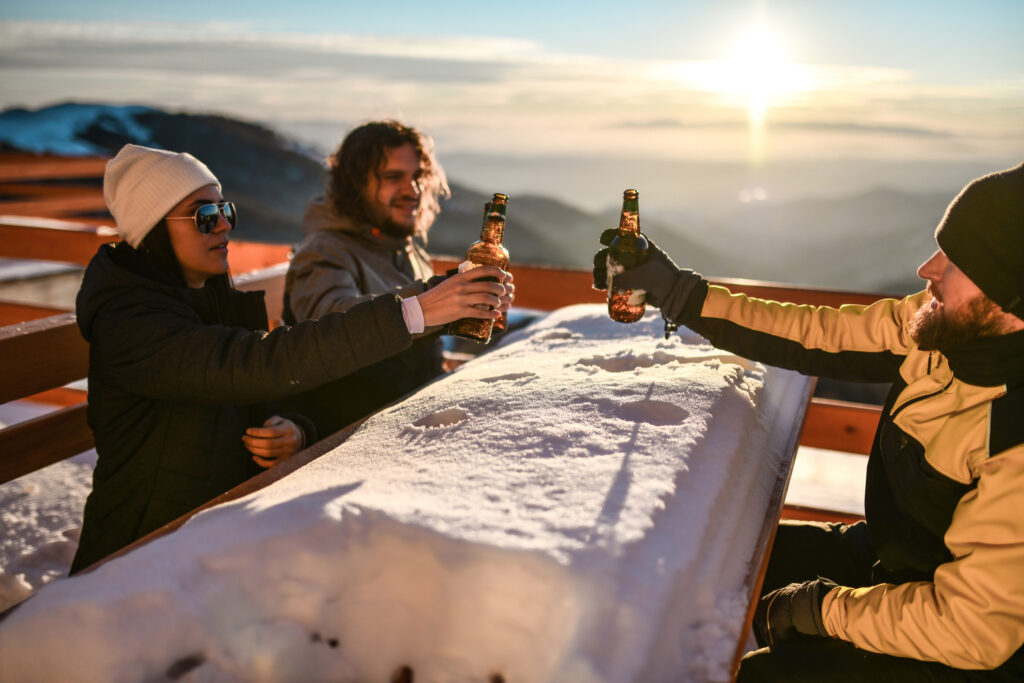
This helps explain why cold-weather traditions often revolve around alcohol. Think about it. Après-ski drinks, hot toddies, mulled wine, whiskey by the fire, and even tailgating in freezing stadiums all lean heavily on booze. When winter drags on, alcohol becomes part comfort, part social glue, and part survival tactic, at least mentally.

But the study also came with an important warning label.

Researchers found that people living in colder climates were more likely to develop liver disease, which is strongly linked to long-term alcohol use. That means the seasonal urge to drink can turn into a real health issue if it becomes a habit instead of an occasional indulgence.

It is a reminder that while alcohol may feel warming in the moment, it comes with consequences. The short-term comfort can easily mask long-term damage, especially in places where cold weather sticks around for months at a time. Winter blues, limited daylight, and cabin fever can all pile on, making it even easier to drink more without noticing.

None of this means you need to swear off winter drinks entirely. It just means being a little more aware of why you are reaching for them.

If it’s cold, dark, and miserable outside, that urge might be less about celebration and more about coping.

So yes, science has officially confirmed what your instincts already told you. Cold weather makes us want to drink. Just remember that staying warm and staying healthy do not always mean the same thing, even if winter tries to convince you otherwise.

The 12 Things in Your Home Most Likely to Hurt You When You’re Drunk

When you’re drunk and stumbling around your house, pretty much everything is dangerous. But which spots are the most dangerous?

A study analyzed emergency room visits – looking at injuries people suffered while drunk or high – and the percentage of injuries caused by 12 different things in your home.

  1. Stairs, 17%
  2. Floors, 13%
  3. Bicycles, 10%
  4. Ceilings and walls, 4%
  5. Windows, 3%
  6. Beds, 3%
  7. Porches and balconies, 2%
  8. Tables, 2%
  9. Chairs, 2%
  10. Bathtubs or showers, 2%
  11. Fences, 2%
  12. Alcohol bottles, 2%

The study also found 70% of all drunk injures happen to men, and there’s only one part of the body women are more likely to injure… the groin region.

Women are slightly more likely to injure themselves there.

Friday, Saturday, and Sunday are the days you’re most likely to suffer a drunken injury… because, yeah obviously. The least likely day is Tuesday.

Which NFL Team’s Fans Drink the Most on Game Day?

If you’ve ever thought, “Wow, these fans seem a little rowdy,” you might be onto something. A new survey of over 3,000 football fans has revealed which NFL teams have the thirstiest fanbases—and it turns out some people treat Sunday like it’s Thirsty Thursday.

According to the survey, Arizona Cardinals fans top the list when it comes to game day drinking. Nearly 19% of Cardinals fans admit to having five or more drinks while watching the game, which definitely puts the “wild” in Wild Card Weekend.

Buffalo Bills fans came in second (maybe it’s all that table-smashing energy they need to fuel), followed by supporters of the Houston Texans, Carolina Panthers, Tennessee Titans, Washington Commanders, LA Chargers, New York Giants, New Orleans Saints, and Jacksonville Jaguars.

On the flip side, the most sober-curious fanbase seems to be in Green Bay. Only 3% of Packers fans hit the five-drink mark, which might be because they’re already full on cheese curds.

Seahawks fans in Seattle came in second for least likely to binge, followed by the Steelers, Dolphins, Patriots, Chiefs, Bears, Colts, Lions, and Jets.

The Cleveland Browns landed right in the middle at 20th place, which might surprise some people given the team’s historically, uh, challenging seasons. Maybe Browns fans are just emotionally numb at this point, or maybe they’ve learned to pace themselves after so many heartbreaks.

The findings come from a survey by Action Network and shed a little light on how different fanbases cope with the highs and lows of their teams. Whether it’s celebrating a win or drowning a loss, NFL Sundays clearly come with a few rounds.

So if you’re heading to a tailgate this fall, maybe keep an eye on the Cardinals fans. And if you’re watching with someone from Green Bay, just bring extra cheese—they’re probably good on beer.

Pro Tip: Apply Sunblock Before You Start Drinking

Is homeownership right for you? We break down the pros and cons, along with tips for first-time buyers.

As warmer weather rolls in, so does sunburn season — and if you’re heading outdoors with a drink in hand, here’s a tip you’ll want to remember: apply your sunscreen before you start drinking.

A new study out of Florida Atlantic University sheds light on why alcohol and sunburn often go hand in hand. 

Researchers surveyed people who had recently gotten sunburned, and the results were eye-opening:

About one in five — 22% — admitted that alcohol played a role.

The reasons are as obvious as they are relatable. Once you’ve had a few drinks, you’re less likely to remember sunscreen, you may underestimate how long you’ve been outside, and you could even end up dozing off under the sun’s rays. 

That’s a perfect recipe for a painful burn. But drinking isn’t the only sunburn risk. The study also found that 11% of burns happened while people were working outdoors, 10% while swimming, and 7% during exercise.

The biggest danger zone, however, was multitasking

A whopping 43% of respondents said they were doing more than one outdoor activity when they got burned.

This research highlights something many of us forget as soon as the patio drinks and beach days arrive: sun protection is easiest to manage before you get distracted. 

That means slathering on sunscreen before you hit the lawn games, the pool, or the backyard barbecue — and reapplying every couple of hours.

As temperatures climb and social calendars fill up, a little planning can spare you a lot of discomfort. So the next time you head out for a day in the sun, make sunscreen the first item on your checklist. 

Your future self (and your skin) will thank you.

Exit mobile version