7 Money-Saving Hacks That Actually Work

Looking to save money without making your life miserable? You’re not alone. With rising bills and everyday expenses piling up, more and more people are searching for simple ways to cut back. The good news? You don’t have to give up everything you love. A few small tweaks can lead to real savings over time—without turning you into a full-time coupon hunter.

Here are seven budget-friendly tricks that can help you keep more money in your pocket, starting now.

1. Unplug Your Electronics
Even when they’re turned off, devices like TVs, gaming systems, and chargers keep sucking energy. It’s called “phantom power,” and it adds up. Plug them into a smart power strip and shut them all down with one button when not in use.

2. Seal Those Drafty Spots
Tiny air leaks around doors and windows can sneakily drive up your energy bills. Grab some weatherstripping or caulk and seal things up. It’s a quick DIY fix that your heating and cooling system will thank you for.

3. Turn Down the Water Heater
Most people leave their water heater set at 140 degrees, but you really only need it at 120. You’ll save on energy costs and still have perfectly warm showers.

4. Plan Your Meals Ahead
Impulse grocery buys and food waste are money killers. By planning meals in advance, you’ll buy only what you need, cut down on spoilage, and reduce those random takeout nights.

5. Cut the Subscriptions
We know it’s painful, but it might be time to ask yourself if you really need five streaming platforms, a meal kit, and a meditation app you haven’t opened since January. Cancel what you’re not using.

6. Make Your Own Cleaning Supplies
You don’t need to buy expensive sprays and wipes. Vinegar and baking soda can clean just about anything—and cost next to nothing.

7. Skip the Heated Dry Cycle
Let your dishwasher do the dirty work, but skip the heated dry. Open the door and let the dishes air dry instead. Your utility bill will dip, and your dishes won’t mind.

None of these changes require major life shifts, but together, they can make a noticeable dent in your expenses. Consider it budgeting without the spreadsheets.

So go ahead, keep your daily coffee (we’re not monsters). Just maybe unplug that Keurig when you’re done.

1 in 7 Americans Want to Nix All Coins

When the U.S. Treasury announced it was finally pulling the plug on the penny, a bunch of people went “Noooo!”… before realizing they had not actually used a penny since Blockbuster Video was a thing?

The penny got the boot because it costs more to make than it’s worth. That alone feels like a metaphor for half the things in our junk drawers. But for some Americans, eliminating the penny was just the warm-up act.

According to a new survey, 24% of people say they would also be fine tossing nickels into the historical dumpster. Meanwhile, 58% want to keep them, including 34% who strongly oppose nickel extinction. These are apparently very passionate nickel fans. Nicklers? Nickelheads? Nickelbacks? (Sorry.)

But here is the real plot twist: 14% of Americans want the government to stop making all coins. Every last one. No pennies, no nickels, no dimes, no quarters, no rogue Sacagawea dollars haunting the bottom of your purse. Just round everything to the nearest dollar and call it a day. No more loose change in your cupholder, no more jingling pockets, no more “Does anyone have 17 cents?” at the gas station.

If you’re wondering why this debate exists at all, here is the fun part. Pennies cost 3.7 cents to make. Nickels cost nearly 14 cents.

That said, dimes and quarters do cost less to produce than their face-value.

As for how often people actually spend pennies, the answer is: they mostly do not. Nearly 30% of Americans say they would not even bend down to pick up a penny off the ground. 11% claim they use pennies every day, which honestly feels like a bigger confession than they meant it to be. That group tends to be older, lower-income Southerners. Another 19% use pennies weekly, 18% monthly, and a solid 28% say they never spend pennies at all. Another 16% use them so rarely it might as well be a leap-year tradition.

So the penny is gone. The nickel is sweating. And somewhere out there is a very determined 14% who dream of a future where everything costs a clean, round number and your only loose change is that one rogue guitar pick in your pocket.

Kids Now Make $52 a Month in Allowance

The newest Americans to get a cost-of-living raise are not government workers or teachers or anyone who actually needs one. Nope. It is children. Small children. Children who sometimes complete chores… and sometimes just confidently lie about completing chores.

A new report says the average kid now pockets $52 a month in allowance, which is about $13 a week.

Of course each kid’s take varies depending on age, work, and whether the family budget is held together by coupons and prayer. But before Grandpa fires up the rant machine about “kids these days,” a quick reality check: inflation is real. Paying a 12-year-old $13 a week today is basically the same as paying a kid in the 1990s about $5.50 a week. And for grandparents who grew up in the 1960s, it would have been about $1.25 a week.

The one place older generations are absolutely justified in shaking a fist? The workload. Kids in previous generations were probably doing more adult work, not to mention farm chores before school. Meanwhile today’s kids are earning thirteen bucks a week for cleaning their room and maybe putting the plates in the dishwasher. Truly the golden age of labor.

Still, parents say the allowance is teaching valuable skills. 78% think their kids can handle money responsibly.

61% even admit their kids are more financially responsible than they were, which is fair, because many of today’s parents learned about money by accidentally racking up overdraft fees in college.

Cash is still the most common allowance method at 56%, but parents are going digital fast. 17% pay their kids through apps like Venmo, which means somewhere an 11-year-old just typed “ty” with a sparkle emoji after receiving five dollars. 14% use special debit cards for kids.

A small slice of parents skip money entirely and pay their kids with experiences (6%) or precious screen time (another 6%), which honestly may have more value than Bitcoin in a young kid’s world.

Bottom line: Kids are earning more, working less, and somehow negotiating better benefits than most grown adults. Grandpa may not love it, but every 11-year-old with chore-induced wealth certainly does.

This Is the Best Temperature to Set Your Thermostat in the Winter

(And before you say anything, we know it’s not technically “winter“, but it’s December and cold mostly everywhere soooooo.)

If you’re constantly arguing with your partner, roommate, or pet about how warm (or not) the house should be in winter, our government has entered the chat—and they’ve got a magic number for you.

According to the U.S. Department of Energy, 68 degrees Fahrenheit is the ideal indoor temperature during the colder months—when you’re awake and at home. If you’re sleeping or out running errands, they suggest turning it down even lower.

Although shouldn’t they have said 67? Think of all the jokes your kids would make!

This recommendation isn’t just about comfort. It’s about saving money and energy, both of which are in short supply during peak heating season. And with electricity prices up more than 41% since 2020, that dial on your thermostat now controls more than just the temperature—it’s also managing your bank account.

Here’s something that might surprise you:

Keeping your thermostat set to a lower temperature doesn’t just reduce your energy use—it actually slows down heat loss from your home. In other words, the cooler your home is, the more heat it retains.

Science wins again.

So why is 68 degrees the golden number? It strikes a balance between comfort and efficiency. If you’re bundled up in cozy socks, a hoodie, and maybe a throw blanket or two, 68 won’t feel like the Arctic. But your heating system won’t have to work as hard, and your energy bill might actually give you a break.

If you’re one of those people who immediately cranks the heat at the first sign of a cold snap, this might be your sign to chill—literally and financially.

And hey, it doesn’t mean you have to suffer. Layer up, invest in some fuzzy slippers, and maybe bake some cookies (you know, for warmth). You’ll stay toasty while your furnace takes a breather.

What temp do you keep your house at in the winter? Asking for our energy bill.

The Highest-Paid Athletes of 2025: Ronaldo and Steph Curry Lead the Pack

If you’ve ever wondered how much money the world’s biggest athletes are pulling in, the 2025 rankings just dropped, and the numbers are jaw-dropping.

Spoiler alert: Cristiano Ronaldo is still living that gold-plated lifestyle at the very top.

The soccer superstar takes the crown as the highest-paid athlete of 2025 with a staggering $275 million paycheck. Yes, that’s a quarter of a billion dollars in one year. He’s not just kicking goals on the field, he’s cashing in on global endorsements, sponsorships, and the sheer fact that his name is basically a brand.

Right behind him is NBA sharpshooter Stephen Curry, who secured the #2 spot with $156 million. Not bad for a guy who turned three-pointers into an art form. And rounding out the top three is heavyweight boxing champion Tyson Fury, who punched his way to $146 million.

Here’s the full Top 10 list of sports money kings in 2025:

  1. Cristiano Ronaldo – $275 million
  2. Stephen Curry – $156 million
  3. Tyson Fury – $146 million
  4. Dak Prescott – $137 million
  5. Lionel Messi – $135 million
  6. LeBron James – $133.8 million
  7. Juan Soto – $114 million
  8. Karim Benzema – $104 million
  9. Shohei Ohtani – $102.5 million
  10. Kevin Durant – $101.4 million

What’s wild is how varied this list is. You’ve got athletes from soccer, basketball, baseball, football, and even boxing all cashing in huge. It’s proof that if you’re elite in your sport and marketable off the field, the checks will keep rolling in.

Also worth noting: both Messi and LeBron may be closer to the end of their careers than the beginning, but they’re still sitting comfortably in the top six.

Legends don’t just fade, they keep cashing those endorsement deals. Meanwhile, Juan Soto is one of the youngest on the list, showing baseball still has the power to mint mega-stars.

At the end of the day, these numbers are so massive they almost don’t feel real. But whether it’s Ronaldo’s global empire, Curry’s sneaker legacy, or Fury’s pay-per-view paydays, the takeaway is simple: sports are not just games, they’re billion-dollar businesses.

7 in 10 People Use Their Gut to Make Major Life Decisions

Who needs spreadsheets or a five-year plan when you’ve just got a really good feeling about it?

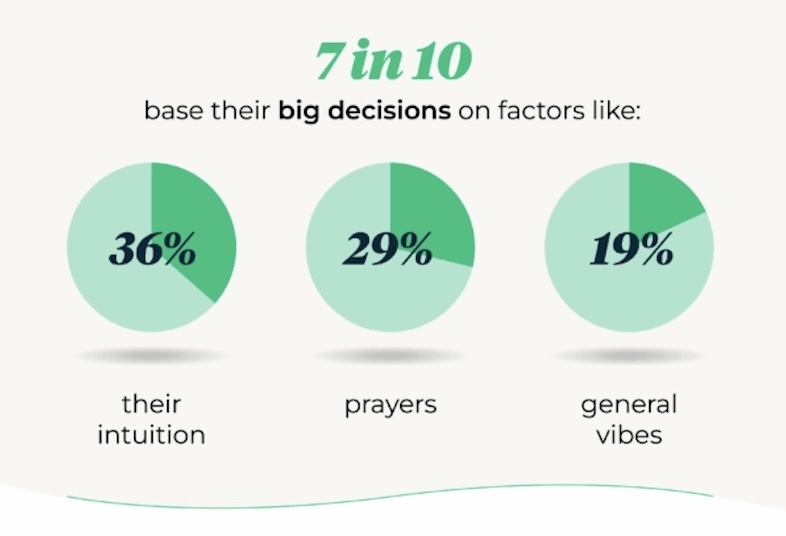
According to a new poll by the life insurance hawkers at LifeHappens.org, 7 in 10 Americans admit they sometimes rely on gut instincts when making big life decisions. Not research, not logic – just straight-up vibes and intuition.

Basically, we’re all out here choosing jobs, partners, and zip codes the same way we pick what to watch on Netflix: “Eh, this feels right.”

What counts as “gut instinct”?

They went pretty broad with it. A gut feeling could mean your “intuition,” the “general vibes” you’re feeling, or what you decided after prayer or reflection. So, basically anything that’s not “I fully thought this through, ran the stats, weighed the pros and cons, and here’s my decision.”

10 things we’ve decided with our gut

They asked people about some common life decisions that shouldn’t be made on a whim, just to see how often our gut influences our decision making. And spoiler alert: it happens a lot.

Here’s a breakdown of just how many of us admit to letting our instincts take the wheel when it comes to major life choices:

  • 32% have chosen a job based on gut instincts.
  • 26% have decided where to move the same way.
  • 26% have used their gut to end a relationship.
  • 24% relied on vibes to quit a job or change careers.
  • 21% have chosen a pet based on instinct.
  • 20% have made investment decisions this way.
  • 20% followed their gut to say yes to marriage.
  • 19% trusted it while accepting a first date.
  • 18% have gone with a feeling when buying a home.
  • 13% decided to go back to school based on instinct.

Basically, if it’s a major decision that could affect your career, finances, or love life, there’s a good chance you or someone you know made that call with more gut than analytics.

So yeah, we like to think we’re rational beings who look at things logically and weigh the pros and cons. But if you’re mostly just vibing your way through life, you’re far from alone.

We’ll willingly go into debt for a gut feeling

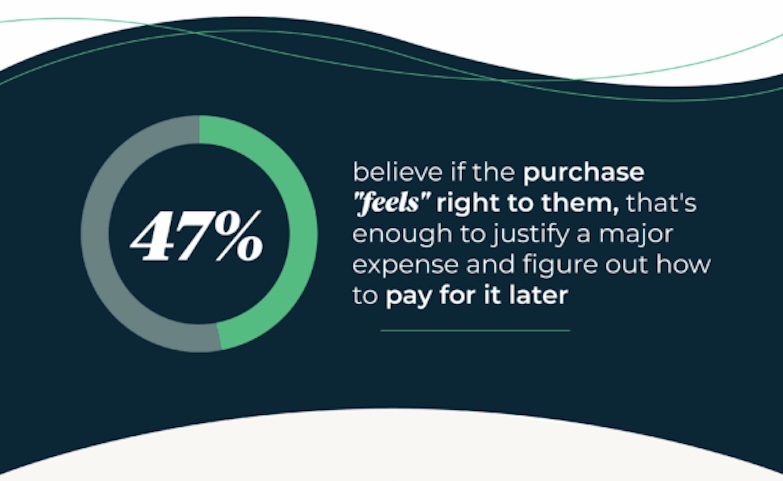
Nearly half of people said they’re also willing to follow their gut when purchasing something they know they can’t afford. If our gut says yes, so does our wallet… and we’ll just figure it out later. YOLO!

Is trusting your gut really a bad thing though?

Many would argue trusting your intuition in many (if not all) of those situations is actually the smart route to take, and maybe even a necessary one. Is it really just impulse? Or is it your brain tapping into experience faster than logic can catch up?

You could argue the “feeling” you get is just a shortcut built from patterns, past outcomes, and emotional intelligence. Or to put it another way, maybe your subconscious knows better than your conscious mind does sometimes. So while spreadsheets are great, it’s possible your gut knows what your head just hasn’t figured out yet.

It’s like a built-in tiebreaker

We’ve all been there before. You have weighed the pros and cons. You’ve run the stats, thought it through the best you can, and still can’t decide. When that’s the case, what choice do you have?

Nothing breaks a tie quite like, “My gut is telling me to ______.”

The Lowest Paying Job in America Is “Shampooer”?

Think your job stinks? It could be worse. It turns out the lowest paying job in America is… one you probably didn’t even know exists.

Our friends over at Stacker.com did a deep dive to rank the lowest paying full-time jobs in the United States, and servers can breathe a sigh of relief. Waiting tables barely made the cut, landing at #50 on the list. That means there are at least 49 gigs that pay even less. Here are the Top 10, and what the average full-time worker makes in a year.


1. Shampooer ($30,830)

Yep, it’s a real job title. They’re the folks who wash your hair at salons before the stylist takes over. It’s often an entry-level job for people who want to become stylists but don’t have enough experience yet.


2. Fast food cook ($31,140)

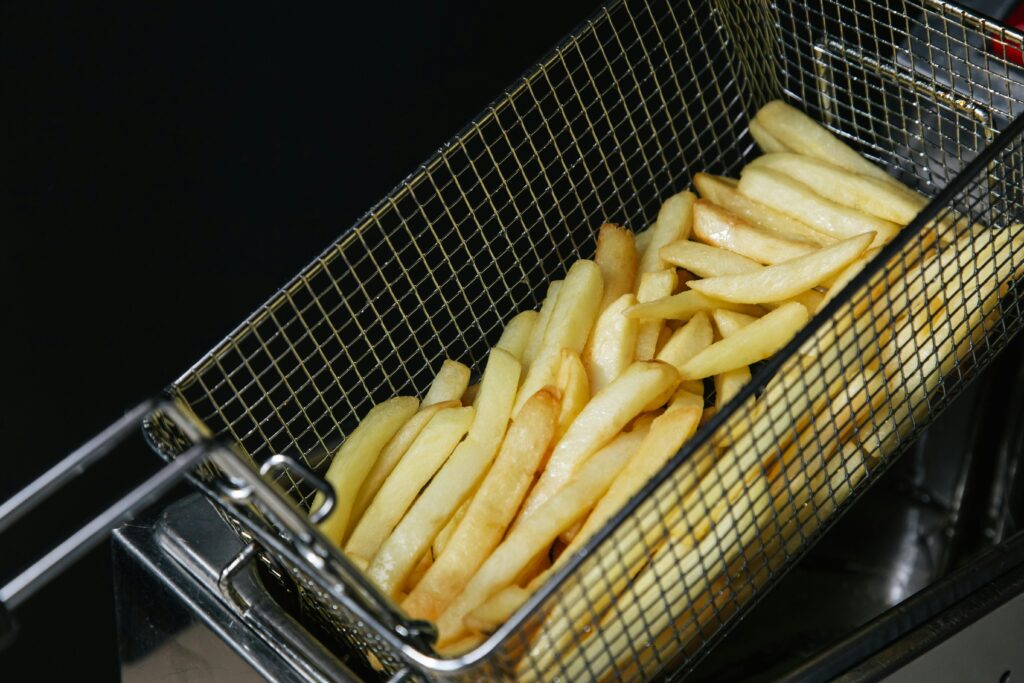
If you’re behind the fryer but never at the counter, this is you. It doesn’t pay great, but there are some perks… like constant grease burns and getting to smell like French fries after every shift.


3. Amusement and recreation attendant ($31,350)

Think carnival workers, ride operators, and concession stand staff. Basically, anyone handing you cotton candy or buckling you into a ride you’re not 100% sure you’ll survive.


4. Fast food counter worker ($31,350)

They earn a little more than the cooks, mostly because they deal with customers. And let’s face it, customers can be tougher than the deep fryer.


5. Usher, lobby attendant, or ticket taker ($31,770)

Those smiling faces at theaters and concert venues? Spoiler alert: they’re probably making less than the price of your ticket.


6. Cashier ($31,810)

One of the most common jobs in America with more than 3 million people scanning barcodes and making change. If their attitude isn’t great, now you know why.


7. Host or hostess ($32,030)

The folks who deal with the riffraff out front earn about $6,000 less per year than the servers who take your order and bring your food.


8. Gambling and sports book writer/runner ($32,570)

They help facilitate bets at casinos and racetracks, or run games like keno. The house always wins, but the workers definitely don’t.


9. Child care worker ($33,140)

Babysitters, daycare staff, and nannies have some of the most important jobs in the world – if only they got paid like it.


10. Dishwasher ($33,220)

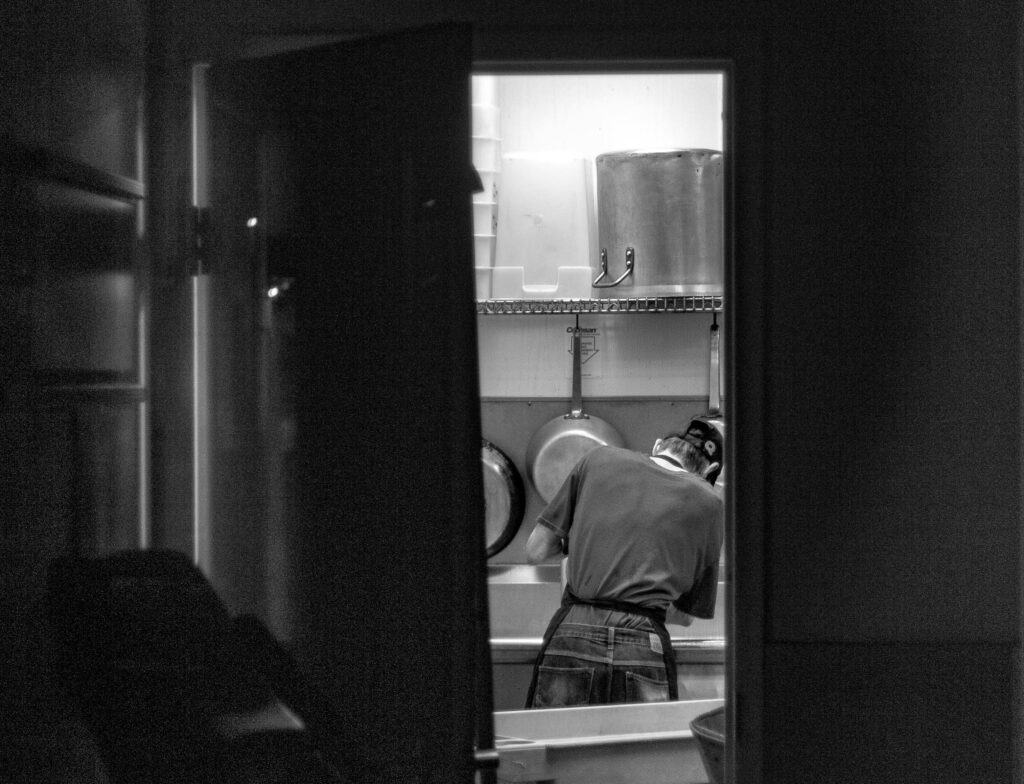
Closing out the Top 10 is that guy in the kitchen doing the dirty work – to the tune of about $1,500 more per year than the smiling hostess out front. (And $80 more than the person watching your toddler all day!)


The big picture? Most of these jobs pay in the low-to-mid $30k range, which doesn’t go far when rent, gas, and groceries keep climbing. So the next time you meet someone working one of these gigs, maybe give them a little extra patience – or a tip – because they’re not exactly cashing in.

Owning a Pet Now Costs a Small Fortune

If your kid asks for a puppy this Christmas, tell them sure… they just might not be able to go to college.

A study by Synchrony found the true cost of caring for a cat or dog over their entire lifetime can range from $20,000 to $61,000 – nearly three times what most people expect.

The poll asked people to estimate how much it would cost to care for a pet for 15 years. The average guesses were $5,735 for a cat and $8,158 for a dog.

But those optimistic ballpark figures fall well short of reality once you account for food, grooming, vet visits, and all those little extras we indulge our pets with. (Hey!! My cat likes dressing up for Halloween, okay!?!)

The actual estimated lifetime cost?

$20,000 to $47,000 for cats, and $22,000 to $61,000 for dogs.

It breaks down to roughly $1,500 a year—and that’s the minimum you should expect.

The cost of pet ownership isn’t just high—it’s also rising fast.

From 2022 to 2025, dog-related expenses increased by 12%, and cat costs have surged 19%.

Despite the financial burden, most pet parents have no plans to live a life without pets.

More than 75% of those surveyed said they see their pets as “family members,” “best friends,” or even “children.” That sentiment runs slightly stronger among dog owners—24% said they view their pup as a child, compared to 21% of cat owners.

With inflation and rising vet bills continuing to push costs higher, the findings serve as a reality check for current and would-be pet owners.

The takeaway? Pets are priceless, but definitely not free.

Walmart Is Locking Up Their Meat Now?

We’ve seen deodorant and baby formula behind locked cases. But meat? Welcome to 2025, where even your ribeye might come with a security cage.

Walmart customers are sounding off online after spotting cuts of steak in tiny wire lockboxes — not behind glass, but still secured with anti-theft devices that must be removed at checkout. Videos of the locked-up groceries have gone viral on TikTok and Instagram, sparking both disbelief and dark humor.

In one clip, a shopper stares at a packaged steak wrapped in a miniature metal gate and says, “That’s when you know it’s bad — when they put miniature gates so you don’t steal their meats.”

@solid_soul83

Walmart tired of yall! 🤣🤣🤣🤣 not the meat

♬ original sound – solidsoul83

Why the Locks?

Walmart hasn’t issued a new public statement about the move, but this isn’t a new phenomenon. Some stores in higher-theft areas have used this strategy for the past few years. However, its recent reappearance on social media — and the fact that it’s happening in the grocery section — has reignited debate about retail theft.

The locked meat isn’t a standard across all locations, suggesting it’s a localized response rather than a nationwide rollout. Still, the optics are striking: a T-bone under lock and key says a lot about the current state of retail.

Retail Theft: A Growing Issue

Big-box retailers have increasingly leaned on security measures as organized retail crime and shoplifting reports rise. In the past, this has meant locking up electronics, beauty products, or over-the-counter medications. But now, with inflation hitting grocery bills hard, high-priced food items are starting to show up on theft prevention lists too.

Walmart isn’t alone. Some Target and CVS stores have also been criticized for locking up everyday essentials, prompting frustration from paying customers who feel like they’re being punished for the actions of a few.

What’s Next?

While anti-theft cages on steaks might seem like a temporary quirk, it taps into a bigger conversation: how far stores are willing to go to protect inventory — and how much inconvenience shoppers will tolerate.

So far, eggs haven’t been caged. But at this rate? Don’t count anything out.

Mom’s Clever Takeout Trick Has Parents Cheering

Parents know the battle: getting kids to eat homemade meals can sometimes feel like an Olympic sport. But one mom found a hilariously brilliant workaround—by convincing her kids that her home-cooked food was actually restaurant takeout.

Alex MacLaren, a mom and talented home cook, started plating her meals in to-go containers and presenting them as takeout. The result? Her kids gobbled it up—both the food and the story.

In a now-viral TikTok, MacLaren is seen unpacking a brown paper bag filled with homemade dishes like tortellini minestrone soup and a chicken-and-rice entrée, all neatly tucked into legit-looking takeout trays.

@mac.larena

🚨 NEW SERIES 🚨 Takeout but made at home 🤭 #easyweeknightmeals #momlife Make plates with me, dishing up dinner ideas, cheap meals on a budget

♬ original sound – Alex ✨ we use what we have ✨

“We ordered in food, this is an Italian place. They sent us a lot of food, you guys!” she announces with theatrical flair.

The kids, none the wiser, eagerly dig in.

The idea struck MacLaren after she ordered takeout containers from Amazon to pack her daughter’s school lunches. Seeing how well it worked for lunch, she expanded the ruse to dinnertime—and it’s been an undeniable success. Although she’s only used the tactic a few times, it’s worked without fail.

In another video, MacLaren ups the ante by claiming the food is from a Greek restaurant, complete with garlic pita bread. Even when one child gets suspicious, noting the containers look familiar, MacLaren stays in character: “All the restaurants use the same containers,” she quips.

The reaction online has been overwhelmingly supportive.

Fellow parents praised the ingenuity, with comments like, “It’s all about the rebrand” and “Mommy marketing wins again.”

One viewer even joked, “Those kids are masters at being gaslit. As a human, be ashamed. As a mom, you’re my hero!!!!”

Interestingly, MacLaren isn’t the only parent tapping into the power of presentation. One commenter admitted to doing the same with homemade Chinese food, saying their child had no clue they’d swapped the restaurant for mom’s kitchen.

When asked how she avoids getting caught cooking, MacLaren revealed she uses a hidden crockpot setup in the basement—proving that a little stealth goes a long way.

As for the ethics of her creative fibs, MacLaren told Today that “gaslighting is a pretty big part of my parenting strategy,” humorously adding, “Why are we overthinking everything?” When it comes to picky eaters, maybe a few white lies are just part of getting the job done.

Because let’s be honest: even most adults would agree—takeout just hits different.

Exit mobile version