Pun Poll: Some Love Wordplay, Others Just Groan

Wordplay might be the lowest form of comedy to some, but to others it is simply a play on brilliance.

A new poll on puns shows the country is pretty divided on whether clever wordplay is witty or just a bit pun-derwhelming.

(Sorry. I do appreciate the polite eye roll.)

The survey asked a simple question: how do you feel about other people making puns?

14% of people say they love when others drop a clever play on words. Another 27% say they like it. That means about four in ten people are at least pun-positive. Meanwhile, 37% feel neutral, which is basically the human equivalent of “meh.” On the more pun-ishing end of the spectrum, 5% say they dislike puns and 3% flat-out hate them. Another 15% are not sure how they feel, which suggests they are still processing a dad joke from 2007.

The poll also flipped the question around and asked how people feel about making puns themselves.

16% say they love crafting a good groaner.

Another 23% like it. 36% are neutral, 4% dislike doing it, and 2% hate it. So yes, there is a small but mighty group who would rather face a tongue twister than attempt a pun.

When it comes to skill level, most people admit they are just average in the wordplay department. However, 6% boldly claim they are outstanding at coming up with puns. That is some serious confidence. On the flip side, 9% say they are horrible at it, which might explain why some jokes never quite land and instead just plane crash.

The demographic breakdown is not shocking. Men are more into puns than women, which tracks with the long-standing tradition of dad jokes being both relentless and unrequested.

Younger adults also tend to appreciate puns more than older folks, proving that wordplay is still very much in its prime.

Puns may not always be well-received, but for a dedicated slice of the population, they are the highest form of humor.

People Rated 2025 a 5.3 Out of 10

A poll asked Americans to rate 2025 on a scale of 1 to 10, and the final verdict is about as enthusiastic as a shrug.

The average score for 2025 came in at 5.3 out of 10, which is not terrible, but it is also not something you brag about. It is the rating equivalent of saying, “Yeah, it was… fine.”

In fact, “5” was not just the average, it was the most common response. 20% of people gave 2025 a straight-up 5, the ultimate sign of emotional neutrality. On the extremes, 6% felt bold enough to give the year a perfect 10, while 9% slammed it with a 1. Those people definitely had a year.

Different generations viewed 2025 slightly differently, but no one was exactly thrilled. Gen X was the least impressed, giving the year an average score of 5.1. Millennials landed right at the overall average with a 5.3. Gen Z and Boomers were the most generous, both handing out a 5.4, which is still not exactly fireworks.

What makes this more noticeable is that 2025 took a dip compared to 2024, which scored a slightly healthier 6.1 out of 10. Apparently, whatever optimism we were riding did not quite make it through.

That said, zooming out tells a more hopeful story on a personal level. 69% of people said they felt they developed in some way over the past 12 months. The biggest gains were in personal life improvements, at 59%, followed by mental or emotional growth at 49%.

There was also a solid amount of spiritual growth, with 45% saying they felt stronger in that area, and 33% reporting intellectual growth. So while the year itself was underwhelming, a lot of people were quietly leveling up behind the scenes.

Generational differences really show up here. Gen Z leads the pack, with 75% saying they grew as a person in 2025. Boomers were lowest at 59%, which is still respectable considering they have been doing personal growth since before Gen Z existed.

Gen Z was most likely to say they developed emotionally and intellectually, while Boomers were more likely to feel spiritual growth and improvements in physical health and fitness. Millennials claimed the crown for professional, creative, and artistic development, which tracks for a generation always trying to optimize itself.

And then there is Gen X. According to the poll, they did not particularly excel in any category. Not emotionally, not professionally, not spiritually. Just quietly surviving, as usual.

What Dish or Flavor Best Represents Your State?

If you had to explain your entire state to a stranger using just one dish, America has already decided what you would serve. And in most cases, it is heavy, comforting, and absolutely not gluten-free.

A recent survey asked people to name the dishes or flavors that best represent each state. And some of it makes sense.

Here is the state-by-state breakdown of the foods people most associate with each place, plus a little personality baked in.

Alabama
• Banana pudding
• Pinto beans and cornbread (grandma is watching, so be respectful)

Alaska
• Seafood
• Muktuk (if you know, you know)

Arizona
• Mexican cuisine
• Sonoran hot dogs

Arkansas
• Catfish
• Country fried chicken

California
• Mexican food
• Burgers
• Shrimp tacos (served with opinions)

Colorado
• Green chili on literally anything
• Rocky Mountain oysters (we are not explaining them again)

Connecticut
• Clam chowder
• Pizza (yes, they are very serious about it)

Delaware
• Scrapple
• Bengali cuisine (sneaky food flex)

Florida
• Seafood
• Key lime pie
• Fresh orange juice (pulp debate mandatory)

Georgia
• Peach cobbler
• Seafood boils

Hawaii
• Laulau
• Poke
• Loco moco (breakfast that could bench press you)

Idaho
• Potatoes (all forms, no apologies)

Illinois
• Deep dish pizza
• Chicago-style hot dogs (do not ask for ketchup)

Indiana
• Corn
• Pork tenderloin sandwich (larger than the plate)

Iowa
• Corn
• Pork chops

Kansas
• Barbecue
• Steak
• Chili with cinnamon rolls (trust the process)

Kentucky
• Fried chicken (the original influencer)

Louisiana
• Crawfish
• Cajun cuisine
• Gumbo

Maine
• Lobster (no notes)

Maryland
• Crab cakes (Old Bay is implied)

Massachusetts
• Clam chowder
• Seafood

Michigan
• Cherry pie
• Coney Island dogs

Minnesota
• Juicy Lucy
• Tater tot hotdish
• Walleye

Mississippi
• Fried catfish
• Soul food

Missouri
• Barbecue (strong opinions, no consensus)

Montana
• Steak
• Wild game
• Huckleberry everything

Nebraska
• Runza sandwiches (you either love it or moved away)

Nevada
• Buffets
• Mexican food (Vegas rules apply)

New Hampshire
• Seafood
• Apple cider donuts

New Jersey
• Italian food
• Pizza
• Taylor ham, egg, and cheese sandwich (pick a side)

New Mexico
• Green chilis
• Enchiladas (red or green, choose wisely)

New York
• Pizza
• Bagel and cream cheese (attitude included)

North Carolina
• Barbecue
• Knoephla soup (surprise!)

Ohio
• Buckeyes (not the tree kind)

Oklahoma
• Chicken fried steak
• Comfort food in general

Oregon
• Salmon
• Marionberry pie

Pennsylvania
• Pierogies
• Cheesesteaks

Rhode Island
• Seafood
• Clam cakes
• Chowder

South Carolina
• Soul food

South Dakota
• Fry bread

Tennessee
• Barbecue

Texas
• Tex Mex
• Barbecue (bigger opinions than plates)

Utah
• Jello salad
• Fry sauce
• Funeral potatoes (yes, really)

Vermont
• Pancakes with maple syrup
• Mac and cheese

Virginia
• Ham (colonial confidence)

Washington
• Apples
• Salmon

West Virginia
• Pepperoni rolls (portable joy)

Wisconsin
• Cheese
• Fish fry (Friday is sacred)

Wyoming
• Steak (that is the whole sentence)

I guess this proves one thing: Every state thinks its food is iconic, correct, and deeply misunderstood by everyone else.

36% of Garages Are So Cluttered That There’s No Room for an Actual Car

A garage always starts as a place for vehicles… and then slowly transforms into a black hole for anything you don’t want to deal with inside the house.

One day it’s spotless; the next, you’ve got a workbench, some tools, a second fridge, six totes of Christmas decorations, and a mysterious box labeled “cords?”

A survey found that 36% of Americans have garages so cluttered, they can’t even park their cars in them anymore. Which really makes you wonder… who’s the garage actually for at this point?

And 62% say their garage is the most cluttered space in their entire home. So if you can’t find it in the closet or attic, check under that pile of paint cans.

Over half (53%) claim to use their garage as a DIY workshop, which means you at least have room to move around a bit.

Naturally, most people wish they had an organized garage. 90% say a tidy garage makes a small one feel bigger, and 85% say they’d take pride in having one. The other 15% apparently gave up years ago and just park in the driveway like it’s 1952.

Still, 52% admit they’re not happy with the current setup… probably because it’s less “garage” and more “archaeological dig site.”

This Is the Age We Stop Preferring Self-Checkout

We all have our social quirks, or not-so-social quirks. Some of us talk to our plants. Some of us talk to our cats. But increasingly, some of us would rather not talk to a cashier… ever again.

According to recent data from a consumer group, 42% of shoppers overall now prefer self-checkout. But age matters.

The appeal? 82% of them prefer it because it’s faster, 41% said quieter, and 36% enjoy bagging their own groceries like they’re playing real-life “Tetris.”

The no-chat checkout life is especially beloved by Gen Z and Millennials, who most definitely prefer shopping methods that involve as little human interaction as possible. Whether it’s self-checkout, curbside pickup, or ordering online so they don’t have to speak to Chad in Aisle 6… they’re in.

Meanwhile, older shoppers are holding the line: 40% still prefer human cashiers, often because they enjoy the interaction, but also because they don’t want to have to bag all their own stuff.

So when does the turning point occur? Age 55

According to the report, 55 is the age when the average shopper starts saying, “You know what? I’m picking the lane with an actual person.” 

And when it comes to in-store pickup, the generational divide gets even wider. 86% of Gen Z and 76% of Millennials do it at least monthly, with about a quarter doing it weekly. Half of Gen X and Boomers, though? They’ve never tried it. Possibly because they don’t trust their phone. Or maybe they just like wandering around.

Bottom line: Retailers need to cater to both crowds. Give the people their human-free zones… but don’t unplug the cashiers just yet. Some of us still like a little small talk with our snacks.

1 in 4 People Use Zero Vacation Days?

A new report found that 23% of employees didn’t take a single vacation day in the past year, even though most of them technically have PTO.

You’ve probably heard it from your boss or HR team: “Make sure you take time for yourself!” Which sounds lovely… until you try to schedule a week off and suddenly you’re treated like you just asked to take the breakroom coffeemaker to Mexico.

The main reason? Work has become like a treadmill that’s on fire.

43% say their workload is just too heavy to justify taking time off, and 30% worry they’ll drown in emails the second they get back. Another 29% say they feel guilty about requesting PTO because it might make them look “less committed,” and one in four workers say their boss would probably react badly if they asked for a whole week off. (Apparently, “mental health” is only encouraged on weekends and national holidays.)

Then there’s the “unlimited PTO” trap… a perk that sounds amazing until you realize it’s really code for, “We’ll never tell you what’s too much, but you’ll know when you’ve crossed the line.”

Workers in tech know this game well: unlimited vacation, but somehow every week is the wrong week to take it.

And sure, some people say they don’t have enough PTO to take a real vacation anyway. A day off to do laundry and cry into a sandwich doesn’t count.

Here’s the thing: time off actually helps companies. It boosts morale, focus, and productivity. It even makes workplaces feel more like a team instead of a group therapy session that charges by the hour.

So yeah, “take time for yourself.” Just make sure it’s not during a busy quarter, before a product launch, after a holiday, or on any day ending in “Y.”

Couples Need to Have 54% in Common to Make It?

Some couples seem like they were separated at birth. Others make you wonder if one of them just lost a bet.

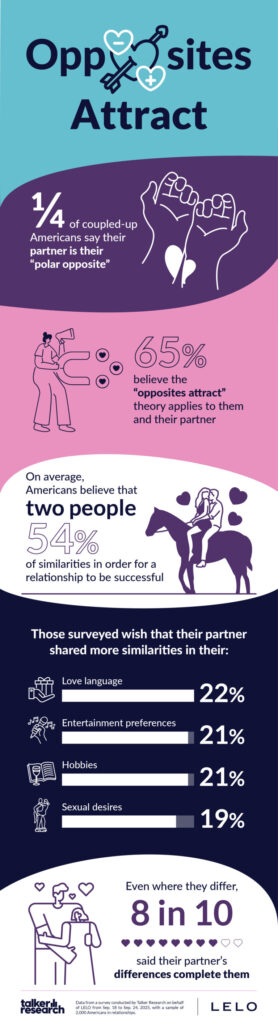
A new survey from the adult toy site LELO found 26% of people in relationships think they and their partner are polar opposites. But a solid 73% of us still believe opposites attract.

We’re talking the usual yin-and-yang combos: introvert meets extrovert, planner meets free spirit, dreamer meets spreadsheet warrior. When it works, each person brings something the other one lacks. You get balance, growth, and someone to blame when your “spontaneous weekend trip” costs $800.

But most people don’t go out looking for someone who hates all the same stuff they love. According to the people in the survey, the sweet spot for a successful relationship is 54% similar. That’s just enough overlap to share a Netflix account without fighting over every show.

You just need to match up on these core things

The things couples really need to match on are big ones: core values, family goals, and what counts as cheating (on a diet or each other). The least important things? Career ambitions, fitness routines, and hobbies. So, you might still make it even if one of you runs marathons while the other spends weekends on the couch binge-watching whatever Peacock is shoving down our throats that month.

You might not stay opposites forever

The good news: opposites may attract, but they don’t usually stay opposites. Over time, most couples say they’ve grown more alike than different. So, maybe love doesn’t just find a way… it finds the middle.

Literally Half Your Workday Is Busywork

If you’ve ever ended the day wondering what you actually accomplished, here’s your answer: about half what you could.

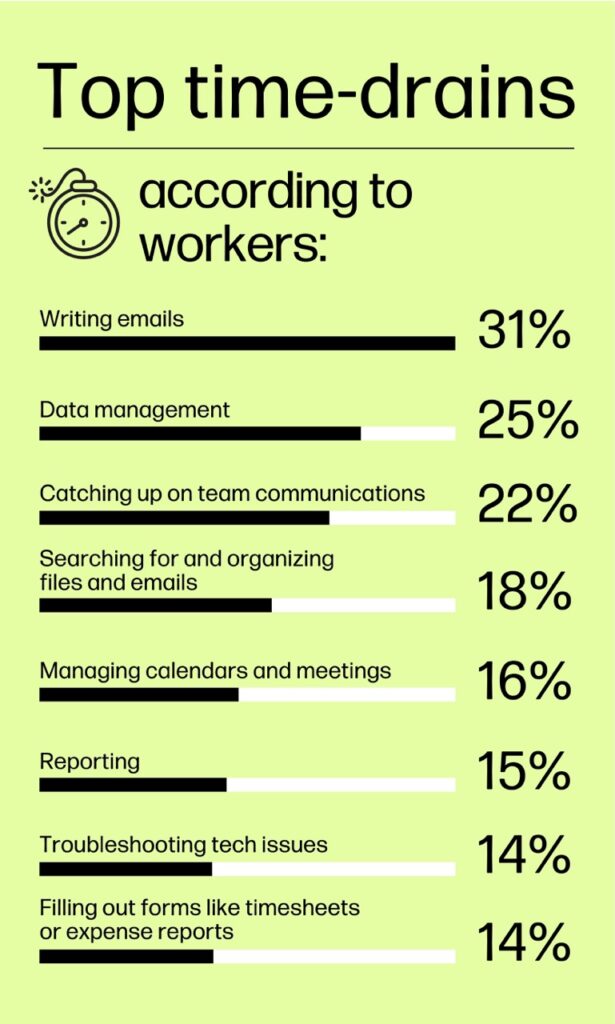
A new survey says American office workers spend half their day (literally, 51%) doing nonsense busywork like writing emails, digging through files, and copy/pasting. Basically, it’s admin Groundhog Day.

That’s not all the annoyance we have to deal with either. The survey found 1 in 3 people have considered quitting because of bad or outdated tech, and 85% blame repetitive tasks for their burnout.

The Top 3 Biggest Time Sucks

The poll found the biggest time suck of them all is email, followed by data entry, and then catching up on team messages. So basically, you spend half your day talking about work instead of doing it.

Even IT folks admit things are out of hand. They say employees waste way too much time on menial junk, and not even 4 in 10 workers feel like they’ve got the right tools to do their best work.

Will A.I. save us?

The “good” news? Companies say they’re rolling out A.I. tools to save us from all that busywork. The bad news? If history’s any clue, those tools will come with training videos, logins, and new ways to “streamline” the same stuff we already hate.

The dream is simple: less typing, fewer tabs, and eventually a workday that feels like work instead of a never-ending email marathon.

For now, we’ll just keep dreaming.

Talker Research

The Five Most Annoying Things That Can Happen with Customer Support

How much do Americans hate sitting on hold with customer support? 

A poll found over a quarter of us would rather do our taxes, go to the dentist, or stand in line at the DMV.  (We’re not sure we buy it, but over one in five also said they’d rather spend a night in jail or shave their head.)

Only 46% of customer service issues actually get resolved.  It takes an average of three attempts and 90 minutes on hold to make it happen. 

Here are the five most annoying things that can happen when dealing with customer support:

1.  Having to repeat details when you’re transferred or get disconnected.

2.  Having to call or email multiple times to solve a problem.

3.  Only having one option to reach out.  Like you have to call, no emails.

4.  Not being able to reach a real person quickly and easily.

5.  Terrible hold music.

A few more that made the top ten include:  A bad connection, or having a hard time hearing them… not being able to resolve an issue online… and too many button options, like “To talk to a customer service rep, press 9.” 

Phones Are Ruining Family Conversations… and It’s Not Just the Kids

Trying to have a heart-to-heart with your kid these days is damn-near impossible, since you’re competing with TikTok, Snapchat, and whatever’s trending on YouTube.

A new survey found that kids under 18 are holding a phone 52% of the time their parents are trying to talk to them. That’s right… half your valuable wisdom is probably getting drowned out by memes and cat videos.

And before you roll your eyes at “these kids today,” let’s be real: parents aren’t much better. The same survey says partners are glued to their phones 58% of the time during conversations. So basically, everyone’s ignoring everyone.

But at least we’re ignoring each other together.

Only 74% of parents could say they’d had a real, device-free conversation with their kid in the past week. Which means a quarter of families haven’t gone even seven days without someone scrolling mid-sentence. No wonder 78% of parents are worried about losing face-to-face time with their kids.

Some households are trying to fight back with “no phone zones” during dinner, family outings, or movie night. You know, those rare times when you actually want to see each other’s faces instead of the glow of a screen. But enforcing those rules is easier said than done.

So yes, the internet is winning. But the silver lining? At least when your teen pretends to listen while glued to their phone, they can say they “learned it from watching you!” (Gen X’ers will get that reference, if they’re even listening to me.)

Exit mobile version