Happy Summerween!  Here Are the 13 Best Horror Movies to Watch

Summerween is real, and it’s here to stay.

The term originated in the cult-favorite Disney animated series “Gravity Falls”, where it was portrayed as a tongue-in-cheek holiday celebrated in the middle of summer. But what started as a fictional tradition has taken on a life of its own for fans of spooky season who aren’t willing to wait until October to get their horror fix.

Summerween has turned into a full-fledged seasonal aesthetic. From TikTok hashtags to themed parties, it’s now common to see people embracing the creepy vibes during the year’s hottest months.  Think pineapples carved like jack-o-lanterns.

If you’re planning a Summerween movie night, there are certain horror flicks that hit just right this time of year. Whether they’re set in summer or simply ooze the kind of dread that lingers long after the campfire’s out, these 13 movies are perfect for the vibe:

  1. “IT” (2017) – A modern classic that feels like summer break gone horribly wrong.
  2. “Wrong Turn” (2003) – For those who fear the backroads.
  3. “I Know What You Did Last Summer” (1997) – A ‘90s teen slasher with beachy vibes.
  4. “Midsommar” (2019) – A daylight horror that’s all about summer rituals.
  5. “Jeepers Creepers” (2001) – A road trip movie that devolves into pure terror.
  6. “Jaws” (1975) – The OG summer horror movie.  Admit it, you were scared of a shark coming through your pool drain.
  7. “Fear Street Part Two: 1978” (2021) – A throwback to classic slasher camp horror, with axes, secrets, and summer bloodshed.
  8. “The Texas Chain Saw Massacre” (1974) – Oppressive heat, sweat, and chainsaws.
  9. “Sleepaway Camp” (1983) – Summer camp horror at its campiest.
  10. “Sinners” (2025) – Small town. Big heat. Even bigger secrets.
  11. “The Final Girls” (2015) – A clever, funny, and heartfelt love letter to ‘80s slasher tropes—with a killer summer-camp backdrop.
  12. “The Lost Boys” (1987) – Vampires, boardwalks, and a killer soundtrack. A goth summer dream.
  13. “Friday the 13th” (1980) – Because Summerween wouldn’t be complete without a trip to Camp Crystal Lake.

Pro-tip: Take your movie night outside with a screen and projector. But don’t forget the mosquito repellent, or that’ll be the real horror.

20 of the Best Movie Dads of All Time (Just in Time for Father’s Day)

With Father’s Day landing this Sunday, it’s the perfect excuse to revisit some of the greatest dads in movie history. Whether they’re brave, bumbling, endlessly wise, or just trying their best, these on-screen fathers have made us laugh, cry, and maybe even text our own dads more often.

From action stars to sitcom-level softies, here are 20 of the most unforgettable movie dads of all time:


1. Atticus Finch (To Kill a Mockingbird, 1962)

No dad list is complete without Atticus. Gregory Peck’s quiet, principled lawyer raised his kids with compassion and conviction in one of the most admired roles in cinema history.

2. Clark Griswold (National Lampoon’s Vacation series)

Chevy Chase’s eternally optimistic dad is the king of forced family fun. His road trips may crash and burn, but his intentions are pure dad gold.

3. Chris Gardner (The Pursuit of Happyness, 2006)

Will Smith’s emotional performance as a homeless father fighting for a better life is equal parts heartbreaking and inspiring — and even more powerful because it’s based on a true story.

4. Daniel Hillard / Mrs. Doubtfire (Mrs. Doubtfire, 1993)

Robin Williams’ role as a dad who disguises himself as a nanny just to spend time with his kids is the kind of comedic heartbreak that hits even harder as an adult.

5. Bryan Mills (Taken, 2008)

A very specific set of skills — and one of the most quoted dad monologues ever. Liam Neeson’s laser-focused rescue mission turned him into an action-dad icon.

6. Marlin (Finding Nemo, 2003)

Who knew a clownfish could break our hearts? Marlin’s ocean-spanning search for his son is a crash course in overprotection and devotion.

7. Jason “Furious” Styles (Boyz n the Hood, 1991)

Laurence Fishburne’s calm, powerful presence stood in contrast to the chaos around him — a portrait of strength, guidance, and grounded fatherhood.

8. Harry Stamper (Armageddon, 1998)

Bruce Willis saving the planet is impressive. But doing it so his daughter can live? That’s next-level dad energy.

9. Howard Langston (Jingle All the Way, 1996)

Arnold Schwarzenegger punches, races, and turbo-charges his way through holiday madness — all for a toy and a chance to redeem himself as a dad.

10. Mr. Levenstein (American Pie series)

Eugene Levy’s awkward, overly honest dad became the MVP of the American Pie movies. Awkward? Sure. But weirdly comforting too.


11. Mufasa (The Lion King, 1994)

Regal, brave, and wise, Mufasa (voiced by James Earl Jones) was everything a kid could want in a dad. And his death still wrecks us.

12. John Quincy Archibald (John Q., 2002)

Denzel Washington’s desperate father takes a hospital hostage to save his son. It’s a gut punch of a performance with a very clear message: he’ll do anything for his child.

13. Gil Buckman (Parenthood, 1989)

Steve Martin’s portrayal of a stressed, self-doubting dad is one of the most relatable in film. Parenthood is messy, and Gil knows it.

14. Darth Vader (Star Wars saga)

Yes, he tried to kill his kid. But redemption matters — and in the end, Vader made the ultimate sacrifice for Luke. A complicated legacy, sure, but still iconic.

15. Don Vito Corleone (The Godfather, 1972)

Not exactly warm and fuzzy, but Marlon Brando’s patriarch protected his family at all costs — in his own chilling, strategic way. Just… maybe not your parenting role model.

16. Professor Henry Jones, Sr. (Indiana Jones and the Last Crusade, 1989)

Sean Connery’s academic foil to Indy brought unexpected warmth and humor — and gave us one of the best father-son pairings in action-adventure history.

17. Cameron Poe (Con Air, 1997)

Nicolas Cage’s Southern-drawled ex-con just wants to get home to his daughter. Hijacked plane? No problem. He’s got a teddy bear to deliver.

18. George Bailey (It’s a Wonderful Life, 1946)

Jimmy Stewart’s everyman dad reminds us that being present, loving, and selfless matters more than money or success. A timeless Father’s Day mood.

19. Jack Byrnes (Meet the Parents, 2000)

Robert De Niro’s CIA dad-from-hell interrogates his daughter’s fiancé like a suspect. Terrifying? Sure. But also darkly hilarious.

20. Mac MacGuff (Juno, 2007)

J.K. Simmons delivers a quiet but powerful performance as a dad who meets his teen daughter’s pregnancy with support, sarcasm, and love — just how she needs it.

Want more? You can see YardBarker’s full list here.

’70s Songs We Love to Hate (And Secretly Still Sing Along To)

The 1970s gave us iconic artists and legendary albums—but not every track has stood the test of time. A lifestyle site called FamilyMinded.com curated a list of the “worst” songs of the decade, with some big names on the chopping block.  These tracks weren’t necessarily flops when they debuted—in fact, many were hits—but they’ve since developed a reputation as cheesy, annoying, or downright baffling.

Here are the 15 songs that made the list:

  1. “Let ‘Em In” – Paul McCartney and Wings (1976)
  2. “Feelings” – Morris Albert (1975)
  3. “Billy Don’t Be a Hero” – Bo Donaldson and the Heywoods (1974)
  4. “Muskrat Love” – Captain and Tennille (1976)
  5. “(You’re) Having My Baby” – Paul Anka (1974)
  6. “Convoy” – C.W. McCall (1975)
  7. “The Morning After” – Maureen McGovern (1973)
  8. “The Streak” – Ray Stevens (1974)
  9. “Seasons in the Sun” – Terry Jacks (1974)
  10. “Sing” – The Carpenters (1973)
  11. “Afternoon Delight” – Starland Vocal Band (1976)
  12. “Lovin’ You” – Minnie Riperton (1974)
  13. “Escape (The Piña Colada Song)” – Rupert Holmes (1979)
  14. “Disco Duck” – Rick Dees and His Cast of Idiots (1976)
  15. “Ben” – Michael Jackson (1972)

For music fans, the list is a mix of guilty pleasures, novelty tracks, and polarizing ballads.  “Muskrat Love” and “Disco Duck” are frequent targets of ridicule, thanks to their odd subject matter and production quirks.  Meanwhile, “Afternoon Delight” and “The Piña Colada Song” have been re-evaluated as kitschy or camp, despite their success at the time.

And it’s not just novelty songs or syrupy ballads that get called out—big-name artists like Paul McCartney and Michael Jackson are also featured, proving that even legends have their misses.

Of course, calling something the “worst” is subjective.  One person’s cringe is another’s nostalgia.  But if you’re building a playlist of infamous ’70s tunes to revisit (or avoid), this list offers a solid place to start.

So whether you’re laughing, groaning, or secretly adding these to your queue, these songs remain part of pop culture—whether we like it or not.

Tom Cruise’s Latest Guinness World Record Is Literally Lit

62-year-old Tom Cruise has made a career out of pushing the limits of what’s possible in action filmmaking — and now he has the Guinness World Record to prove it.

While filming “Mission: Impossible – The Final Reckoning”, Cruise completed 16 high-altitude parachute jumps — with a twist that only he would dare attempt.  Each time, he leapt from a helicopter with a parachute that had been soaked in fuel and set ablaze mid-air.  The jaw-dropping feat has officially earned him the Guinness title for “most burning parachute jumps by an individual”.

According to Guinness World Records, no other actor or stunt professional has come close to attempting, let alone completing, this many flaming jumps.  

Behind-the-scenes footage reveals just how risky the stunt was, with Cruise explaining that if the parachute twisted during descent, it would cause him to spin uncontrollably — while still on fire.

“If this is twisted while it’s burning, I’m going to be spinning and burnt,” Cruise says in the clip. “I have to kick out of the twist and then ignite in 10 seconds.”  Despite the extreme nature of the stunt, he adds, “We’re going to be real smart.  I’m not saying be risky.  We don’t take risks, obviously.”

The Editor-in-Chief of Guinness World Records, praised Cruise’s unmatched dedication to authenticity. “Tom doesn’t just play action heroes — he is an action hero.”

“A large part of his success can be chalked up to his absolute focus on authenticity and pushing the boundaries of what a leading man can do.”

This isn’t the first time Cruise has raised the bar for cinematic stunts. He’s previously scaled the Burj Khalifa, clung to the outside of a military aircraft during takeoff, and performed hundreds of HALO (high-altitude, low-opening) jumps.  But lighting himself on fire mid-skydive adds an entirely new level to his reputation as Hollywood’s most fearless leading man.

Cruise’s commitment to doing his own stunts has become a defining trait of the “Mission: Impossible” series.  With “The Final Reckoning” expected to be the last in the series, this record-setting spectacle feels like a fitting — and fiery — finale.

Cruise also holds the record for the most consecutive $100-million-grossing movies (as an actor) for his 11 films between “Jack Reacher” (2012) and “Mission: Impossible –The Final Reckoning” (2025).

16 Celebs Who Cracked Forbes’ Richest Self-Made Women List

Forbes has unveiled its annual ranking of America’s 100 richest self-made women—and once again, a notable group of entertainers, athletes, and media moguls have carved out spots on the coveted list through empires built on hustle, branding, and reinvention.

Leading the celebrity charge is Oprah Winfrey, whose net worth sits at a staggering $3.1 billion. Coming in at No. 13 overall, Winfrey continues to set the bar as a media powerhouse whose wealth spans TV, film, publishing, and investments.

Kim Kardashian follows at No. 19 with $1.7 billion, fueled by the success of her shapewear company SKIMS and other business ventures.

Taylor Swift, riding high from her record-breaking Eras Tour and billion-dollar music catalog, ranks just two spots behind at No. 21 with $1.6 billion.

Rihanna clocks in at No. 35 with $1 billion, thanks in large part to her beauty and fashion brands Fenty Beauty and Savage X Fenty. Madonna, Beyoncé, and Selena Gomez also appear in the Top 50, with fortunes ranging from $700 to $850 million.  Gomez’s place on the list is bolstered not just by music and acting, but also by Rare Beauty—her fast-growing cosmetics brand.

At No. 52 is Kylie Jenner with $670 million, a placement that continues to stir debate about what qualifies as “self-made” in the world of celebrity wealth.

Jenner’s cosmetics empire is undeniably lucrative, but her start was anything but ordinary.

This year’s list is a snapshot of evolving industries—where beauty, branding, and business acumen go hand-in-hand.  Whether through licensing deals, digital platforms, or ownership stakes, these women have turned fame into fortune in ways that are anything but accidental.

Here’s every celebrity on the list:

·  Oprah Winfrey – $3.1 billion (Rank #13)

·  Kim Kardashian – $1.7 billion (Rank #19)

·  Taylor Swift – $1.6 billion (Rank #21)

·  Rihanna – $1 billion (Rank #35)

·  Madonna – $850 million (Rank #42)

·  Beyoncé – $780 million (Rank #45)

·  Selena Gomez – $700 million (Rank #48)

·  Kylie Jenner – $670 million (Rank #52)

·  Judge Judy Sheindlin – $580 million (Rank #61)

·  Celine Dion – $570 million (Rank #64)

·  Barbra Streisand – $510 million (Rank #71)

·  Ellen DeGeneres – $450 million (Rank #78, tie)

·  Dolly Parton – $450 million (Rank #78, tie)

·  Reese Witherspoon – $440 million (Rank #82)

·  Katy Perry – $360 million (Rank #97)

·  Serena Williams – $350 million (Rank #100)

MrBeast, the Billionaire, Is Borrowing Money from His Mom to Pay for His Wedding

Some people are too proud to ask their parents for help—MrBeast is not one of them. The 27-year-old YouTube sensation, whose real name is Jimmy Donaldson, recently revealed that he’s borrowing money from his mom to pay for his upcoming wedding. Yes, the same MrBeast who’s reportedly worth $1 billion.

The surprising confession came in response to a social media post praising him as the only billionaire under 30 who didn’t inherit his fortune. MrBeast replied with his usual mix of transparency and dry humor:

“I personally have very little money because I reinvest everything (I think this year we’ll spend around a quarter of a billion on content).

Ironically I’m actually borrowing [money] from my mom to pay for my upcoming wedding lol. But sure, on paper the businesses I own are worth a lot.”

It’s a classic MrBeast moment—disarming honesty with a wink. While his personal bank account might not reflect it, the empire he’s built certainly does. Between his viral YouTube videos, Feastables snack line, Beast Burger brand, and philanthropy-fueled content machine, he’s turned giving things away into a billion-dollar business model.

But that model also means funneling most of the profits right back into production.

According to Donaldson, his team will spend roughly $250 million on content this year alone—a staggering number that puts him in the realm of small studios and streaming services. That reinvestment-first strategy might make him cash-light in the moment, but it’s also what’s propelled him to the top of the creator economy.

Still, the idea of a billionaire borrowing from his mom to cover wedding expenses is odd—and people online are perplexed.

Some fans are applauding his humility, while others are marveling at just how expensive content (and weddings) have become. But a lot of people think he’s just using his mom as a tax haven, so people can’t sue him.

Whether he’s dead serious or exaggerating for effect, the message is clear: MrBeast isn’t hoarding wealth—he’s putting it to work. But when it comes to walking down the aisle, even the most successful internet mogul might still lean on Mom.

Ultimate Classic Rock Names the 50 Greatest Power Ballads

Ultimate Classic Rock has unveiled its ranking of the 50 Greatest Power Ballads in Rock History, and if you’re already humming synth-heavy melodies and picturing wind machines, you’re probably right on track. The list is a love letter to the genre’s golden era—the 1980s—though a few later entries snuck into the Top 10.

Taking the crown is Prince’s emotional epic “Purple Rain” from 1984. A ballad drenched in guitar solos, gospel vibes, and heartache, it’s a track that transcends genre and generation. Right behind it is Heart’s “Alone” (1987), a vocal powerhouse that helped define power ballads as vehicles for drama and desire.

The top five is rounded out by Guns N’ Roses’ “November Rain” (1991), a stadium-sized slow burn with an equally iconic video; Journey’s eternal karaoke staple “Don’t Stop Believin'” (1981); and Foreigner’s yearning anthem “I Want to Know What Love Is” (1984).

Here’s the complete Top 20:

  1. “Purple Rain” – Prince (1984)
  2. “Alone” – Heart (1987)
  3. “November Rain” – Guns N’ Roses (1991)
  4. “Don’t Stop Believin'” – Journey (1981)
  5. “I Want to Know What Love Is” – Foreigner (1984)
  6. “Home Sweet Home” – Mötley Crüe (1985)
  7. “Dream On” – Aerosmith (1973)
  8. “I’d Do Anything For Love (But I Won’t Do That)” – Meat Loaf (1993)
  9. “Sister Christian” – Night Ranger (1983)
  10. “Heaven” – Bryan Adams (1983)
  11. “Keep on Loving You” – REO Speedwagon (1980)
  12. “Faithfully” – Journey (1983)
  13. “Broken Wings” – Mr. Mister (1985)
  14. “Heaven” – Warrant (1989)
  15. “Total Eclipse of the Heart” – Bonnie Tyler (1983)
  16. “More Than a Feeling” – Boston (1976)
  17. “Open Arms” – Journey (1981)
  18. “Against All Odds” – Phil Collins (1984)
  19. “Every Rose Has Its Thorn” – Poison (1988)
  20. “Wind of Change” – Scorpions (1990)

While power ballads saw their peak in the late ’80s and early ’90s, their influence lingers. These songs were the emotional reset buttons on hard rock albums, often becoming the biggest hits for bands otherwise known for distortion and swagger.

For a full list of all 50 songs—including the stories behind them—you can visit UltimateClassicRock.com. Just be prepared to fall down a nostalgia rabbit hole of teased hair, power chords, and slow-motion lighters in the air.

Taylor Swift’s Original Albums Surge on Spotify After She Reclaims Her Masters

The “Taylor’s Version” Era is OVER. Taylor Swift has officially reclaimed ownership of her entire music catalog—and the response from fans may surprise you.

Following the announcement that she now owns the master recordings for her first six albums, streams of the original versions—not the “Taylor’s Version” re-recordings—spiked dramatically on Spotify. According to The Hollywood Reporter, there was a 40% increase in overall streams, and in some cases, the numbers skyrocketed far higher.

Here’s a breakdown of the surge in original album streams:

  • “Speak Now”: ↑ 430%
  • “Taylor Swift” (debut): ↑ 220%
  • “Reputation”: ↑ 175%
  • “Fearless”: ↑ 160%
  • “Red”: ↑ 150%
  • “1989”: ↑ 110%

For context, “Reputation” and her self-titled debut are the only two albums that haven’t been re-recorded, which likely contributed to their sharp gains. But the jump across the board raises an interesting question:

Now that Swift owns the originals, is there still a reason to listen to the “Taylor’s Version” albums?

The re-recordings were originally released as a way for Swift to regain control of her music after a dispute with her former label, Big Machine Records, and its new owner Scooter Braun. Swift’s fans embraced the project not only out of loyalty but also as a way to direct royalties back to her rather than the previous rights holders.

With Swift now holding the masters to both versions, that original incentive is gone. And the streaming data suggests a shift—fans may now be returning to the nostalgic versions they grew up with, the ones that originally soundtracked their breakups, car rides, and late-night dance parties.

Still, “Taylor’s Version” releases aren’t just copies. They have re-recorded vocals, subtle production tweaks, and “From the Vault” tracks that offer new material. But now that Swift has nullified the ethical dilemma by owning it all, listeners are increasingly free to choose based on sound and sentiment rather than principle.

James Blunt Reveals the Meaning Behind You’re Beautiful After 20 Years

For two decades, James Blunt’s 2005 hit You’re Beautiful” has been widely misunderstood. Many listeners embraced it as a romantic ballad—an ode to lost love and aching hearts.  But on the song’s 20th anniversary, Blunt set the record straight: It’s not a love song at all. It’s about drugs and stalking.

Blunt marked the milestone with a cheeky, candid message on X. “Twenty years ago today, I released a song that bought me this house,” he wrote.

“Whoever thought a song about being high as a kite on drugs, stalking someone else’s girlfriend, would resonate quite so much? Thank you. You guys are beautiful.”

This revelation may not come as a total shock to fans who’ve listened closely. The lyrics tell the story of a man who spots a woman on the subway, feels an instant but unreciprocated connection, and ultimately admits, “She’s with another man.” That moment—combined with lines about an “angel” smiling at him—has always walked a fine line between romantic yearning and unsettling fixation. Blunt’s latest comments suggest it leaned harder into the latter.

In fact, Blunt has occasionally acknowledged the song’s darker undertones in past interviews, but the 20th anniversary post was perhaps his most direct commentary yet.

“You’re Beautiful” was a breakout hit that propelled Blunt to global fame, topping charts in the UK, US, and beyond. It also helped define the mid-2000s era of earnest, acoustic-driven pop.

But its staying power may have less to do with its perceived romance and more to do with its simplicity—and now, apparently, its creep factor.

He’s also been refreshingly blunt (pun intended) about his career and public image, often poking fun at his reputation as the man behind one of pop’s most overplayed ballads.

As anniversary retrospectives go, this one is less about nostalgia and more about recalibration. It’s a reminder that not every song with a soft melody and wistful gaze is about love. Sometimes, it’s just about a guy who got way too high and made a bad decision on public transportation.

Which MLB Mascot Is the Hottest?

Just in time for the 2025 MLB season, the sports betting site BetUS decided to stir up a spicy conversation that no one saw coming: Which Major League Baseball mascot is the hottest?

Yes, you read that right.  Using a mix of metrics—including personality, Google search interest, social media following, and even the so-called “golden ratio” for physical proportions—BetUS compiled a ranking of the 15 “hottest” mascots in Major League Baseball.  The results?  Equal parts hilarious and unsettling.

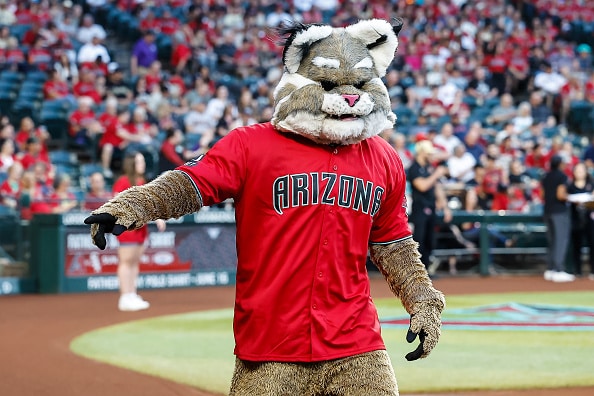
Topping the list is D. Baxter the Bobcat, the Arizona Diamondbacks’ desert-dwelling mascot.

He evidently has the right combination of charisma and cartoon symmetry to claim the crown.  

📸 Kevin Abele / Icon Sportswire via Getty Images

Coming in second is the legendary Phillie Phanatic.

His chaotic energy and fuzzy green physique have made him a fan favorite—and now, apparently, a sex symbol?

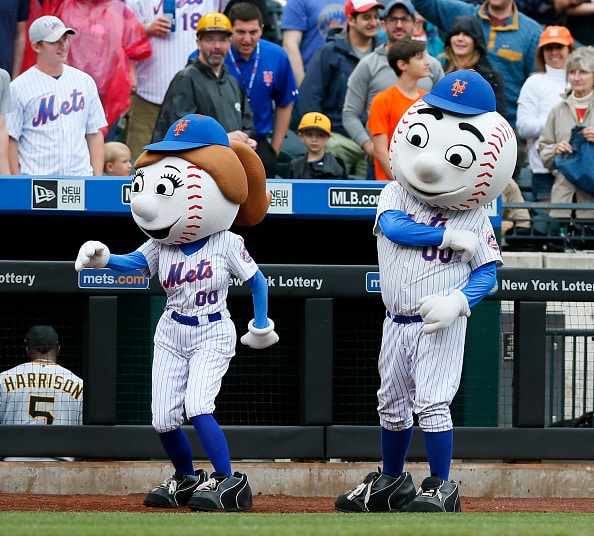
The top five round out with Clark the Cub from Chicago, Rosie Red of the Cincinnati Reds, and Mrs. Met, who out-ranked her better-known baseball-headed husband, Mr. Met. (He still made the list at #7.)

Here’s the Top 15:

  1. D. Baxter (Arizona Diamondbacks). It’s true, look at him- He’s jacked.
  2. Phillie Phanatic (Philadelphia Phillies)
  3. Clark the Cub (Chicago Cubs)
  4. Rosie Red (Cincinnati Reds)
  5. Mrs. Met (New York Mets)
  6. Billy the Marlin (Miami Marlins)
  7. Mr. Met (New York Mets)
  8. Raymond (Tampa Bay Rays)
  9. Orbit (Houston Astros)
  10. Oriole Bird (Baltimore Orioles)
  11. Blooper (Atlanta Braves)
  12. Fredbird (St. Louis Cardinals)
  13. PAWS (Detroit Tigers)
  14. Slider (Cleveland Guardians)
  15. Rangers Captain (Texas Rangers)

If you’re wondering why you don’t see the Los Angeles Dodgers, the Los Angeles Angels, or the New York Yankees on here, it’s because those teams don’t have official mascots.  In retrospect, maybe they just didn’t want to be objectified???

📸 Paul Bereswill / Getty Images

Sorry, Pirate Parrot. You’ll get ’em next time. (Look at that face. What’s not to love?)

Exit mobile version