Didn’t Get Into College? Try a Rejection Cake

In the age of viral college acceptance videos and decked-out bedroom celebrations, some high school seniors are flipping the script on rejection—and doing it with frosting.

The latest trend on social media? Rejection cakes.

Instead of quietly mourning the dreaded “We regret to inform you,” students like Ceci Skala from Needham, Massachusetts, are choosing to commemorate college rejections with a sense of humor—and a slice of cake. In a TikTok video that’s racked up more than 5 million views, Skala and her friends gather around a dessert decorated with the names and flags of elite universities that turned them down. They cheerfully chant, “This is our rejection cake!”

The cake, adorned with rejection pins from schools like Harvard, Yale, USC, Dartmouth, and Georgetown, isn’t just a joke—it’s a coping mechanism.

For Skala, who applied to 12 schools and was waitlisted at her top choice, the experience of laughing together with friends helped take the sting out of what can be a demoralizing time.

“If you’re applying to a hard college and you’re seeing all these acceptance videos, it’s going to hurt,” she says in the video. “You don’t see all the videos of everybody else getting rejected.”

She’s right. Social media is saturated with scenes of joy and triumph during admissions season, leaving many students to quietly question their worth in the absence of similar celebrations. The rejection cake offers an antidote to that pressure—one that says it’s okay to laugh through the disappointment.

And Skala’s not alone. A quick scroll through TikTok reveals other teens sharing their own versions of the trend, with cakes labeled things like “At least I have cake!” or “Rejection never tasted so sweet.”

In a way, it’s a refreshing counter to the curated perfection of college-bound content.

The trend, while playful, taps into something real: the collective anxiety, comparison, and stress baked into the modern college admissions process. By turning rejection into a shared joke (and dessert), students are reclaiming their narrative—and finding a little bit of joy in the “no.”

Who knew a denial could taste this good?

@ceciska12

Rejection cake!! ❌❌ (I promise shiran is going to college) #rejection #college

♬ original sound – ceci

Too Busy to Work Out? Just Rush Through Your Chores

If the thought of squeezing in a workout makes you groan, there’s good news: your daily hustle might already be doing more than you think—if you move fast enough.

A new study published in the journal Circulation suggests that doing everyday chores briskly can deliver significant heart health benefits—even if you never set foot in a gym. Researchers tracked the movements of over 24,000 adults who reported getting little to no structured exercise.

Surprisingly, those who simply rushed through routine tasks saw much lower risks of heart attacks and strokes over time.

In fact, for some participants, moving with urgency—even in short bursts—cut their cardiovascular risk in half compared to those who approached tasks at a leisurely pace.

We’re not talking about marathon training here. The benefits came from everyday activities done at a quicker clip: think speed-scrubbing the toilet, hustling to take out the trash, or even power-walking between errands.

The magic number? Just five minutes of vigorous movement per day appeared to make a measurable difference.

The findings challenge traditional assumptions about fitness and open the door for people who struggle to find time—or motivation—for structured workouts. According to the study’s lead author, it’s less about formal exercise and more about how you move through your day. “It’s a good idea to find ways to fit exertion into your daily life,” they said. “But that doesn’t mean you have to actually exercise.”

So if you’re constantly on the go, multitasking your way through laundry, dishes, and dog walks—good news: you might be giving your heart a solid workout without realizing it.

Just don’t forget to breathe.

Is “CocoMelon” Destroying Our Children’s Brains?

It’s one of the most-watched children’s shows in the world, but not everyone is singing along. “CoComelon” — the ultra-bright, music-driven animated series — has captivated millions of young viewers. Now, it’s also drawing criticism from some parents and influencers who claim it might be doing more harm than good.

Across social media, concerned parents are calling the show overstimulating, with some comparing it to “crack for kids.” Their main concern? The show’s rapid pacing, constant sound, and flashy visuals, which they say can lead to mood swings and behavioral issues — especially when it’s time to turn it off.

Too Much of a Good Thing?

One mom said she bans “CoComelon” in her house entirely. “It’s too fast-paced, it’s too aggressive, and I don’t like how big their eyes are. It’s scary,” she said in a now-viral video. “I also feel like the overstimulation is playing into the short attention span I think kids already have. When kids get used to constant entertainment, they struggle with boredom and quiet play.”

The sentiment has sparked a growing online conversation among parents, educators, and child development experts about how screen time — particularly high-stimulation content — impacts early development.

What Does the Science Say?

While research on “CoComelon” specifically is limited, studies have shown that rapidly paced media can affect attention regulation in young children. The American Academy of Pediatrics recommends limiting screen time for toddlers and encouraging unstructured, imaginative play to help develop focus and problem-solving skills.

That said, not all experts are in agreement that shows like “CoComelon” are inherently harmful. Context, content quality, and viewing habits all matter.

CoComelon Responds

The creators behind “CoComelon,” Moonbug Entertainment, have pushed back on the criticism. In a statement, the company said:

“We dedicate substantial care and resources to ensure all of our content, including ‘CoComelon’, is as enriching as it is entertaining. We work closely with experts in childhood development to inform our content development choices.”

The Takeaway

Whether “CoComelon” is helpful or harmful may depend more on how — and how much — it’s used. Like any screen-based activity, moderation is key. If you’re noticing meltdowns or withdrawal-like symptoms when the show ends, it might be worth mixing in quieter, slower-paced content — or better yet, some unplugged playtime.

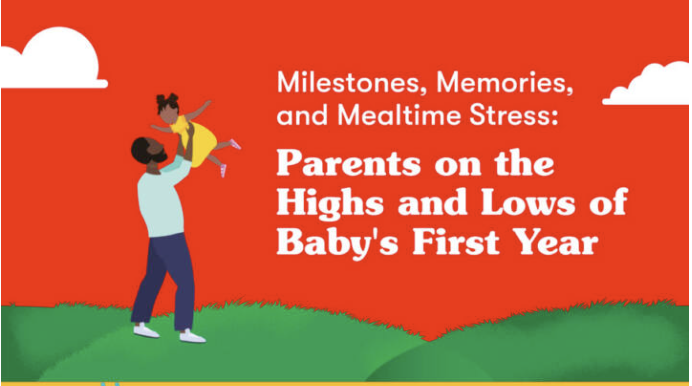
Parents Snap Over 1,000 Photos in Their Baby’s First Year

A new poll from Horizon Organic reveals that today’s new parents are documenting their baby’s first year like never before—snapping an average of 1,000 photos, or about three a day.

The survey sheds light on how much parents cherish even the tiniest moments, capturing everything from sleepy yawns to the first gummy smile. But it’s not just about the photos.

The poll also found that parents are tracking an average of 48 different milestones in that all-important first year. Among the top three most anticipated: a baby’s first steps, first word, and first laugh.

This surge in documentation isn’t too surprising in an era when every smartphone is a camera and every cute moment is a potential social media post. But it also speaks to a deeper desire among parents to preserve fleeting moments that pass all too quickly.

While milestones bring joy, they can also stir up anxiety—especially when it comes to food. According to the same poll, 56% of new parents admit they’re already worried about their baby becoming a picky eater. For a brand like Horizon Organic, which focuses on healthy food options for kids, that concern hits close to home.

The results highlight just how intensely modern parenting has evolved. Where once baby books sufficed, now it’s digital albums, milestone-tracking apps, and curated Instagram highlights. And while the pressure to “capture everything” can be overwhelming, it’s clear that for most parents, it’s worth it to document every laugh, every stumble, and yes, every spoonful of mashed carrots flung across the kitchen.

In a world that moves fast, today’s parents are trying to freeze time—one snapshot at a time.

Is Your Car a Disaster? You’re Definitely Not Alone

If someone asked to peek inside your car right now, would you confidently unlock the door… or fake an urgent phone call and drive away? According to a new poll, a lot of people would choose option two.

The survey found that 34% of car owners say they would be embarrassed if someone they know looked inside their vehicle at this exact moment. And once you see what people admit is in there, that number suddenly feels low.

For starters, 33% of people say they have random clothing just living in their car. Not an emergency jacket, but full-on mystery outfits. Another 23% admit there is trash and food wrappers floating around. Meanwhile, 36% say their car is littered with bottles and cans.

And then there’s the boldest confession of all: 21% say there is actual food on the floor of their car right now. Not crumbs. Food.

Let’s be honest. A lot of these people probably have young kids. Or they are emotionally the same as young kids.

Overall, about half of car owners say the current state of their car’s interior is a “fair reflection of their personality,” which feels like a very calm way of saying, “Yes, this chaos is who I am.”

46% say their car is very or somewhat clean and organized. 16% admit it’s a total mess. And 19% say it’s constantly shifting between messy and clean, usually depending on whether anyone important is riding with them.

Generationally, things get even more interesting. Gen Z drivers are the most likely to say their car is clean, maybe because they want to impress people and don’t have kids yet.

Boomers, on the other hand, reportedly have the trashiest cars, possibly because they don’t care anymore, or because their grandkids are absolute animals.

Then there’s the list of the strangest things people say are currently in their vehicles, and this is where things really get weird.

Some highlights include a Sammy Sosa bobblehead, uncashed lotto tickets, old Halloween decorations, and someone’s husband’s fake leg, which feels like it deserves a follow-up question. Other answers include a dog stroller, cassette tapes (with no confirmation there’s still a cassette player), false teeth, jams and jellies, fake money that we’re choosing to believe is not part of a crime, and a camping shower.

The takeaway here is simple. Your car isn’t just transportation. It’s a rolling snapshot of your life, your habits, and your ability to keep it together. And according to this poll, a lot of us are driving around in a four-wheeled confession.

Do Parents Care If Kids Swear?

If you have ever heard a kid casually drop a swear word in the grocery store and felt your soul leave your body, you are not alone.

A new poll looking at parents’ attitudes toward kids swearing, and yeah: parents have strong opinions about profanity, right up until their own child says something wildly inappropriate at the worst possible moment.

The poll surveyed parents of kids ages 6 to 17 about whether swearing is acceptable, and nearly half of them, 47%, say profanity is never okay. Not even accidentally. Another 35% say it depends on the situation, while 12% say it depends on the word. And then there is the 6% of parents who shrug and say swear words are no big deal, which probably tells you everything you need to know about what their house sounds like.

Age matters a lot here. Parents of younger kids, ages 6 to 12, are far more likely to say swearing is totally off-limits. Parents of teenagers, on the other hand, are more likely to say it depends on the situation. This is likely because once your kid is 15, you are just happy if they are not swearing at you.

Of course, when it comes to their own children, most parents swear their kids are basically saints.

44% say their child never uses profanity, and another 32% say it happens rarely. Meanwhile, 24% admit their kid swears occasionally or frequently, which feels like the most honest group in the room.

So why are kids doing it? According to parents, 41% say it is just “out of habit.” 37% think kids swear to fit in with friends, while 36% say they are trying to be funny. 21% believe their child is doing it for attention, and 27% say, with a deep sigh, that it is just the way kids talk these days now. Cool. Love that for us.

As for where kids learn these words, parents mostly blame other people, but not entirely. 65% say friends or classmates are the main influence. 58% point to popular media. But 45% of parents admit their kids probably learned those words by hearing them say it first, usually while driving.

So parents hate swearing in theory… tolerate it in reality… and secretly know they are responsible.

You can make all the rules you want, but once a kid learns a bad word, it is only a matter of time before they use it loudly, confidently, and in front of someone important.

Kids Say These 12 Things Mean You’re “Old”

Want to feel absolutely ancient? Just hang out with a 10-year-old. They’re sweet, they’re funny, and they can destroy your self-esteem in under five seconds by calling you “old” for something you didn’t even realize was old yet.

Here are some of the funniest and most soul-crushing examples people have shared online about the moment a kid made them feel like a relic from the past:

Born in the 1900s

Yep, that includes anyone over 30. One kid called someone old just for having a birth year that starts with “19.”

“I saw that in theaters.”

A teacher got labeled “old” because she mentioned that she saw the original “Shrek” in theaters. (Which, for the record, came out in 2001. What a brat.)

Knowing how to use old tech

Simply knowing what a VHS tape is makes you ancient. And we’re rapidly reaching the same point with DVDs. Welcome to the retirement home.

Still using CDs in your car

Congrats, you’re officially driving a time machine. And forget about listening to the radio. What are you, 90?

Carrying stamps

A woman got roasted for carrying stamps in her purse. Which, sure, does sound suspiciously grandma-ish—but still.

“When I was a kid…”

One guy got called old just for reminiscing about the days when kids played outside. You mean there was a time before tablets and TikTok?!?

Leaving a voicemail

If you leave voicemails, you’re practically prehistoric. A teen called out their parent for it, saying only old people do that. (God help you if you mention we used to have something called “answering machines.”)

Still own an iPod?

If a teenager has one, they’re “retro.” But a girl told her mom it meant she was “old old.”

Having anything other than Gmail

A woman admitted she still has a Hotmail address, and even she had to admit the kid who called her out for it might’ve had a point.

“I remember when…”

A kid lost their mind when they found out YouTube used to be ad-free by default. If you remember that golden era, congrats, you’re now ancient history.

Phrases you didn’t know were outdated

A guy shouted “Kobe!” after tossing something in the trash. His younger coworker looked at him and said, “Wow, you’re old.” That one hurts, deeply.

Overusing emojis

One poor soul thought emojis made him seem youthful – until a younger cousin told him the laughing-crying emoji is officially “old people stuff” now. Ouch. So yeah, context matters. If you’re 16, you can use as many emojis as you want. But if you’re 60, you’re not fooling anyone.

And if you grew up rewinding tapes with your finger or remember when your phone couldn’t take photos, you’re a certified fossil in the eyes of today’s youth. There’s no avoiding it, so try not to take it personally. Or do. Just don’t leave them a voicemail about it.

Pop Culture Has Basically Ruined These Once-Normal Baby Names

Baby names and pop culture are now permanently intertwined, and Lifehacker.com just proved it with a list of once-normal baby names that pop culture completely hijacked.

These are names that used to blend right in at roll call. Now they come with baggage, memes, and nonstop jokes.

Take Karen. Once a perfectly nice, friendly-sounding name, it is now internet shorthand for an entitled, rule-obsessed white lady who demands to speak to the manager. That reputation is not going away anytime soon.

Mario is another casualty. Before video games ruled the world, Mario was just a name. Now it is nearly impossible to separate it from a mustached plumber who jumps on turtles and yells “It’s-a me!”

Chad followed the same meme-heavy path as Karen. It has become shorthand for an aggressive alpha dudebro stereotype, whether that is fair or not to all the perfectly normal Chads out there.

Some names were taken down by major events instead of memes.

Katrina is a big one. Hurricanes rarely ruin human names, but Hurricane Katrina was so devastating that the association stuck permanently.

Then there is Hermione. Before Harry Potter, it was considered unusual but elegant. Now it screams wizard, wand, and Gryffindor house pride, whether parents intend that or not.

Adolph is in a league of its own. It is arguably the most negatively associated name of all time, and it never recovered.

Technology has also entered the baby name battlefield. Siri and Alexa are now known as digital assistants that listen to you at home, which makes yelling your child’s name in public feel a little weird. Siri was never exactly common, but Alexa absolutely was.

Some names just fell victim to language itself. Dick and Fanny were once standard names, but slang had other plans.

Donald now carries unavoidable associations too, both political and cartoonish, thanks to Donald Trump and Donald Duck. Waldo will forever invite “Where’s Waldo?” jokes, and Damien has been linked to supernatural evil ever since “The Omen” terrified audiences in 1976.

And finally, Guy. No single pop culture villain here, it is just become the ultimate generic placeholder, as in “just some guy,” unless you are thinking about Flavortown.

Moral of the story: when naming a baby, you are not just naming a person. You are naming a future adult who will live with everyone else’s pop culture references forever.

Kids Now Make $52 a Month in Allowance

The newest Americans to get a cost-of-living raise are not government workers or teachers or anyone who actually needs one. Nope. It is children. Small children. Children who sometimes complete chores… and sometimes just confidently lie about completing chores.

A new report says the average kid now pockets $52 a month in allowance, which is about $13 a week.

Of course each kid’s take varies depending on age, work, and whether the family budget is held together by coupons and prayer. But before Grandpa fires up the rant machine about “kids these days,” a quick reality check: inflation is real. Paying a 12-year-old $13 a week today is basically the same as paying a kid in the 1990s about $5.50 a week. And for grandparents who grew up in the 1960s, it would have been about $1.25 a week.

The one place older generations are absolutely justified in shaking a fist? The workload. Kids in previous generations were probably doing more adult work, not to mention farm chores before school. Meanwhile today’s kids are earning thirteen bucks a week for cleaning their room and maybe putting the plates in the dishwasher. Truly the golden age of labor.

Still, parents say the allowance is teaching valuable skills. 78% think their kids can handle money responsibly.

61% even admit their kids are more financially responsible than they were, which is fair, because many of today’s parents learned about money by accidentally racking up overdraft fees in college.

Cash is still the most common allowance method at 56%, but parents are going digital fast. 17% pay their kids through apps like Venmo, which means somewhere an 11-year-old just typed “ty” with a sparkle emoji after receiving five dollars. 14% use special debit cards for kids.

A small slice of parents skip money entirely and pay their kids with experiences (6%) or precious screen time (another 6%), which honestly may have more value than Bitcoin in a young kid’s world.

Bottom line: Kids are earning more, working less, and somehow negotiating better benefits than most grown adults. Grandpa may not love it, but every 11-year-old with chore-induced wealth certainly does.

These Are the Greatest Cartoon Characters of All Time

Trying to rank the best cartoon characters of all time is basically asking for chaos.

Everyone has their favorites, everyone has nostalgia blinders on, and everyone is convinced their childhood cartoons were objectively better. MovieWeb.com leaned into that chaos anyway and released a ranked list of the Top 20 cartoon characters ever, and honestly, it is pretty solid, even if it is guaranteed to start arguments.

At the very top of the list is Mickey Mouse, the original cartoon superstar and the face of an entire entertainment empire. Mickey has been around for nearly a century and somehow remains instantly recognizable to kids, parents, and grandparents alike. Right behind him is Bugs Bunny, the wisecracking Looney Tunes icon who turned sarcasm into an art form long before it was cool.

Landing at number three is the entire Simpsons family, which feels like a bit of a cheat but also completely justified. Homer, Marge, Bart, Lisa, and Maggie have been cultural fixtures for decades, shaping comedy, satire, and animated TV in a way few characters ever have.

SpongeBob SquarePants takes the fourth spot, representing a newer generation of cartoon dominance. He is endlessly quotable, wildly expressive, and somehow appeals to kids and exhausted adults at the same time. Fred Flintstone comes in at number five, reminding everyone that cartoons were doing prime-time TV long before streaming existed.

Classic chaos lands at number six with Tom and Jerry, while Ash Ketchum and Pikachu from “Pokémon” grab the seventh spot. Scooby-Doo checks in at number eight, proving that cowardly mystery-solving dogs never go out of style.

Rounding out the top ten are Snoopy and Charlie Brown at nine, followed by Optimus Prime at ten. One brings quiet, existential humor, and the other brings robots, explosions, and inspirational speeches.

The middle of the list features the “South Park” kids at eleven, the “Rugrats” gang at twelve, and Wile E. Coyote with the Road Runner at thirteen. Daffy Duck and Porky Pig follow at fourteen and fifteen, representing the golden age of animation absurdity.

Tweety and Sylvester come in at sixteen, Garfield at seventeen, Casper the Friendly Ghost at eighteen, and Popeye the Sailor Man at nineteen. Closing out the list at number twenty are the Teenage Mutant Ninja Turtles, who have somehow remained cool through multiple generations, reboots, and pizza-related catchphrases.

No list like this will ever make everyone happy, but that is kind of the point. Whether you grew up with Saturday morning cartoons, after-school reruns, or streaming marathons, these characters helped define pop culture. The full list goes to 35, and if your favorite didn’t make it, congratulations, you have just found your next argument.

Exit mobile version