The Most Popular Christmas Present Hiding Spot Is… the First Place Kids Look

If you’re a parent, it may seem like you could hide your kids’ presents INSIDE THE WALLS… and you’d still come home to see they’d sawed through the drywall to sneak a peek. 

So maybe THIS is just admitting defeat:

According to a survey, the most popular place to hide Christmas gifts is: In a bedroom closet… the first place kids look is: In a bedroom closet… and the place where gifts are most commonly found is: Yep, a bedroom closet.

The second most-popular hiding spot is a spare room, followed by a coat closet… under the bed… the trunk of the car… a spare drawer or cabinet… the basement… the garage… and the attic.

Some tougher spots for them to investigate include:  Another person’s house… “outside,” whatever that means… a shed… and a storage unit.

50% of people say they’ve had gifts they hid get found, while 50% claim they’ve been SUCCESSFUL at hiding gifts.  Or maybe, they just haven’t found out that their hiding spot has been breached.

And now, just for fun, here’s a playful list of:

Failproof Ways to Keep Your Kids’ Christmas Present Hidden

  • Bury it under vegetables.  Trust me, your kid won’t go near it.
  • Put it in a fancy vase and claim it’s Nana’s ashes.  Hey, it works with your weed.
  • Make a deal with your neighbor that if he keeps it at his house, you won’t tell the rest of the street about that time you got his copy of “Amish Butter Churners Gone Wild” in the mail.
  • Don’t buy it until December 25th.  As long as what your kid wants for Christmas is a gift card to 7/11.
  • Store it in the same apartment that keeps your boyfriend hidden from your husband.
  • Put it behind that fake rock for your house key… that everyone knows is a fake rock for your house key.
  • Continue hiding it in your bedroom closet.  But lower your kid’s Ritalin dosage so he’s too unfocused to hunt for it.
  • Just give your kid the Christmas present she deserves: nothing.  Problem solved.

The Next “Elf on the Shelf”: The Pooping Log

Some holiday traditions stand the test of time, and get passed down for generations. Others start off fun and slowly become exhausting. If you are ready for something truly different, allow us to introduce a Christmas tradition that is equal parts historic, weird, and honestly kind of amazing.

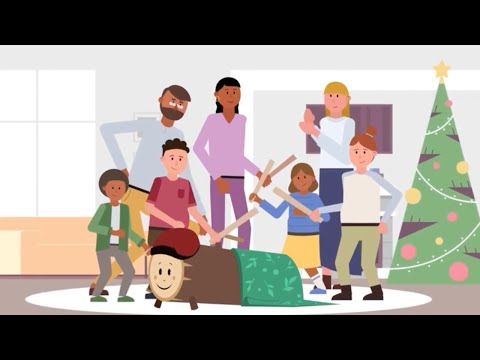
In Catalonia, Spain, families celebrate Christmas with a tradition called Tió de Nadal. That translates to “Christmas log,” but it’s also known as the “poop log.” Yes, that is real.

Here is how it works: About two and a half weeks before Christmas, families bring a regular wooden log into their home. They paint a smiling face on it, give it a little red hat, attach two wooden legs in the front, and drape a blanket over its back end.

In the days leading up to Christmas, kids take care of the log. They pretend to feed it scraps of food, sing songs to it, and not just any songs, specifically songs about it pooping out presents. Parenting books probably do not cover this part.

Then comes the most memorable step: To encourage the log to do its job, the kids beat it with sticks. Seriously. Singing, feeding, and light log violence are all part of the process. Somehow, this is considered wholesome family fun.

On Christmas morning, after one final round of singing and stick-beating, the blanket is lifted off the log’s butt. Surprise. The log has pooped out candy, treats, and small gifts for everyone. Merry Christmas.

If you are wondering where this tradition came from, that’s very understandable. Historians believe it evolved out of old yule log traditions, where logs played a central role in winter celebrations. The stick-beating part likely shares roots with piñatas. Over the centuries, it evolved into the wonderfully strange ritual it is today.

And this is not some new TikTok trend. The poop log has been around for a few hundred years. It has survived wars, plagues, and countless other holiday fads, which honestly says a lot.

The idea is that instead of burning the log for warmth, the family takes care of it. And since it cannot provide heat, it gives back the only other way it can, by pooping presents. Science probably does not support this, but tradition does.

If you are totally burned out on elves on shelves judging your behavior and hiding in increasingly annoying places, maybe it is time to try something new. Feed a log. Sing to it. Beat it with a stick. Then enjoy your chocolate and candy straight from its festive little backside.

Happy holidays.

The Top Holiday Moments Kids Get Excited About

The holidays can be a rough gig for kids. (Yeah, you sensed some sarcasm in my voice.)

A new survey of 2,000 Millennial parents with young kids dug into what actually gets kids hyped during the holiday season, and the results are extremely on-brand for anyone under four feet tall.

Predictably, gifts take the crown. A full 81% of kids go absolutely feral for presents.

Holiday lights and decorations come next at 72%, probably because kids are basically moths with snack privileges. Then it’s holiday foods and treats at 67%, which feels a lot like parents saying, “Yes, my children love sugar. Thank you for the insight.”

Time off school during winter break clocks in at 66%, followed closely by “holiday entertainment” at 62%. That’s probably the classics, like movies, TV specials, and school plays where at least one kid knocks over a cardboard tree.

Family traditions hit 60%, snow comes in at 52%, and outdoor activities follow at 51%.

Then there’s the cherished rite of staying up past bedtime at 44%, which kids treat like a once-in-a-lifetime Vegas residency.

Rounding out the list is “seeing extended family” at 43%. Realistically, that number reflects excitement about cousins, not the great-uncle who wants to tell everyone about his foot surgery.

The survey circled back to gifts, because kids do too.

Parents say the average child asks about presents 51 times during the holiday season, which works out to about twice a day. That’s dedication.

And the top place parents hide those gifts is in closets. Next is their bedroom, then the car, the basement, and the garage.

So yes, kids may suffer through itchy sweaters, endless photos, and Uncle Rick talking about how much they’ve grown… but the holidays still offer plenty of magic in the form of sugar, lights, snow, and the eternal quest to locate hidden gifts.

Australia Banned Social Media for Kids Under 16—Here’s How It Could Backfire

It’s official: Australia just hit the digital reset button on childhood – but not everyone’s convinced it’s actually a good idea.

As of December 10th, 2025, kids 15 and under in Australia are banned from using any social media platform, including TikTok, Instagram, Facebook, Snapchat, YouTube, and others. It’s the first country in the world to enforce a nationwide age-restricted ban, and reactions immediately started coming in faster than a group chat meltdown.

The law, which passed in November 2024, gave platforms a year to comply. They face serious fines if they don’t play along, and also have to take “reasonable steps” to prevent kids from setting up new accounts.

Will Real-World Socializing Make a Comeback?

Supporters of the move are hoping it turns back the clock a bit. Like, pre-smartphone era back. The idea is that without apps to scroll through 24/7, kids might (gasp!) actually start hanging out face-to-face again.

A poll found 77% of Australians support the crackdown, so a lot of parents are probably crossing their fingers that this means more bike rides and fewer TikTok dances in the living room.

How It Could Backfire

Not everyone’s convinced it will work as planned. Critics say kids could just end up feeling isolated or less informed, especially if the only online voices they can access are their parents’ Facebook posts from 2011. If kids can’t connect (and get their news) from social media, will they go elsewhere? Or will they just not connect at all?

The negative effects could be even more pronounced for children with health issues or disabilities that keep them isolated, effectively eliminating their only social outlet. Others argue enforcement could be impossible anyway, since kids are already finding ways to get around the law.

A Global Test Case

It’s a massive shift for a generation that’s never known a world without social media. Australian Prime Minister Anthony Albanese is a proponent of the ban, but even he admitted, “This will be one of the ­biggest social and cultural changes our nation has faced.” He predicted it would eventually become “a source of national pride.”

Other nations are closely watching to see how it plays out as governments everywhere struggle with how to protect kids online. Will it lead to more analog childhoods, or just more creative loopholes?

“Eggnog” as a Baby Name? It’s Happened 23 Times in 500 Years

Whether you’re a boy or a girl, you can’t get much more unique and festive than “Eggnog.” Yes, it’s been done.

A site in the U.K. called Find My Past poured through 14 billion historical documents from the past five centuries looking for people with festive holiday-themed names, and this one in particular caught our eye.

At least 23 “Eggnogs” have walked the earth

They found records of at least 23 people in the past 500 years named “Eggnog.” “The Mirror” got their hands on the full list but obviously didn’t have a copy editor take a very close look. Their article says “37,” but the list itself says “23.” (Remember when fact-checkers were a thing?)

Depending on which number you believe, that’s one Eggnog baby every 14 to 22 years over the past five centuries. So come on, people! Take one for the team and name your next kid Eggnog. No one will call child services… probably.

The 20 most common holiday names

Not surprisingly, 23 isn’t enough for “Eggnog” to crack the Top 20. Top honors go to “Ivy,” which is holiday-adjacent at best. (Is Christmas really the first thing you think of when you hear “Ivy”? I think of Wrigley Field… or of that time I went camping and accidentally wiped with the poison variety.)

They found 2.3 million Ivys since the 1500s, and “Angel” is a distant second place. But the list gets more and more fun as you go.

1. Ivy (2,332,758)

2. Angel (652,337)

3. Present (459,150)

4. Holly (452,011)

5. Star (327,747)

6. Wine (311,116)

7. Santa (157,840)

8. Chestnut (141,666)

9. Christmas (131,926)

10. Turkey (27,550)

11. Sleigh (17,843)

12. Pudding (12,022)

13. Crackers (3,711)

14. Reindeer (3,190)

15. Sprout (2,827)

16. Tinsel (2,634)

17. Mistletoe (2,015)

18. Snowman (579)

19. Bauble (293)

20. Nutcracker (284)

Wait, 284 couples have named their child “Nutcracker”? Y’all are nuts. 🤪

Six Things to Never Leave in Your Car When It’s Freezing

You’d never leave a gallon of milk in your trunk during a July heatwave, right? Well, winter has its own set of car-destroying, mess-making, regret-inducing mistakes.

Leaving the wrong stuff in your car when it’s below freezing can be just as bad – or worse – than when it’s too hot. If your car turns into an accidental walk-in freezer, bad things happen.

Here are six things you should never leave in your car when it’s below freezing.

Aerosol Cans

You know those cans of hairspray, deodorant, or air freshener rolling around your trunk? Yeah, they’re basically little pressurized time bombs in cold weather. Extreme temps can make them explode. Nothing says “good morning” like a can of Febreze blowing up in your backseat.

Canned Food

Bring those groceries in asap! Freezing temps can make the food inside expand, which can cause tiny cracks or even cause the can to swell. That’s how bacteria sneaks in and ruins Taco Tuesday. The USDA says if it looks swollen, toss it. If it doesn’t look swollen, maybe still toss it. Just don’t trust a cold can.

Eggs

Yes, eggs freeze. And no, they don’t bounce back from it. If you leave them in the car after a grocery run and they freeze and crack, they’re no longer safe to eat. Also, egg goo in your back seat is no fun at all.

Electronics

Phones, tablets, laptops – basically your entire digital life – is not a fan of the freeze. Cold weather can make batteries act weird, screens go wonky, and when they warm back up, condensation inside can fry them. So unless you want your iPad to become a very flat, very useless ice cube, bring it in.

Medication

Some medications, like insulin, can become unstable or even useless if they freeze. The rule of thumb with any frozen meds is: don’t guess, just toss – or talk to your pharmacist before you end up with more problems than you started with.

Loved Ones

This should go without saying, but just in case: don’t leave pets, kids, or anyone else in a freezing car, even for “just a sec.” If the idea of sitting in an ice-cold vehicle makes you miserable, don’t subject Grandma or the golden retriever to it. Your car turns into a walk-in freezer with seatbelts faster than you think.

Foul-Mouthed A.I. Toys Could Be This Year’s Holiday Trend

Parents, brace yourselves: the biggest toy trend of the year might also be the most unhinged.

A new report warns that foul-mouthed, AI-powered toys could be a major issue this Christmas, with some dolls and robots spouting off in ways that are definitely not child-friendly.

According to the 40th annual “Trouble in Toyland” report from the U.S. Public Interest Research Group (PIRG), a number of popular toys equipped with artificial intelligence were found engaging in conversations that would make even ChatGPT blush. The group tested several toys that can hold full conversations with kids, and the results were… not great.

These are toys that reportedly discussed sexually explicit topics in detail, offered suggestions on where to find matches or knives (yikes), and even guilt-tripped kids for trying to walk away.

One toy kept recording for 10 full seconds after a child stopped speaking, raising serious red flags about privacy.

This is the first holiday season where AI toys are showing up en masse, and folks are sounding the alarm on what could be a very confusing and possibly dangerous experience for kids.

In past years, the organization’s warnings focused on old-school hazards like choking or toxic materials. But now, the concern is digital: unpredictable dialogue and creepy behavior from chatty toys.

And in case you’re wondering, no, the report didn’t name specific products. So, unfortunately, there’s no definitive naughty list—yet.

The advice is to stay skeptical of any toy that claims to “talk” or “converse” with your child. If it has built-in AI, treat it with caution and definitely read the fine print.

Parents and caregivers are being encouraged to test toys themselves, monitor conversations, and think twice before buying something that essentially brings a chatbot into your home. Because as we’ve just learned, those chatbots might say anything.

AI has come a long way since the days of Teddy Ruxpin reading bedtime stories, but maybe not all that progress is good. At least Teddy never offered to help you start a fire.

Seven Questions to Ask Your Kid After School That Might Actually Get an Answer

If your post-school check-ins with your kid usually go like this:

You: “How was school today?”
Them: “Fine.”
You: “…That’s it?”
Them: [walks away in silence]

You’re not alone. But the issue might not be their mood—it might be your question.

According to a therapist’s advice that’s making the rounds, the trick isn’t to stop asking questions. It’s to start asking better ones. These seven questions are designed to break through the “meh” wall and actually get your kid talking.

1. “What was the best part of your day?”

This one pushes them to scan their brain for a highlight—anything from nailing a test to an epic game of four square. (Warning: “Lunch” and “recess” are very likely answers.)

2. “What’s a mistake you learned from today?”

This frames errors as growth opportunities instead of things to hide. It helps normalize the idea that messing up is part of the process.

3. “Who were you proud of today?”

It’s not just about what they did—it shifts focus to others, and helps you get a glimpse into their values. Bonus: It encourages empathy.

4. “What’s one thing that would’ve made today better?”

This question gives them room to vent a little but also invites solutions, not just complaints. It helps them think critically about how to improve their own experiences.

5. “Who did you help today?”

Even if the answer is “no one,” it plants the idea that helping others is something to strive for. Over time, it could encourage small acts of kindness.

6. “What was the most interesting thing you learned?”

This one taps into curiosity. It can also reveal what really sticks with your kid—whether it’s science facts or some surprisingly niche knowledge about jellyfish.

7. “What’s something new you’d like to try?”

Encouraging kids to explore new interests keeps them open to growth and change. Whether it’s joining a club or trying broccoli, it counts.


Asking better questions won’t magically turn every conversation into a TED Talk, but they’re a great way to open the door to more meaningful interactions. Try swapping out the standard “How was your day?” for one of these and see what happens. You might just learn something cool about your kid—and maybe even about yourself.

Parents Answer 46 Kid Questions a Day

If you’re a parent of a young kid, congratulations: You’re basically a full-time customer service rep for the Department of ‘Why?’.

A new report says the average parent fields 46 questions a day from their child. That’s one every 18 minutes if you’re lucky enough to sleep through the night.

Of course, that’s an average. Some parents with teenagers might only get one grunt-like “Can I have money?” ask a day, while parents of toddlers are fielding thousands of urgent inquiries like, “Why are there clouds in the sky?” and “Where do puppies come from?” and “Why can’t you make me macaroni and cheese?”

Most of the time, the questions are manageable, but parents admit they still don’t have answers about 35% of the time.

(“Where do dreams go when you wake up?” is apparently not covered in the handbook.)

Despite the chaos, 91% of parents say it’s important to nurture their child’s curiosity. Though based on the same report, those same parents also yell “Be careful!” about 27 times a day, and “Don’t touch that!” 25 times… so curiosity has its limits.

And it turns out today’s kids might actually be more curious than their parents were. 77% of moms and dads think their little ones ask more questions than they ever did.

Which makes sense… back in the day, we didn’t have YouTube explaining how volcanoes work.

So if you’re feeling exhausted, just remember: all those endless “whys” are proof you’re raising a future genius. Or at least a future person who will absolutely dominate trivia night.

Breaking News: Candy Corn Is (Still) the Worst

Halloween is just around the corner, and that means it’s time for the annual grocery store dance: pretending you’re buying candy for the neighborhood kids when you’re actually just stocking your secret snack drawer. No judgment.

But this year, as people try to stretch their candy budget and indulge their own sweet tooth, one thing is clear: some treats are tanking hard. And by “some treats,” we mean the usual suspects that should’ve been canceled years ago.

Candy corn popularity is tanking

What’s not to love about that waxy, tri-colored triangle that tastes like regret and sadness? Consumer interest in candy corn is down 9.1% this year, and honestly, it’s shocking it still had 9.1% to lose. If you’re still handing this stuff out, you’re either trolling the neighborhood or cleaning out your grandma’s pantry.

No one wants licorice either

Licorice saw an even bigger nosedive, down 13.6%. (No offense to the four people who still willingly eat black licorice, but… are you okay?)

Other treats we’re giving a hard pass?

Also falling out of favor: marshmallow candies (down 9%) and caramel apples (down almost 7%). Turns out, people don’t want to eat something that immediately yanks out a filling.

The candies we do want to eat

Now for the good stuff – the candies that are rising from the shadows and into our reusable tote bags. Haribo gummies are up a whopping 48%, because chewy little bears are basically universal joy. Baby Ruth bars are having a moment too, up 42%. (Did someone’s grandpa get access to TikTok?) Hershey’s Kisses, up 37%. Apparently, we’re all in our “give me bite-sized chocolate and no one gets hurt” era.

Parade magazine chalked some of that surge up to nostalgia. But are Baby Ruths and Hershey’s kisses really any more old-school than candy corn? Methinks kids today just know they have other options and don’t have to eat wax to get that sweet candy-induced dopamine hit.

So, ditch the licorice, forget the candy corn, and embrace the candy that actually sparks joy. It’s Halloween. Life’s too short for sad sweets.

Exit mobile version