Pop Culture Has Basically Ruined These Once-Normal Baby Names

Baby names and pop culture are now permanently intertwined, and Lifehacker.com just proved it with a list of once-normal baby names that pop culture completely hijacked.

These are names that used to blend right in at roll call. Now they come with baggage, memes, and nonstop jokes.

Take Karen. Once a perfectly nice, friendly-sounding name, it is now internet shorthand for an entitled, rule-obsessed white lady who demands to speak to the manager. That reputation is not going away anytime soon.

Mario is another casualty. Before video games ruled the world, Mario was just a name. Now it is nearly impossible to separate it from a mustached plumber who jumps on turtles and yells “It’s-a me!”

Chad followed the same meme-heavy path as Karen. It has become shorthand for an aggressive alpha dudebro stereotype, whether that is fair or not to all the perfectly normal Chads out there.

Some names were taken down by major events instead of memes.

Katrina is a big one. Hurricanes rarely ruin human names, but Hurricane Katrina was so devastating that the association stuck permanently.

Then there is Hermione. Before Harry Potter, it was considered unusual but elegant. Now it screams wizard, wand, and Gryffindor house pride, whether parents intend that or not.

Adolph is in a league of its own. It is arguably the most negatively associated name of all time, and it never recovered.

Technology has also entered the baby name battlefield. Siri and Alexa are now known as digital assistants that listen to you at home, which makes yelling your child’s name in public feel a little weird. Siri was never exactly common, but Alexa absolutely was.

Some names just fell victim to language itself. Dick and Fanny were once standard names, but slang had other plans.

Donald now carries unavoidable associations too, both political and cartoonish, thanks to Donald Trump and Donald Duck. Waldo will forever invite “Where’s Waldo?” jokes, and Damien has been linked to supernatural evil ever since “The Omen” terrified audiences in 1976.

And finally, Guy. No single pop culture villain here, it is just become the ultimate generic placeholder, as in “just some guy,” unless you are thinking about Flavortown.

Moral of the story: when naming a baby, you are not just naming a person. You are naming a future adult who will live with everyone else’s pop culture references forever.

Your Favorite Band Was Probably Locked In by 7th Grade, and That Explains a Lot

If someone played the music you were obsessed with in seventh grade, would you proudly sing along or immediately ask them to turn it off?

According to a new survey, there is a very good chance that the songs you loved back then are still shaping your tastes today, whether you want to admit it or not.

Ticketing company TickPick surveyed more than 1,000 people and asked when they first heard their all-time favorite band. The average answer was age 13, which lines up almost perfectly with seventh grade. In other words, your musical destiny was probably sealed around the same time you were figuring out lockers, awkward crushes, and how to survive middle school.

That age also lines up with another milestone. People said they were first exposed to explicit music at around 12 and a half. So right as music started getting a little more rebellious, it also became a lot more meaningful.

That combination might explain why those early favorites stick so hard.

When it comes to what actually shaped people’s music tastes growing up, friends were the biggest influence by far. Sixty-six percent of respondents said their friends played the biggest role. Radio came in next at 59%, followed by movies at 52%. Parents also mattered more than you might expect, with 48% citing their father and 45% their mother as influences. TV, concerts and festivals, and siblings rounded out the list.

Speaking of siblings, nearly half of the people who said a sibling influenced their music taste admitted it was usually an older sibling introducing them to music their parents probably would not have approved of. That feels like a timeless tradition. Big brothers and sisters have been sneaking questionable CDs and playlists to younger siblings forever.

Parents, meanwhile, are not exactly subtle about their musical opinions. Sixty-four percent said they have actively tried to influence their kids’ musical tastes.

Indie rock parents are the most aggressive about it, with 75% admitting they try to pass their favorite artists on to their kids. Fans of hard rock were close behind at 69%, followed by jazz lovers at 67%.

Classic rock, heavy metal, country, and folk fans all landed at 64%. On the other end of the spectrum, punk rock and pop fans were tied at 62% for being the least likely to push their tastes on their kids. The thinking there is probably that kids will find those genres on their own anyway. There is a reason Hot Topic somehow refuses to die.

Among parents who do try to influence their kids, 23% said it was important that their kids like their favorite artists, while 27% said it was important their kids like their favorite genres. Truly, the stakes have never been lower, and yet the passion remains high.

So if you still love the same bands you discovered in middle school, you are not stuck in the past. You are just extremely normal.

Want to Be Happier? Just Do This One Thing Each Day

If you are looking for an easy, no-cost way to feel a little happier, there’s a study that has a surprisingly simple suggestion: have at least one solid conversation with someone every day.

That’s it. No expensive wellness apps, no major lifestyle overhaul, just an actual human connection. Researchers found that having a meaningful conversation, even just one, can help reduce stress and anxiety while also making us feel more connected to the people around us.

And before you panic thinking this means an hour-long heart-to-heart, relax. The study identified seven different types of conversations that all count, and some of them are things you probably already do without thinking about it.

According to the research, joking around qualifies. So does catching up with someone you have not talked to in a while. Deep, meaningful talks count too, but they are not required. Showing care, valuing someone else’s opinion, offering sincere compliments, and even just listening attentively all fall under the “solid conversation” umbrella.

In other words, you do not need to suddenly become the most emotionally available person in the room. Laughing with a coworker, checking in on a friend, or actually listening instead of half-scrolling on your phone can do the trick.

The study found that people who had at least one of these quality interactions each day reported feeling happier overall. They also felt less stressed and less anxious, which tracks with what a lot of us already know deep down. Humans are social creatures, even the ones who insist they are totally fine never talking to anyone ever again.

Interestingly, the benefits did not stop at just one conversation. People who had multiple quality interactions throughout the day saw an even bigger boost in happiness.

This research lands at a time when a lot of communication happens through texts, emails, and DMs. While those still count as communication, the study highlights how much impact genuine connection can have, especially when it feels intentional and present. A quick joke, a thoughtful compliment, or simply letting someone feel heard can go a long way.

The takeaway here is refreshingly simple. You do not need to schedule a therapy session or write a gratitude journal to feel better today. Just talk to someone. Really talk to them, even for a few minutes.

So the next time you are debating whether to call a friend, chat with a coworker, or actually listen instead of nodding along, remember this. That one small conversation might be doing more for your happiness than you realize.

The Top “Soft Skills” That Could Land You a Job

If you’re planning to job-hunt in 2026, polish up that resume – but don’t forget to brush up on your people skills too.

ResumeTemplates.com polled over 1,000 hiring managers and found that “soft skills” are no longer just a nice bonus. Even if you’re overqualified on paper, they could make or break your chances of landing that next gig.

While “hard skills” refer to job-specific knowledge, soft skills include traits like teamwork, communication, and time management. And in today’s workplace, they matter. A lot. In fact, 62% of managers say hard and soft skills are equally important, and 24% go even further – saying soft skills now outweigh the rest.

So, what should you work on if you want to boost your hireability? According to the survey, here are the top 10 soft skills hiring managers are most drawn to:

  1. Good communication: This includes being clear and concise in emails, listening well, and generally not sounding like you’re typing with oven mitts on.
  2. Professionalism: Yes, this is still a thing – apparently, some younger applicants have never heard of it. One expert noted that Gen Z’s “more laid-back attitude” could be the reason professionalism ranks so high now.
  3. Time management: Can you actually meet a deadline without five reminder emails and a last-minute panic attack?
  4. Accountability: Own your wins and your losses.
  5. Resilience: The ability to bounce back when things go sideways.
  6. Problem-solving: Can you troubleshoot without spiraling into existential dread?
  7. Critical thinking: This one’s about thinking beyond the obvious, and also knowing when an idea is just plain bad.
  8. Attention to detail: Because “teh best condidate” probably isn’t the best candidate.
  9. Collaboration: Work well with others or risk becoming the office cautionary tale.
  10. Adaptability: Roll with the changes, especially with AI shaking up just about every industry. Leaning in and learning to use it well could be your secret weapon.

Bottom line? Your resume might say you can code in 12 languages. But if you can’t play nice in the digital sandbox, that job might go to someone who can.

So start practicing now – and maybe don’t begin that concise email with “per my last message…”

Exercise and Happiness Are the Top 2026 New Year’s Resolutions

If you are already thinking about New Year’s resolutions for 2026, you are definitely not alone.

A new poll suggests many Americans are keeping things simple this time around, focusing less on ultra-specific goals and more on broad, feel-good intentions. And honestly, that approach might finally give people a fighting chance.

According to the survey, one of the most popular New Year’s resolutions for 2026 is simply being happier.

No rigid rules, no complicated systems, just a general desire to feel better about life. Vague? Sure. But also refreshingly realistic.

The poll looked at 25 common resolutions and asked people which ones they plan to prioritize as the new year approaches. The results were familiar, with health, money, and self-improvement once again dominating the list.

Here are the Top 10 New Year’s resolutions for 2026:

  1. Exercise more
  2. Be happier
  3. Eat healthier
  4. Save money
  5. Improve overall physical health
  6. Lose weight
  7. Improve mental health
  8. Learn new things
  9. Spend more time with family
  10. Read more books

What stands out is how broad many of these goals are. Instead of “lose 20 pounds by March” or “go to the gym five days a week,” people are leaning toward resolutions that leave room for real life. Experts often say flexible goals can actually be easier to stick with, because they do not feel like an all-or-nothing commitment.

Only about one-third of adults say they plan to make a New Year’s resolution this year. But among those who do, nearly 89% believe they will follow through. History suggests that confidence may be a little optimistic, but starting the year believing things will go well is not the worst mindset.

At the very least, the message is clear. Heading into 2026, many of us want healthier habits, less stress, and a little more happiness overall. And if your resolution is simply to feel better than you did last year, that might be the most achievable goal of all.

Survey Says: People Are Secretly Over a Lot of Christmas Traditions

The holiday season may look magical on Instagram, but in real life, not every Christmas tradition feels like a warm mug of cocoa. A survey dug into which traditions people are still excited about, which ones they tolerate, and which ones they quietly wish would be banished to the North Pole. It gathered thousands of responses, giving us a surprisingly honest look at how people REALLY feel about holiday rituals. If you need proof that holiday burnout is a thing, well, here it is.

So, what are people still gung-ho about?

Secret Santa surprisingly takes the top spot, with 54% of respondents saying they’re still into it. Maybe it’s the thrill of trying to guess which coworker bought you a mug shaped like a reindeer. Or maybe it’s the $20 limit that keeps things from getting too awkward.

Snow came in at 42%, which makes sense. Snow is beautiful in movies and on postcards, and slightly less delightful when it’s blocking your driveway.

A solid 41% insist that all presents must be opened on Christmas Day, no exceptions. This rule is beloved by traditionalists and feared by anyone who travels between multiple households and ends up opening gifts in the back seat of a car.

Christmas entertainment holds steady. Christmas music, Christmas movies, and Christmas carols all hover in the low 40s and 30s. Apparently there are still plenty of people who will listen to Mariah Carey voluntarily and even leave the house to sing about figgy pudding.

Decorations also make the list, though only 29% are still truly enthusiastic about decking the halls. Hosting Christmas parties isn’t wildly popular either, with 27% saying they’re up for it. That number feels right, considering hosting means cleaning, cooking, and pretending not to notice when someone uses your good hand towels.

Then there’s the spicy category: 26% of respondents say they’re legitimately offended if someone doesn’t like Christmas. Not “bummed,” but offended. Good luck to the polite introverts trying to navigate that one.

Ugly Christmas sweaters still have fans at 25%, tied with baking cookies. Honestly, both traditions have the same vibe: fun, cute, and slightly messy.

Some traditions ranked much lower. Only 21% of people want the tree up before Thanksgiving. And Christmas family photos? Just 14% are really into those, which tracks considering how many of them end in tears, bribery, or matching plaid pajamas no one wanted.

Finally, only 11% of people make their own Christmas cards, which raises the question: Who ARE these people, and what kind of free time do they have?

If nothing else, this survey proves that even the most beloved holiday rituals can get a little . . . complicated. But whether you’re team “let’s do everything” or team “how about we just chill,” at least you can rest easy knowing you’re not the only one feeling that holiday fatigue creeping in.

It’s Science: Cold Weather Makes Us Drink More

If you’ve ever found yourself reaching for a drink the second the temperature drops, congratulations, science is on your side.

A study from the University of Pittsburgh has confirmed something that feels obvious to anyone who has survived a long winter; colder weather really does make people drink more alcohol.

Researchers looked at weather patterns across cities and compared them to average alcohol consumption. What they found was a clear, direct connection between cold temperatures and higher alcohol intake. In other words, when it’s freezing outside, people are more likely to pour themselves another one.

The explanation is actually pretty simple.

Alcohol increases blood flow to the skin, which creates a warming sensation. It does not actually raise your core body temperature, but it tricks your body into feeling warmer. That cozy buzz might be why a cold night suddenly feels like the perfect excuse for a drink, whether it’s a beer, a glass of wine, or something stronger.

This helps explain why cold-weather traditions often revolve around alcohol. Think about it. Après-ski drinks, hot toddies, mulled wine, whiskey by the fire, and even tailgating in freezing stadiums all lean heavily on booze. When winter drags on, alcohol becomes part comfort, part social glue, and part survival tactic, at least mentally.

But the study also came with an important warning label.

Researchers found that people living in colder climates were more likely to develop liver disease, which is strongly linked to long-term alcohol use. That means the seasonal urge to drink can turn into a real health issue if it becomes a habit instead of an occasional indulgence.

It is a reminder that while alcohol may feel warming in the moment, it comes with consequences. The short-term comfort can easily mask long-term damage, especially in places where cold weather sticks around for months at a time. Winter blues, limited daylight, and cabin fever can all pile on, making it even easier to drink more without noticing.

None of this means you need to swear off winter drinks entirely. It just means being a little more aware of why you are reaching for them.

If it’s cold, dark, and miserable outside, that urge might be less about celebration and more about coping.

So yes, science has officially confirmed what your instincts already told you. Cold weather makes us want to drink. Just remember that staying warm and staying healthy do not always mean the same thing, even if winter tries to convince you otherwise.

Six Things to Never Leave in Your Car When It’s Freezing

You’d never leave a gallon of milk in your trunk during a July heatwave, right? Well, winter has its own set of car-destroying, mess-making, regret-inducing mistakes.

Leaving the wrong stuff in your car when it’s below freezing can be just as bad – or worse – than when it’s too hot. If your car turns into an accidental walk-in freezer, bad things happen.

Here are six things you should never leave in your car when it’s below freezing.

Aerosol Cans

You know those cans of hairspray, deodorant, or air freshener rolling around your trunk? Yeah, they’re basically little pressurized time bombs in cold weather. Extreme temps can make them explode. Nothing says “good morning” like a can of Febreze blowing up in your backseat.

Canned Food

Bring those groceries in asap! Freezing temps can make the food inside expand, which can cause tiny cracks or even cause the can to swell. That’s how bacteria sneaks in and ruins Taco Tuesday. The USDA says if it looks swollen, toss it. If it doesn’t look swollen, maybe still toss it. Just don’t trust a cold can.

Eggs

Yes, eggs freeze. And no, they don’t bounce back from it. If you leave them in the car after a grocery run and they freeze and crack, they’re no longer safe to eat. Also, egg goo in your back seat is no fun at all.

Electronics

Phones, tablets, laptops – basically your entire digital life – is not a fan of the freeze. Cold weather can make batteries act weird, screens go wonky, and when they warm back up, condensation inside can fry them. So unless you want your iPad to become a very flat, very useless ice cube, bring it in.

Medication

Some medications, like insulin, can become unstable or even useless if they freeze. The rule of thumb with any frozen meds is: don’t guess, just toss – or talk to your pharmacist before you end up with more problems than you started with.

Loved Ones

This should go without saying, but just in case: don’t leave pets, kids, or anyone else in a freezing car, even for “just a sec.” If the idea of sitting in an ice-cold vehicle makes you miserable, don’t subject Grandma or the golden retriever to it. Your car turns into a walk-in freezer with seatbelts faster than you think.

The World’s Favorite Crayon Color Is…

In the most pressing news your inner child (or actual child) will care about, Crayola just released results from a massive global poll to find the world’s favorite crayon color.

After surveying people in 183 countries, we finally have an answer – and yes, it’s incredibly specific.

Our Favorite Crayon Color? Cerulean

Yup, that soft, sophisticated shade of blue that Meryl Streep’s character famously lectures Anne Hathaway about in The Devil Wears Prada. You might remember the monologue where a simple sweater becomes a masterclass in fashion history. Turns out it’s also a global favorite when it comes to coloring outside the lines.

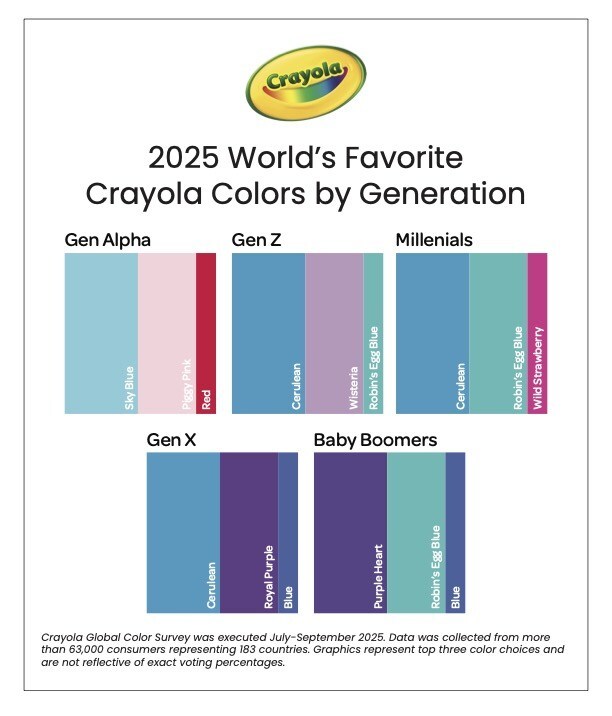
The top three crayon colors in the world are Cerulean, Robin’s Egg blue, and Wisteria purple.

Each generation’s favorite color?

Crayola also broke it down by age, and the blue obsession crosses generational lines. Boomers are the only generation that didn’t have blue at the top of their list.

Blue has been a top pick for decades

This isn’t the first time blue has dominated the crayon world. In fact, it’s kind of a long-standing monarch. Back in 1993, Crayola polled Americans and blue won then too. Then in a 2000 poll, six different shades of blue made the Top 10. So if you’re wondering why your kid’s coloring books all look like the ocean, now you know.

15 Old-School Music Devices We Miss Way More Than We Expected

Streaming services may rule the music world now, but for a lot of Americans, nothing will ever beat the crackle of vinyl, the ka-chunk of an 8-track, or the thrill of a mixtape carefully dubbed on a boom box.

UltimateClassicRock.com just put together a list of music gadgets from the past that we still miss, and honestly, reading through it feels like opening a time capsule.

At the top of the list is the pocket transistor radio, a little box of magic that made family road trips and lazy afternoons at the beach feel like adventures. And for kids of the ‘70s and ‘80s, nothing beat the Fisher-Price turntable. You’d sneak Mom and Dad’s double Neil Diamond album and play it until the grooves practically wore out.

Of course, no nostalgia trip is complete without the 8-track player.

Sure, the sound quality wasn’t perfect, but that loud ka-chunk between tracks was an experience in itself. Then there was the portable turntable, where listening to music was practically a ritual: flipping through album covers and reading liner note as the needle hit the groove.

Some memories are tied to very specific setups, like Dad’s leather-wrapped garage radio or his glass-door stereo, where finally being trusted to close those smoky panels felt like a rite of passage. And who could forget the boom box with the handle? It wasn’t just for blasting tunes, it was an instant party kit.

Then came the glory days of personal listening. The Sony Walkman made music feel private for the first time, while the bright yellow Walkman Sport made you feel like the hero of your own movie soundtrack.

Later came the Sony Discman, which was amazing as long as you didn’t move too suddenly and make the CD skip.

Not every device was a hit. The MiniDisc player never really caught on in the U.S., though it earned some cool points among European exchange students. But the car multi-CD changer? That was peak road trip nostalgia. Loading up your CD binder before heading out often felt more exciting than the trip itself.

Music might be more convenient now, but it’s hard not to miss the personality those gadgets brought to the experience. Streaming is fine, but nothing compares to the magic of slamming a cassette into a boom box or hearing the first crackle of a vinyl spin.

Exit mobile version