The Weird Jobs Rock Stars Had Before Fame

Before the fame, fortune, and questionable backstage antics, a lot of rock stars were just regular people with regular jobs. Okay… maybe not regular jobs. Some of these side hustles are wild, some are gross, and a few are the kind of thing you only admit after a couple of drinks.

Here’s the breakdown of what your favorite rock icons were doing before they became legends:

  • Ozzy Osbourne – The Prince of Darkness started out cutting open cow carcasses at a slaughterhouse. Yep, meat hooks before microphones.
  • Chris Cornell (Soundgarden) – Handled fish guts at a seafood company. Glamorous? Not exactly. Slimy? Absolutely.
  • Lemmy Kilmister (Motörhead) – Hung out with greatness early on as a roadie for Jimi Hendrix. That’s basically a rock ‘n’ roll internship.
  • Kurt Cobain (Nirvana) – Before defining grunge, he was pushing a mop as a janitor. Smells like bleach spirit.
  • Axl Rose (Guns N’ Roses) – Worked as a manager at Tower Records, probably alphabetizing the bands he’d eventually outsell.
  • Corey Taylor (Slipknot) – Sold adult toys and movies in a porn shop. Masked metal mayhem feels like the logical next step.
  • Debbie Harry (Blondie) – Rock’s coolest blonde once worked as a Playboy Bunny in New York City.
  • Courtney Love – Stripped in Los Angeles to make ends meet. Considering her chaotic stage presence, this actually tracks.
  • Rob Zombie – Got his start in children’s TV of all places, working as a production assistant on “Pee-wee’s Playhouse”. That explains a lot, honestly.
  • Tom Morello (Rage Against the Machine) – Shredded clothes before he shredded guitars, working as an exotic dancer for bachelorette parties.
  • Fred Durst (Limp Bizkit) – Inked skin as a tattoo artist before yelling about doing it “all for the nookie.”

See? Not all legends are born with a guitar in their hands. Some are armed with mops, fish guts, or a stack of tattoo needles. So the next time you’re stuck at your 9-to-5, just remember: even Ozzy started off elbow-deep in cow carcasses, and look how that turned out.

7 in 10 People Use Their Gut to Make Major Life Decisions

Who needs spreadsheets or a five-year plan when you’ve just got a really good feeling about it?

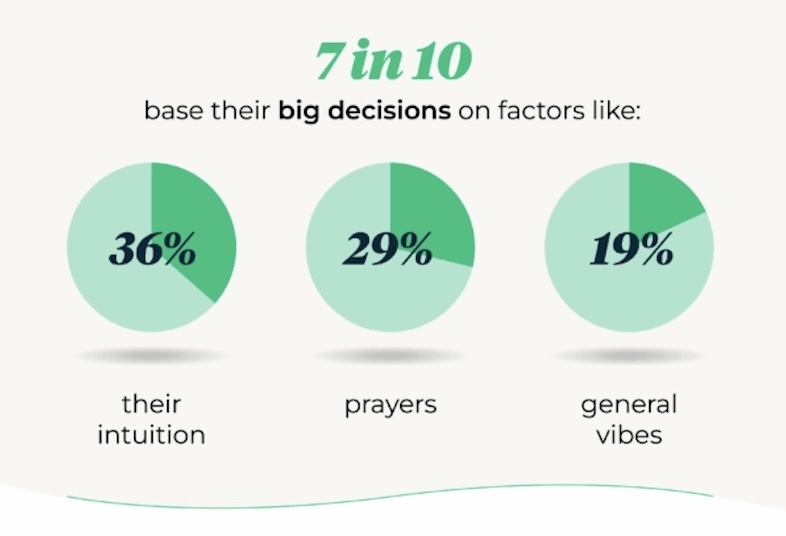
According to a new poll by the life insurance hawkers at LifeHappens.org, 7 in 10 Americans admit they sometimes rely on gut instincts when making big life decisions. Not research, not logic – just straight-up vibes and intuition.

Basically, we’re all out here choosing jobs, partners, and zip codes the same way we pick what to watch on Netflix: “Eh, this feels right.”

What counts as “gut instinct”?

They went pretty broad with it. A gut feeling could mean your “intuition,” the “general vibes” you’re feeling, or what you decided after prayer or reflection. So, basically anything that’s not “I fully thought this through, ran the stats, weighed the pros and cons, and here’s my decision.”

10 things we’ve decided with our gut

They asked people about some common life decisions that shouldn’t be made on a whim, just to see how often our gut influences our decision making. And spoiler alert: it happens a lot.

Here’s a breakdown of just how many of us admit to letting our instincts take the wheel when it comes to major life choices:

  • 32% have chosen a job based on gut instincts.
  • 26% have decided where to move the same way.
  • 26% have used their gut to end a relationship.
  • 24% relied on vibes to quit a job or change careers.
  • 21% have chosen a pet based on instinct.
  • 20% have made investment decisions this way.
  • 20% followed their gut to say yes to marriage.
  • 19% trusted it while accepting a first date.
  • 18% have gone with a feeling when buying a home.
  • 13% decided to go back to school based on instinct.

Basically, if it’s a major decision that could affect your career, finances, or love life, there’s a good chance you or someone you know made that call with more gut than analytics.

So yeah, we like to think we’re rational beings who look at things logically and weigh the pros and cons. But if you’re mostly just vibing your way through life, you’re far from alone.

We’ll willingly go into debt for a gut feeling

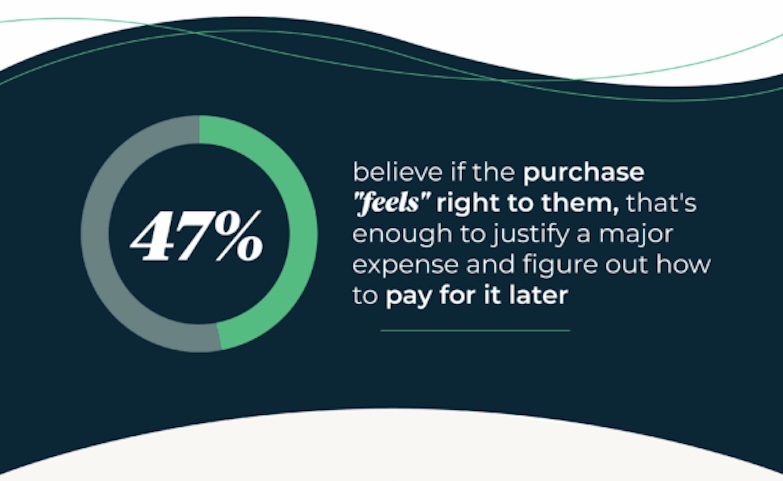
Nearly half of people said they’re also willing to follow their gut when purchasing something they know they can’t afford. If our gut says yes, so does our wallet… and we’ll just figure it out later. YOLO!

Is trusting your gut really a bad thing though?

Many would argue trusting your intuition in many (if not all) of those situations is actually the smart route to take, and maybe even a necessary one. Is it really just impulse? Or is it your brain tapping into experience faster than logic can catch up?

You could argue the “feeling” you get is just a shortcut built from patterns, past outcomes, and emotional intelligence. Or to put it another way, maybe your subconscious knows better than your conscious mind does sometimes. So while spreadsheets are great, it’s possible your gut knows what your head just hasn’t figured out yet.

It’s like a built-in tiebreaker

We’ve all been there before. You have weighed the pros and cons. You’ve run the stats, thought it through the best you can, and still can’t decide. When that’s the case, what choice do you have?

Nothing breaks a tie quite like, “My gut is telling me to ______.”

10 Things We Wish Were “Business Casual”

Ever stared at your closet wondering if you could get away with wearing those sweatpants to work? According to Google, searches for “business casual” hit an all-time high in 2025, and it’s not because we’re all suddenly passionate about HR dress codes. It’s because no one knows what it means anymore. (Did we ever?)

The dictionary definition is “a style of dressing for white-collar employees that is less formal than business attire.” Super helpful, right? That could mean a nice sweater… or maybe a hoodie with cowboy boots depending on who you ask and where you live.

Google looked at the most popular “Is this business casual?” searches of the year, broken down by city. And something about the list tells me we’d all be wearing tees, jorts, and Crocs to the office if we knew it wouldn’t cost us that raise.

Here are 10 questionable fashion choices we’ve been Googling and where those fashion dilemmas are trending the most.


1. “Are sweats business casual?”

Los Angeles is leading the charge on this one. Shocking absolutely no one.


2. “Are baggy jeans business casual?”

Salt Lake City is ready to be living in 1998 again.


3. “Are cowboy boots business casual?”

Charleston, South Carolina, wants to make this happen. And honestly, we kind of support it.


4. “Are hoodies business casual?”

Denver’s hoping it’s okay as long as it’s made by Patagonia.


5. “Are combat boots business casual?”

Chicago’s trying to punk up the office vibe.


6. “Are flannel shirts business casual?”

San Francisco, meet Portland’s wardrobe.


7. “Are shorts business casual?”

Eugene, Oregon, you’re on the same latitude as Minneapolis. This only applies like eight days a year.


8. “Is a cowboy hat business casual?”

Kansas City, Missouri, clearly thinks the rodeo is a networking event.


9. “Are yoga pants business casual?”

Hartford, Connecticut, just wants to be comfy.


10. “Is cheetah print business casual?”

Atlanta’s out here trying to make statement pieces work in staff meetings.


In the end, “business casual” for most of us means… whatever your boss won’t yell at you for. But as work-from-home culture continues to blend into in-office life, the line between business and casual is as blurry as ever.

One person’s power blazer is another person’s cheetah print sweats, apparently. At this rate, the only universal rule might be if you have to Google it, maybe toss on a button-down instead.

Over Half of Us Are “Quiet Cracking” at Work

Do all your colleagues think you’ve got your life together at work—emails answered, deadlines crushed, boss totally fooled—but secretly you’re screaming into the void? Congratulations, you might be quiet cracking.

The shiny new term – coined by the workplace training company TalentLMS – describes that awkward stage between burnout and quiet quitting. You’re not phoning it in yet, but you’re definitely not okay.

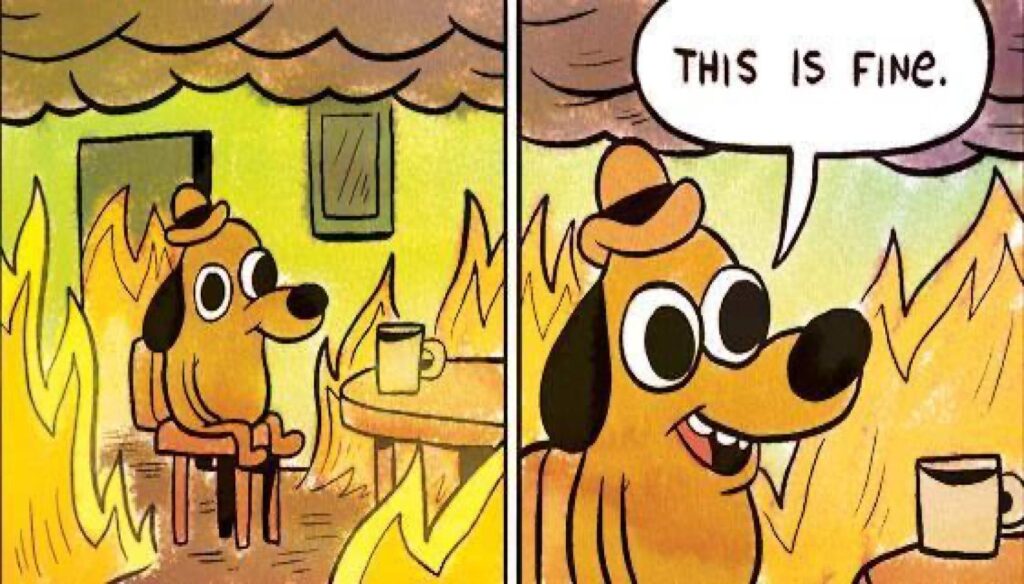
Think of it like your career is holding a “this is fine” mug while the office is on fire. And you’re not the only one watching the room around you burn.

Quiet cracking is shockingly common

A new survey by Resume Templates found 59% of employees are currently in quiet cracking mode. Another 20% said they were recently. That’s almost 8 out of 10 workers who are either cracking now or just pieced themselves back together. So if the break room feels like a haunted house of tired smiles and forced “I’m good, how are you?”s, that’s why.

What’s making us crack?

What’s pushing people over the edge? The top culprits are:

  1. Too much work (43%)
  2. Personal life stress (40%)
  3. Bad bosses (36%)
  4. Repetitive, soul-sucking tasks (34%)
  5. Low pay (31%)

Just outside the top five were not being recognized (30%) and no room to grow (28%). Basically, people are overworked, underpaid, ignored, or stuck in career quicksand. Fun!

How are we coping?

Mostly by taking time off or secretly job hunting. In fact, 62% of quiet crackers admitted they’re at least somewhat likely to quit in the next six months. Translation: if your office feels stable now, just wait. The great resignation sequel is coming soon to a cubicle near you.

The big takeaway? Quiet cracking is basically the new burnout, but sneakier. If you’re crushing it at work while quietly unraveling, you’re not alone. Odds are, most of your coworkers are too. So maybe, just maybe, it’s time companies stop calling it “employee engagement” and start calling it what it really is: survival mode with a smile.

The Lowest Paying Job in America Is “Shampooer”?

Think your job stinks? It could be worse. It turns out the lowest paying job in America is… one you probably didn’t even know exists.

Our friends over at Stacker.com did a deep dive to rank the lowest paying full-time jobs in the United States, and servers can breathe a sigh of relief. Waiting tables barely made the cut, landing at #50 on the list. That means there are at least 49 gigs that pay even less. Here are the Top 10, and what the average full-time worker makes in a year.


1. Shampooer ($30,830)

Yep, it’s a real job title. They’re the folks who wash your hair at salons before the stylist takes over. It’s often an entry-level job for people who want to become stylists but don’t have enough experience yet.


2. Fast food cook ($31,140)

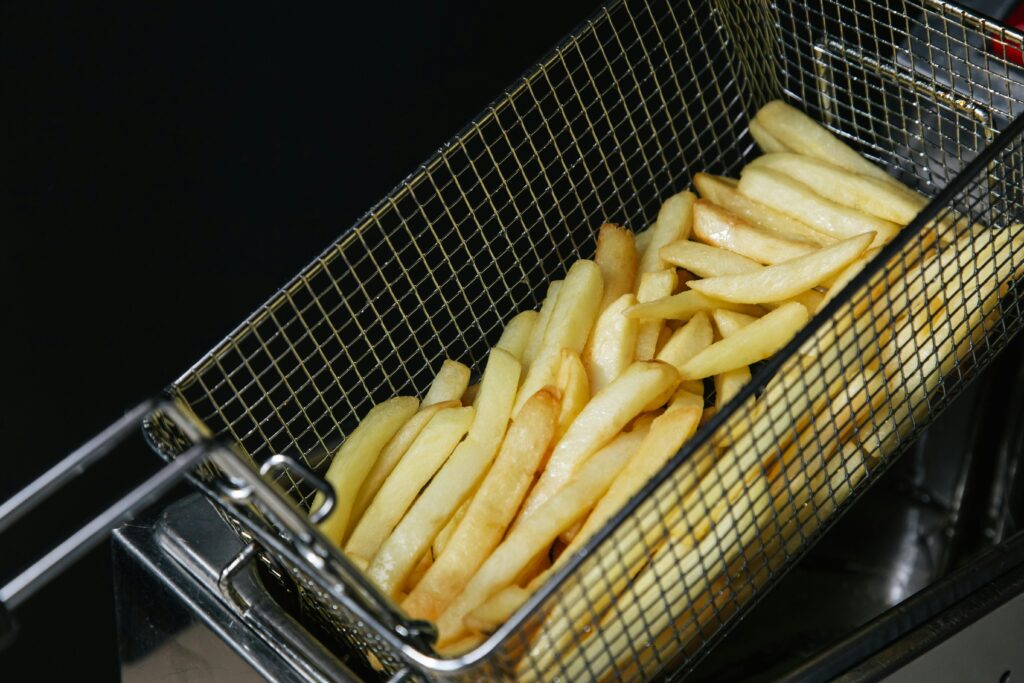
If you’re behind the fryer but never at the counter, this is you. It doesn’t pay great, but there are some perks… like constant grease burns and getting to smell like French fries after every shift.


3. Amusement and recreation attendant ($31,350)

Think carnival workers, ride operators, and concession stand staff. Basically, anyone handing you cotton candy or buckling you into a ride you’re not 100% sure you’ll survive.


4. Fast food counter worker ($31,350)

They earn a little more than the cooks, mostly because they deal with customers. And let’s face it, customers can be tougher than the deep fryer.


5. Usher, lobby attendant, or ticket taker ($31,770)

Those smiling faces at theaters and concert venues? Spoiler alert: they’re probably making less than the price of your ticket.


6. Cashier ($31,810)

One of the most common jobs in America with more than 3 million people scanning barcodes and making change. If their attitude isn’t great, now you know why.


7. Host or hostess ($32,030)

The folks who deal with the riffraff out front earn about $6,000 less per year than the servers who take your order and bring your food.


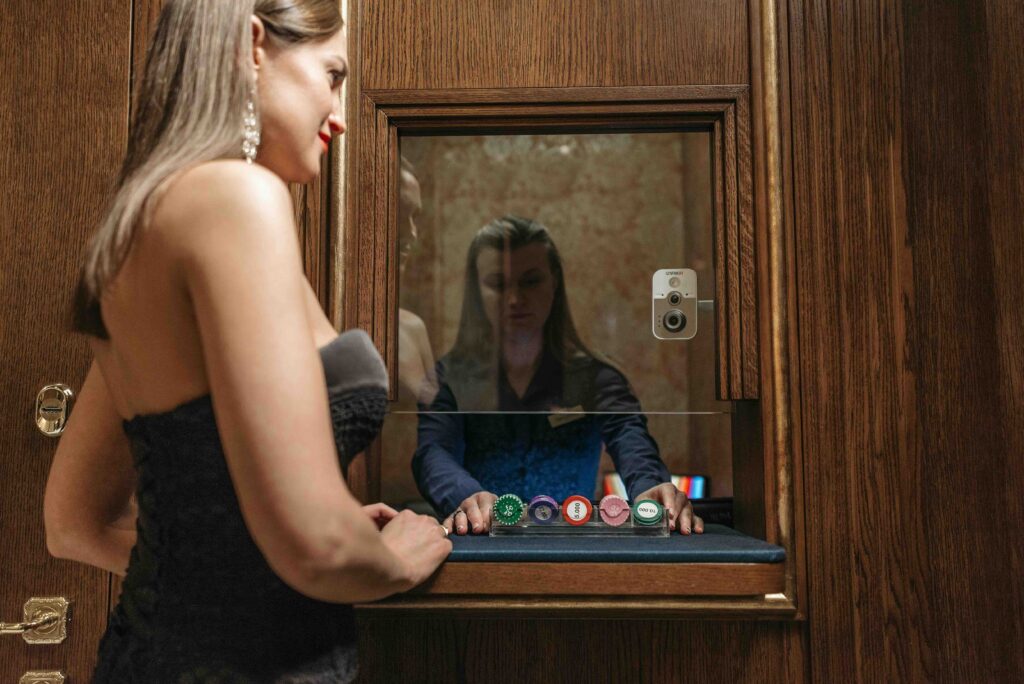
8. Gambling and sports book writer/runner ($32,570)

They help facilitate bets at casinos and racetracks, or run games like keno. The house always wins, but the workers definitely don’t.


9. Child care worker ($33,140)

Babysitters, daycare staff, and nannies have some of the most important jobs in the world – if only they got paid like it.


10. Dishwasher ($33,220)

Closing out the Top 10 is that guy in the kitchen doing the dirty work – to the tune of about $1,500 more per year than the smiling hostess out front. (And $80 more than the person watching your toddler all day!)


The big picture? Most of these jobs pay in the low-to-mid $30k range, which doesn’t go far when rent, gas, and groceries keep climbing. So the next time you meet someone working one of these gigs, maybe give them a little extra patience – or a tip – because they’re not exactly cashing in.

Study Finds Some of Us Want a Mean Boss—Here’s Why

Ever had a boss who seems to think “management” means yelling louder than everyone else? Turns out, not everyone hates that.

A new study out of Columbia University suggests a surprising twist in workplace culture: a lot of people actually respect—and even prefer—mean bosses.

It all depends on how you see the world.

Some people think mean bosses are needed in order to get sh*t done.

The study – titled Savvy or Savage? How Worldviews Shape Appraisals of Antagonistic Leaders – found there are two camps.

If you believe life is mostly caring and collaborative – or that everyone’s pitching in and doing their best – then an aggressive manager might feel toxic and ineffective.

But if you think it’s a “dog‑eat‑dog world,” you might see that same boss as a strong leader who keeps people motivated and gets results.

Those who see the social world as a competitive jungle tend to attach greater value to antagonism, responding with heightened tolerance or even appreciation for leaders who show it. Those who see the world as collaborative and caring, on the other hand, may often view antagonistic leaders as “hopelessly misguided and ineffective.”

Workplace culture isn’t one‑size‑fits‑all.

According to the study, people in the “caring” camp tend to think harsh leadership is a sign you don’t know how to handle people. But those in the “dog‑eat‑dog” camp? They’re more likely to admire someone who’s fiery, even if it means they (or their coworkers) get yelled at sometimes.

The study was sparked by a real‑life viral story.

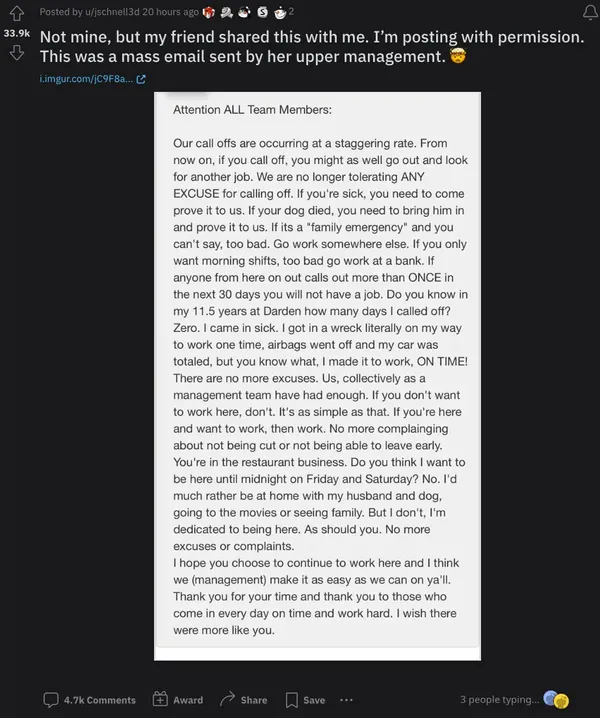
Remember the Olive Garden manager in Kansas in 2022? The one who sent a memo to staff saying, “If you call off, you might as well go out and look for another job.”

The line that really got people was, “If your dog died, you need to bring him in and prove it.” 👀

The manager got fired, but plenty of people online defended the tough‑love approach, blaming “lazy employees” instead.

Is a drill sergeant approach really necessary?

Again, it depends on how you view the world, whether you think people need a drill sergeant to stay motivated – and also, whether you think your colleagues are a bunch of lazy bastards or not.

What the study definitely shows is we all have wildly different ideas on what good, effective management looks like – what feels like abuse to one person might feel like strong leadership to another.

Do you work better under a boss who barks orders, or one who hugs it out?

Fourth of July: Half of Americans Think They Should Get the Whole Week Off

If your productivity this week has dipped below “bare minimum,” you’re in excellent (and lazy) company. A recent poll found that 45% of American workers admit they’re not really getting anything done between now and the Fourth of July. And frankly, the other 55% might just be lying to look good.

That’s right: nearly half of us are mentally out of office, spiritually beachside, and physically still showing up to Zoom meetings with the camera off.

And we’re not just talking about a slow day or two. Half the country thinks the entire week of July 4th should be a national no-work zone.

49% say companies should just close up shop and let everyone live their best summer life. Millennials and Gen Z are especially here for it: 61% are in favor of making it official.

Meanwhile, only 32% of older workers agree. Which tracks. These are the same people who think taking a sick day for appendicitis is “pushing it.”

But here’s the twist: a mid-year summer break might actually help companies.

35% of workers believe they’d be more productive the rest of the year if they knew they had a week off in July. 28% said they’d work harder, and 22% would be more likely to recommend their company to others. So yes, Cheryl in HR… time off is a retention strategy.

If you are getting more than just Friday off, congratulations, you’re living the dream. Only 34% of workers will get two or more days off this week, and just 10% are getting the full five-day break. The rest of us are pretending to care while googling “patriotic jello shot recipes.”

So go ahead and phone it in this week. Just make sure your boss is phoning it in too.

Job Seekers Want Short Workweeks, Pets, and Nap Rooms

Turns out job seekers in 2025 aren’t just asking for competitive salaries… or beanbag chairs and unlimited LaCroix.

A new survey from Resume.io reveals what today’s workforce considers non-negotiable benefits, and at the top of the list? Cold, hard financial security.

Topping the workplace must-haves:

  • Paid overtime (76%)
  • Paid sick leave (75%)
  • Comprehensive health insurance (73%)
  • 401(k) retirement plans (67%)
  • Dental coverage (59%)

In other words, if you want to hire great people, you better be ready to pony up for the basics.

But there’s a gender divide when it comes to the finer details. Male professionals are prioritizing wealth-building perks: 28% say stock options are essential, and 20% want financial planning services included. Meanwhile, women are more focused on benefits that support inclusivity and family life. Over a third (36%) say maternity/paternity leave is a must, and 30% list DEI programs as essential… compared to just 27% and 23% of men, respectively.

And then there’s Gen Z and Millennials, coming in hot with the vibe check.

Gen Z’s demands include:

  • Four-day workweeks (30%)
  • “Fun rooms” with ping-pong and games (18%)
  • Pet-friendly offices (20%)

Millennials? They just want a nap. Literally—17% of them say “nap rooms” are necessary.

While some of these perks might sound a little over the top, they reflect a real shift in work culture. Flexibility, mental health, and purpose-driven policies are quickly becoming as critical as pay and healthcare. Employers hoping to stay competitive might need to rethink what their benefit packages say about their company’s values.

Or, maybe they just hire A.I. to replace you, until it starts demanding gym memberships, trampolines, and adult ball pits.

10 Things That Drain Our “Social Battery”

One minute you’re chatting like a functioning adult, and the next you’re mentally pricing out cabins in the middle of nowhere with zero cell service. Congratulations, your “social battery” just flatlined.

The electrolyte and energy drink brand Zipfizz polled 2,000 Americans and looked at the little everyday annoyances that can completely zap your “social battery.” You know, the stuff that pushes you from “I got this” to “I need to live alone in the woods.”

Here are the top 10 culprits you might encounter today:

  1. Being interrupted or talked over. Honestly, is there anything more infuriating? At least let me finish my story before you jump in and try to top it, Chad.
  2. Awkward small talk. An occasional musing about the weather is excusable as long as it’s quick and painless. If you follow with “how was your drive to work,” my brain starts weighing the pros and cons of hitting you with my car.
  3. Dealing with customer service. You’ve been on hold for 20 minutes when a real human finally gets on the horn… and it turns out they’re an idiot. Bye bye, social battery.
  4. Talking to strangers. Some people love a random convo if you catch them at a good time. Otherwise, it can feel like you’re being forced to talk to someone you’ve never met, don’t care about, and will likely never see again. (Hence, the not caring part.)
  5. Unsolicited advice. Nothing more refreshing than someone “helpfully” telling you how to live your life when you didn’t even ask. Bonus points if their own life is in the crapper.
  6. Office gossip. The drama, the whispers, the alliances. I’d rather just watch more reality TV.
  7. Group video calls. The overlapping chatter, frozen screens, and “sorry, you go ahead” loops are enough to fry anyone’s brain.
  8. Oversharing coworkers. There’s TMI, and then there’s “things I can never un-hear.”
  9. When someone wants to show you something on their phone. It’s always a blurry photo, a too-long video, or a meme you saw three weeks ago. But they’re excited, so you have to be.
  10. Networking events. Nothing drains introverts faster than forced mingling, name tags, and small talk marathons.

So if you’ve ever felt socially fried for seemingly no reason, now you know you’re not alone. It’s not that you hate people. It’s just that people can be a lot.

These Everyday Pet Peeves Are Driving Us Nuts—Which Ones Are on Your List?

What’s something small that totally wrecks your mood? If you’ve ever snapped because someone chewed too loudly or your phone buzzed during a meeting, you’re not alone.

A poll commissioned by the brand CBDfx reveals even the tiniest disruptions can seriously stress us out.

You’ll probably encounter at least one of them today, and here’s the through line: if there’s one thing that consistently annoys the hell out of us, it’s… other people. (Yeah, I’m lookin’ at you! 🫵)

Here are the Top 10 minor annoyances that disproportionately get under our skin:

1. Running into someone you’d rather avoid. Whether it’s an ex, an enemy, or just someone you don’t exactly enjoy–it’s never fun when you have to go into “fake friend” mode.

2. A surprise knock at the door. In this day and age, they didn’t at least call first? Or better yet, text? (See #6 below)

3. People talking to you when you need some peace and quiet. Like when you’re in the middle of a work project, and your cubicle mate Todd chimes in with, “If a tomato is a fruit, does that mean ketchup counts as a smoothie??” (Sure, Todd. Now STFU!)

4. Slow or spotty Wi-Fi. In an age where everything’s online, even a 10-second Wi-Fi hiccup can feel like you’re being suffocated.

5. Loud chewing. I hate to keep picking on Todd, but…

6. Getting a phone call from someone out of the blue. It wasn’t that long ago when random phone calls were seen as a nice surprise. But now it’s like a personal affront. (And God help you if you FaceTime me out of nowhere.)

7. Heavy breathing. (See #5)

8. Alarms going off. It doesn’t matter what the alarm sound is, you’ll learn to hate it. It’s why you should never use a favorite song as your morning alarm sound–it’ll be your least favorite in under a week.

9. A flood of text notifications. If you add me to a group text with more than 5 people, we might not be friends anymore.

10. Phone dings during work meetings. Honestly, that one’s on me. I should have had it on vibrate.

Each thing on the list might be no big deal as a one-off, but they do add up fast–especially in a world that’s already overstimulated and constantly connected.

Whether it’s the awkwardness of a surprise visit or the rage-inducing crunch crunch crunch of nearby snacking, these everyday annoyances can trigger an outsized emotional response.

How to calm down after these little disruptions?

According to the same survey, the top method for de-stressing is simple: listening to some music. So if you’re feeling overwhelmed by minor irritations, maybe it’s time to reach for your headphones.

The poll found other go-to options include deep breathing, or snuggling your pet. (Please, just don’t do those deep breathing exercises if I’m within earshot!)

Exit mobile version